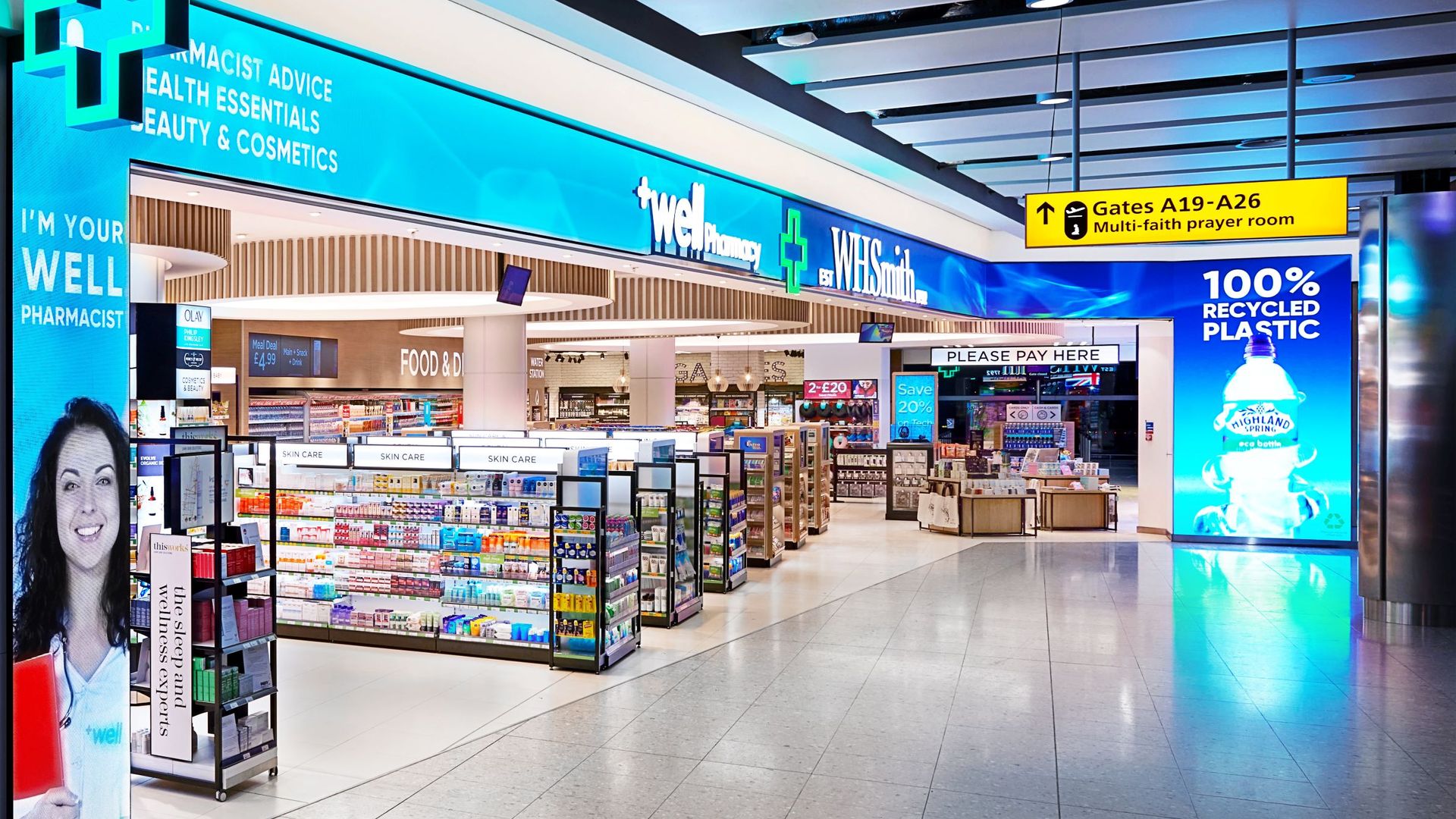
WH Smith has issued a profit warning and suspended shareholder payouts as the travel-focused retailer grapples with growing disruption caused by the Middle East crisis, particularly a looming jet fuel shortage affecting global aviation. The company cited uncertainty arising from the conflict in the region as the primary reason for adopting a more cautious outlook, warning that passenger numbers and consumer confidence remain under pressure.
According to verified reports, WH Smith suffered a pre-tax loss of £25 million in the six months to February 2026, a sharp increase from £4 million during the same period the previous year. This widening loss comes despite a slight two per cent rise in revenue to £748 million over the same timeframe, indicating that increased costs and declining footfall in key travel hubs are eroding profitability. The firm has since slashed its dividend as part of emergency measures to protect margins and strengthen its balance sheet.
The retailer’s profile underwent a significant transformation last year when it sold its 480 high street locations, shifting its focus entirely to stores in airports, train stations, and hospitals. This strategic pivot has left WH Smith especially vulnerable to fluctuations in air travel, which have been exacerbated by ongoing geopolitical tensions. In its latest trading update, the FTSE 250 company stated: “In light of the uncertainty arising from the conflict in the Middle East, the Group is taking a more cautious outlook reflecting the impact on passenger numbers and weaker consumer confidence.”
WH Smith expects full-year profit before tax and underlying items to fall between £90 million and £105 million for the current financial year, down from £108 million in the prior year. The company acknowledged that much will depend on the peak summer trading period and assumed no immediate improvement in consumer confidence. Analysts note that the ongoing jet fuel crisis—driven by supply chain disruptions and regulatory challenges—has led some airlines to ground flights or reduce schedules, directly impacting footfall in airport retail spaces where WH Smith generates the majority of its sales.
The UK’s leading airlines have called on the government to cut taxes and regulations to better prepare for potential fuel shortages, warning that without intervention, the impending drought in jet fuel supplies could force further flight cancellations. WH Smith said it is assuming jet fuel supplies “can be maintained” for its profit forecast, but warned that any disruption would quickly affect its performance.
Impact of Middle East Conflict on Travel Retail
The broader travel retail sector has faced mounting pressure as conflicts in the Middle East continue to disrupt international tourism and business travel. Airlines have reported rerouting flights to avoid volatile airspace, increasing flight times and fuel consumption. These operational changes, combined with fears over fuel availability, have contributed to softer demand for non-essential goods in transit hubs.

WH Smith’s reliance on airport and railway stations means its sales are closely tied to passenger volumes. A decline in long-haul travel, particularly to and from Asia and the Middle East, has disproportionately affected stores located in major international gateways such as Heathrow, Gatwick, and Manchester airports. Even as the company reported flat revenue growth in the UK due to “softening” in air travel, it noted stronger performance in North American and rest-of-world markets, suggesting regional disparities in travel resilience.
Financial Measures and Shareholder Response
In response to deteriorating financial conditions, WH Smith has taken several defensive steps. Beyond suspending its dividend, the company has implemented cost-control initiatives and is prioritising cash preservation. The share price reacted sharply to the news, falling more than 15 per cent on the day of the announcement and leaving the stock down over 16 per cent year-to-date.
Investors have expressed concern over the sustainability of WH Smith’s turnaround strategy, which had previously relied on exiting high-cost high street leases to reinvest in travel locations. Now, with those very locations exposed to external shocks beyond the company’s control, questions remain about the long-term viability of its current model. Retail analysts suggest that diversification into non-travel-dependent channels or further operational streamlining may be necessary if the downturn persists.
Outlook and Industry Implications
Looking ahead, WH Smith said it will continue to monitor developments in the Middle East and their impact on global travel patterns. The company emphasized that its assumptions are contingent on stable jet fuel supplies and no further escalation in regional conflict. Should these conditions change, it may be forced to revise its forecasts again.
The situation underscores the fragility of travel-reliant business models in an era of geopolitical instability. As airlines navigate fuel shortages, regulatory hurdles, and shifting demand, retailers operating within transit ecosystems must adapt to heightened volatility. For WH Smith, the coming months will test not only its financial resilience but too the effectiveness of its strategic shift toward travel-only operations.
WH Smith is expected to release its next interim trading update in late July 2026, covering performance through the peak summer period. Investors and analysts will closely watch for signs of recovery in passenger numbers and any updates on dividend policy.
For ongoing coverage of how global events are shaping retail and travel industries, stay tuned to World Today Journal. Share your thoughts on WH Smith’s situation in the comments below, and help others stay informed by sharing this article.
Related reading