By Dr. Olivia Bennett | | Business
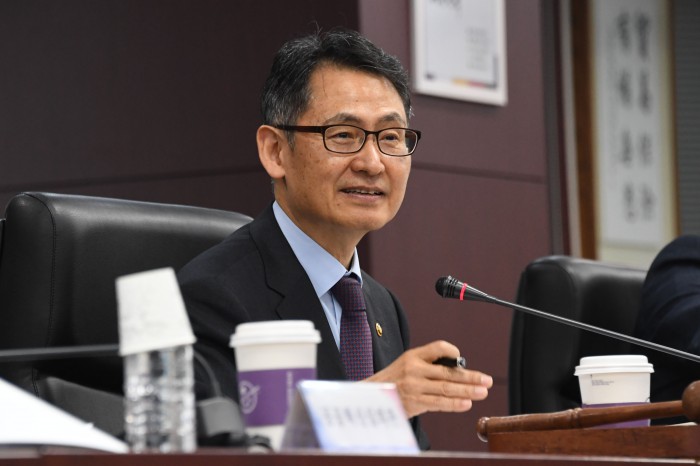
South Korea’s Deputy Finance Minister Leads Economic Diplomacy with OECD and France Amid Global Uncertainty
Seoul — In a significant diplomatic push to deepen economic ties and address pressing global challenges, South Korea’s Deputy Minister of Economy and Finance, Heo Jang, has concluded a series of high-level meetings with officials from the Organisation for Economic Co-operation and Development (OECD) and France’s Ministry of Economy, Finance and Industrial and Digital Sovereignty. The discussions, held over the past week, centered on strengthening multilateral economic cooperation, trade policy alignment, and responses to inflationary pressures gripping global markets.
The meetings follow a period of heightened economic uncertainty, with the OECD recently revising downward its growth forecasts for 2026 due to persistent supply chain disruptions and geopolitical tensions. Against this backdrop, Deputy Minister Heo’s engagements—confirmed by the South Korean Ministry of Economy and Finance—aim to position South Korea as a proactive participant in shaping the future of international economic governance.
While the Ministry did not provide specific details about the outcomes of the talks, sources familiar with the discussions indicate that key topics included OECD-led initiatives on sustainable growth, digital taxation frameworks, and strategies to mitigate the impact of rising energy costs on developing economies. The French side, represented by senior officials from the Directorate General of Public Finance, reportedly emphasized the need for closer coordination on green finance and industrial policy to accelerate the transition to net-zero emissions.
Why These Talks Matter: The Stakes of Multilateral Economic Cooperation
The OECD’s Ministerial Council Meeting, held annually to set strategic priorities for the organization, serves as a critical platform for member countries to align on economic policies. This year’s discussions, which included finance ministers and economy ministers from 38 member states, reflected growing concerns over diverging economic trajectories between advanced and emerging economies. Deputy Minister Heo’s participation underscores South Korea’s commitment to maintaining its role as a bridge between East Asia and Western economic blocs.
For South Korea, the talks come at a pivotal moment. The country is navigating a complex economic landscape marked by slowing domestic demand, a weakening won, and increasing pressure to diversify its export-dependent growth model. The OECD’s recent economic survey of South Korea highlighted the need for structural reforms to boost productivity and address labor market rigidities—issues that are likely to have featured prominently in Deputy Minister Heo’s discussions.
France, as the current president of the OECD, has prioritized themes such as international tax transparency and the role of public investment in fostering inclusive growth. The alignment of South Korea’s policies with these OECD priorities could open avenues for enhanced trade agreements and increased foreign direct investment, particularly in sectors like semiconductors, renewable energy, and biotechnology.
Key Themes: What Was on the Table?
While official statements from the meetings remain limited, industry analysts and diplomatic sources suggest that the following areas were likely central to the negotiations:

- Trade Policy and Supply Chain Resilience: With global supply chains still recovering from pandemic disruptions, discussions may have focused on harmonizing standards and reducing trade barriers. South Korea’s push for WTO-led reforms to modernize trade rules could have aligned with OECD and French interests in creating more predictable trade environments.
- Climate Finance and Green Transition: France’s leadership on climate policy, including its push for mandatory sustainability reporting for large corporations, may have prompted South Korea to explore deeper collaboration on green financing mechanisms. South Korea’s own Green New Deal initiatives could benefit from OECD technical assistance and French investment.
- Digital Economy and Taxation: The OECD’s BEPS 2.0 framework, aimed at taxing multinational corporations’ digital profits, presents both challenges and opportunities for South Korea. Deputy Minister Heo may have sought clarity on how the country can adapt its tax policies to comply with global standards while protecting its competitive edge in tech-driven industries.
- Labor Market and Social Protection: As South Korea grapples with an aging population and labor shortages, OECD expertise on active labor market policies could have been a focal point. France’s experience with its universal basic services model may have provided a benchmark for discussions on expanding social safety nets.
South Korea’s Broader Economic Diplomacy: A Strategic Imperative
Deputy Minister Heo’s engagements are part of a broader diplomatic effort by South Korea to strengthen its economic alliances amid shifting global dynamics. In recent months, the country has intensified high-level visits to key partners, including the United States, Japan, and the European Union, to secure support for its economic priorities.
For instance, South Korea’s recent free trade agreement negotiations with the EU, which aim to modernize their 2011 pact, are expected to be a major topic of discussion in upcoming OECD forums. The alignment of South Korea’s policies with OECD standards could facilitate these negotiations by demonstrating compliance with international best practices.
South Korea’s push to join the Comprehensive and Progressive Agreement for Trans-Pacific Partnership (CPTPP)—a trade bloc dominated by OECD members—has been a priority for Deputy Minister Heo. The OECD’s role in promoting high-standard trade agreements makes it a natural partner in this endeavor.
What Happens Next: The Road Ahead for South Korea’s Economic Diplomacy
The outcomes of Deputy Minister Heo’s meetings are not yet clear, but the next steps are likely to include:
- Joint Policy Statements: The OECD and France may release a joint statement in the coming weeks outlining areas of cooperation, particularly on climate finance and digital taxation. South Korea’s Ministry of Economy and Finance will likely provide an update on its engagement with these initiatives.
- Technical Working Groups: Follow-up meetings between South Korean officials and OECD/French experts are expected to focus on specific policy areas, such as labor market reforms and green investment strategies. These groups may produce detailed reports by the end of 2026.
- Bilateral Agreements: South Korea and France may explore the possibility of a bilateral investment treaty or enhanced trade cooperation, building on their shared membership in the OECD and other multilateral forums.
- OECD Ministerial Council Meeting (June 2026): The next OECD Ministerial Council Meeting, scheduled for later this year, will be a key checkpoint for progress on the issues discussed. Deputy Minister Heo is expected to attend, providing an opportunity to reassess priorities and announce new initiatives.
Key Takeaways: What Which means for South Korea and Global Markets
- Stronger Multilateral Ties: South Korea’s active participation in OECD-led discussions signals its commitment to aligning with global economic standards, which could enhance its credibility in international trade negotiations.
- Green Finance Opportunities: Collaboration with France and the OECD on climate finance may unlock new funding streams for South Korea’s renewable energy sector, particularly in hydrogen and offshore wind.
- Tax Policy Clarity: The OECD’s BEPS 2.0 framework could reshape South Korea’s approach to taxing digital companies, potentially leading to new revenue streams and reduced disputes with foreign investors.
- Labor Market Reforms: OECD recommendations on labor market flexibility may influence South Korea’s efforts to attract foreign talent and address its demographic challenges.
- Trade Agreement Momentum: Progress in OECD forums could accelerate South Korea’s CPTPP accession and EU FTA modernization, both critical for diversifying its export markets.
How to Stay Informed: Official Updates and Resources
For readers seeking further details on South Korea’s economic diplomacy, the following resources provide authoritative updates:
- South Korea Ministry of Economy and Finance: Official statements and press releases on Deputy Minister Heo’s engagements.
- OECD Official Website: Reports on the Ministerial Council Meeting and upcoming policy discussions.
- French Ministry of Economy: Updates on bilateral economic cooperation with South Korea.
- The Korea Times: In-depth analysis of South Korea’s economic policies and diplomatic strategies.
Final Thoughts: A Pivotal Moment for South Korea’s Economic Future
Deputy Minister Heo Jang’s meetings with the OECD and France mark a critical juncture in South Korea’s economic diplomacy. As global markets remain volatile and geopolitical tensions reshape trade dynamics, the country’s ability to navigate these challenges will depend on its capacity to engage constructively with multilateral institutions. The coming months will reveal whether these discussions translate into concrete policy shifts that can safeguard South Korea’s economic stability and foster sustainable growth.
For now, the focus remains on the next OECD Ministerial Council Meeting, where Deputy Minister Heo is expected to provide further clarity on the outcomes of these high-stakes talks. As the world watches, South Korea’s diplomatic and economic strategies will continue to shape its role in the global economy.
What are your thoughts on South Korea’s economic diplomacy? Share your insights in the comments below or join the discussion on World Today Journal’s Business Forum.
Keep reading