In the world of medical communication, few symptoms are as disorienting or as frightening as the sensation that the world is spinning uncontrollably. Known medically as vertigo, this condition is more than just a fleeting feeling of lightheadedness; it can be an incapacitating experience that disrupts daily life, balance and cognitive function. Recently, public interest has turned toward the specific diagnosis of vestibular neuritis—a condition that captures the attention of both the public and those in the medical community—following reports of high-profile figures, such as singer and television personality Kim Jong-kook, experiencing its sudden and severe effects.
As a physician, I frequently encounter patients who struggle to articulate the difference between simple dizziness and true vertigo. Vestibular neuritis involves an inflammation of the vestibular nerve, the pathway responsible for transmitting balance signals from the inner ear to the brain. When this communication is interrupted, the brain struggles to process spatial orientation, leading to the classic “spinning” sensation. According to the National Institute of Neurological Disorders and Stroke (NINDS), this condition is often characterized by a sudden onset of severe vertigo, nausea, and vomiting, which can persist for several days.
Understanding the Vestibular System and Inflammation
To understand why vestibular neuritis feels so catastrophic, one must first appreciate the complexity of the vestibular system. Located within the inner ear, this system acts as a sophisticated gyroscope, constantly providing the brain with data regarding head position and movement. When the vestibular nerve becomes inflamed—often due to a viral infection—the signals sent to the brain become inconsistent or entirely absent. This creates a sensory mismatch, where your eyes, muscles, and inner ear provide conflicting information, resulting in the overwhelming perception of movement when you are perfectly still.
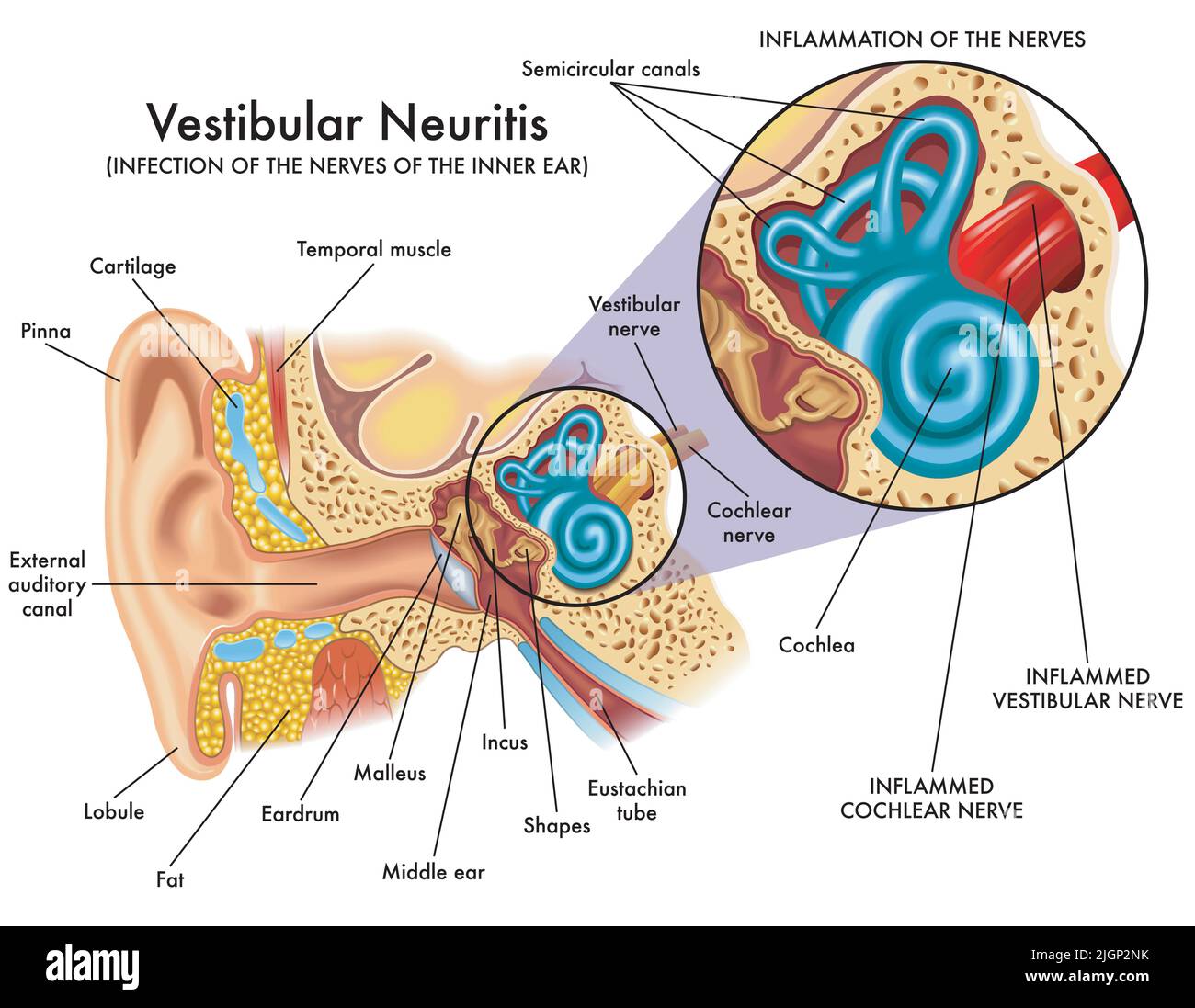
The Mayo Clinic notes that while the exact cause remains elusive in many cases, it is frequently associated with a preceding viral illness, such as a cold or influenza. Unlike labyrinthitis, which also affects the cochlea and can cause hearing loss or ringing in the ears (tinnitus), vestibular neuritis is typically isolated to the balance nerve. This distinction is vital for accurate diagnosis and treatment, as hearing preservation is a key clinical marker in differentiating the two.
The Clinical Presentation: What Patients Experience
The hallmark of vestibular neuritis is the sudden, intense onset of vertigo. Patients often describe it as a sensation of the room rotating or feeling as though they are being pulled to one side. Here’s frequently accompanied by significant autonomic symptoms, including intense nausea, sweating, and vomiting. Because the vestibular system is also linked to the muscles that control eye movement, patients often exhibit nystagmus—an involuntary, rhythmic oscillation of the eyes.

In the acute phase, which typically lasts for several days, most individuals find it nearly impossible to stand or walk without assistance. It is a humbling and often frightening experience, even for those who are physically fit. During this period, the brain begins a process called “vestibular compensation,” where it learns to rely on other sensory inputs, such as vision and proprioception (the sense of body position), to compensate for the faulty signal from the damaged nerve. This recovery process is the cornerstone of long-term rehabilitation.
Diagnostic Approaches and Treatment Strategies
Diagnosis is primarily clinical, based on a patient’s history and a physical examination. A physician will look for signs of nystagmus and assess balance through various maneuvers, such as the Head Impulse Test. Because vertigo can also be a symptom of more serious neurological events, such as a stroke or a brain tumor, medical professionals must be diligent in ruling out central causes. The Johns Hopkins Vestibular Disorders Center emphasizes that while imaging like an MRI may be used to rule out other pathology, the diagnosis of vestibular neuritis is often established by the clinical pattern of symptoms and the absence of hearing loss or neurological deficits.
Management usually involves a two-pronged approach: symptom control and vestibular rehabilitation. During the acute, highly symptomatic phase, anti-nausea medications or vestibular suppressants may be prescribed to alleviate discomfort. However, these medications are generally intended for short-term use, as they can actually hinder the brain’s ability to compensate for the nerve damage if used for too long. Vestibular rehabilitation therapy (VRT)—a specialized form of physical therapy—is the gold standard for recovery. By performing specific head and eye exercises, patients can “retrain” their brain to better process balance information, significantly speeding up the recovery timeline.
Long-Term Outlook and When to Seek Help
While the initial symptoms of vestibular neuritis are intense, the prognosis is generally excellent. Most individuals experience a gradual improvement in symptoms over several weeks. Some may notice mild balance issues during rapid head movements for a longer period, but for the vast majority, full functionality is restored. If you experience vertigo accompanied by sudden hearing loss, severe headache, double vision, or difficulty speaking, Consider seek emergency medical attention immediately, as these can be signs of a more urgent neurological condition.
In the context of public awareness, stories involving public figures help normalize the conversation around vestibular health. They remind us that our internal balance mechanisms are delicate and that even the most physically robust individuals are susceptible to the unexpected challenges of viral-induced nerve inflammation. As we continue to advance our understanding of neuro-otology, the focus remains on providing timely, evidence-based care that restores both balance and quality of life.
If you or a loved one are experiencing persistent dizziness or balance difficulties, the most reliable course of action is to consult with an otolaryngologist or a neurologist. They can provide a thorough evaluation and direct you toward the most appropriate rehabilitation pathway. We invite our readers to share their experiences or questions in the comments section below, as we continue to track developments in medical diagnostics and patient care standards.