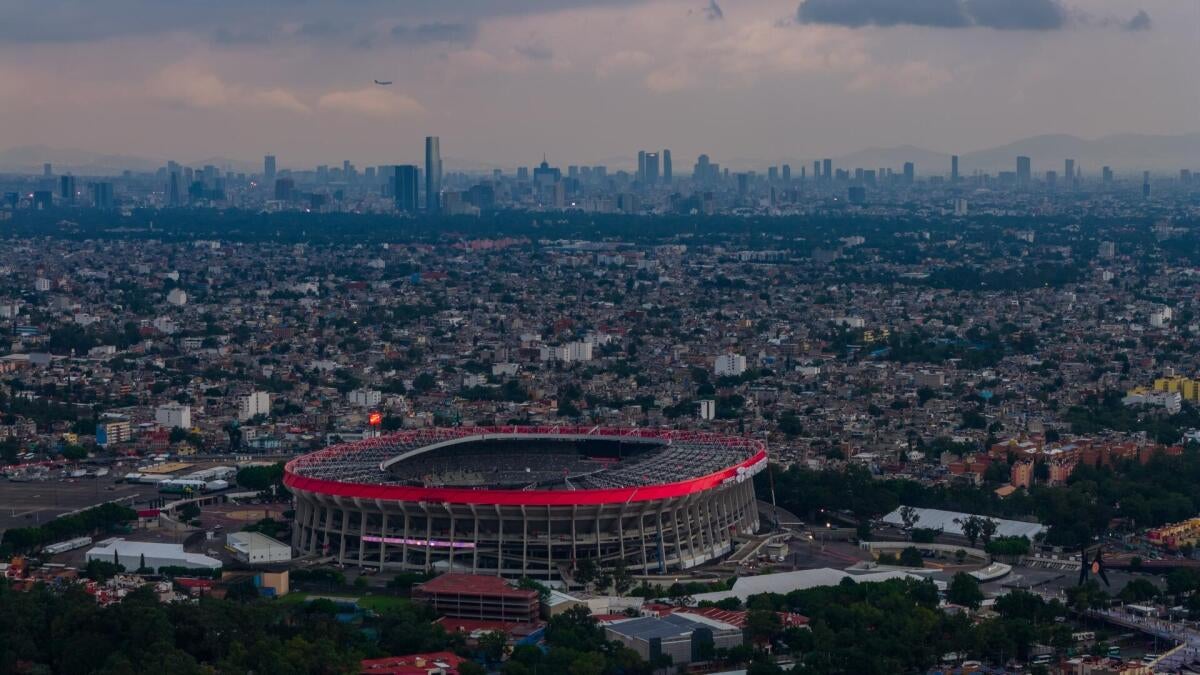
The Estadio Azteca, a cathedral of world football located in Mexico City, remains one of the most formidable venues in international sports due to its extreme altitude and capacity to host over 80,000 spectators. As England prepares for a high-profile international fixture against Mexico, the stadium’s reputation as a “fortress” for the Mexican national team, known as El Tri, is reinforced by a historic record of success in major tournament play. According to records maintained by FIFA regarding the 1986 World Cup, the stadium served as the epicenter of Mexico’s home advantage, a trend that has persisted across decades of international competition.
For visiting teams, the Estadio Azteca presents a unique set of physiological and environmental challenges. Standing at an elevation of approximately 2,240 meters (7,350 feet) above sea level, the venue forces players to contend with significantly thinner air, which impacts aerobic capacity and recovery times during high-intensity matches. Research published by the National Institutes of Health indicates that athletes competing at such altitudes often experience increased heart rates and respiratory distress compared to those playing at sea level, factors that have historically favored the home side in Mexico City.
The Historical Significance of Estadio Azteca
Opened in 1966, the Estadio Azteca holds the distinction of being the first stadium to host two FIFA World Cup final matches, in 1970 and 1986. Its architectural design, characterized by a steep rake that keeps fans close to the pitch, creates a wall of sound that many visiting players describe as intimidating. The stadium’s capacity, while reduced from its original 110,000 to comply with modern safety standards, remains a massive influence on match atmosphere.

Historical data from Reuters sports archives confirms that Mexico’s tactical approach at the Azteca often leverages the familiarity of the ball’s flight path in thin air, which can be deceptive for goalkeepers and defenders accustomed to playing in Europe. This atmospheric phenomenon, combined with the partisan support of the local crowd, has rendered the stadium a “house of horrors” for many visiting nations that struggle to maintain their rhythm over 90 minutes.
Why Visiting Teams Struggle at Altitude
The primary hurdle for teams like England is not merely the opposition, but the physiological toll of the environment. Sports physiologists often point to the “hypoxic environment” as a key variable in match outcomes. When players move from sea level to high altitude without a prolonged acclimatization period—typically lasting 10 to 14 days—their oxygen saturation levels drop, leading to faster muscle fatigue.
According to data from the Union of European Football Associations (UEFA), modern sports science programs now incorporate specific training protocols for teams traveling to high-altitude regions. However, even with advanced preparation, the psychological weight of playing in a stadium where the home team has maintained an unbeaten record in World Cup matches—a feat spanning 10 tournament games held at the venue—remains a significant hurdle for visiting squads.
Tactical Adaptations and Match Expectations
For the upcoming fixture, coaching staffs are expected to focus heavily on energy management. Tactical reports suggest that teams playing at the Azteca often adopt a “low-block” defensive strategy in the first half to conserve energy, hoping to exploit the home team’s potential fatigue in the final 20 minutes. Yet, the history of the stadium shows that Mexico frequently uses the first half to press aggressively, banking on the altitude to drain the opposition early.
The match serves as a test of endurance as much as skill. As noted by analysts at AP News, the ability to control the tempo of the game is the most valuable asset for a visiting side in Mexico City. England’s squad, primarily composed of players based in the English Premier League, will face a stark transition from the temperate, sea-level conditions of the UK to the arid, high-altitude climate of the Mexican capital.
Next Steps for the National Teams
Both football associations are expected to release their official travel itineraries and training camp locations in the coming weeks. Official updates regarding ticket availability and stadium access for international media will be provided through the Federación Mexicana de Fútbol (FMF) portal. The match remains one of the most highly anticipated friendlies on the international calendar, drawing attention for its historical context and the tactical clash between two distinct styles of play.

Readers interested in further developments regarding the squad selection and match preparations are encouraged to monitor the official channels of the respective national football governing bodies. Please share your thoughts on whether you believe altitude or tactical discipline will play a larger role in this encounter in the comments section below.