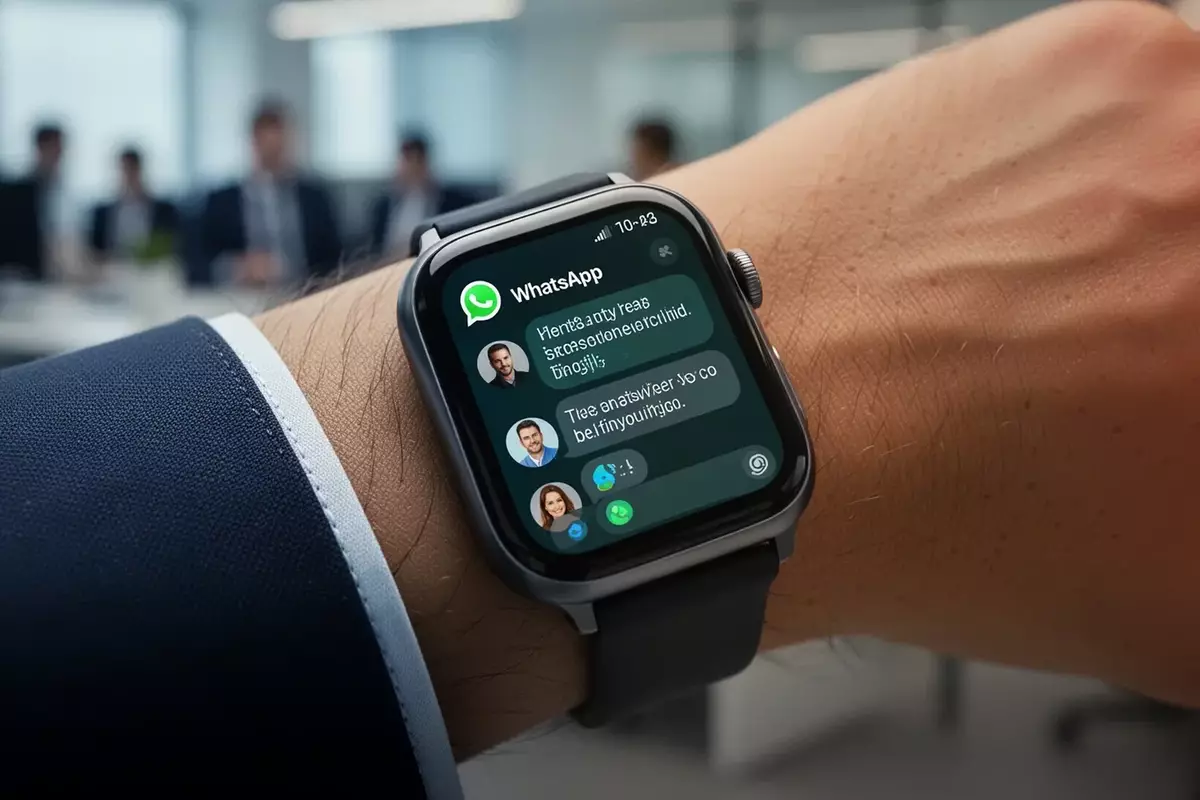
WhatsApp is updating its Wear OS application to allow users to start and pin chats directly from their smartwatches, reducing the need to interact with a paired smartphone for basic messaging. According to reports from ad-hoc-news.de, these functional improvements are arriving alongside the rollout of Wear OS 7, Google’s latest operating system for wearable devices.
The update transforms the WhatsApp wearable experience from a passive notification receiver into a more active communication hub. Users can now initiate new conversations and organize their most frequent contacts by pinning chats to the top of their list, a feature previously reserved for the mobile application. This shift indicates a move toward greater independence for the wearable app, leveraging the updated architecture of the Google-developed OS.
For those using Android-based watches, the integration of these features means a more streamlined workflow. Instead of scrolling through a long list of recent messages on a small screen, the pinning function allows for immediate access to priority contacts. This update targets a common pain point in wearable tech: the friction between receiving a notification and starting a fresh interaction.
New Functionality in the WhatsApp Wear OS App
The primary addition to the Wear OS app is the ability to start chats directly on the wrist. Previously, the wearable version of WhatsApp functioned largely as a companion tool, allowing users to reply to existing threads via voice-to-text or quick replies. The new capability allows users to browse their contact list and trigger a conversation without first opening the app on their phone.

Alongside the ability to start chats, the “pinning” feature is now available. According to ad-hoc-news.de, users can mark specific conversations as priority, ensuring they remain at the top of the chat overview. This is particularly useful for users who manage multiple group chats or high-volume professional threads, as it eliminates the need to search for specific people after new messages arrive from other sources.
These updates are designed to work in tandem with Wear OS system improvements. By optimizing how the app handles data and contact indexing, WhatsApp is reducing the latency typically associated with wearable messaging. The goal is to make the watch a viable primary interface for short-form communication.
Integration with Wear OS 7 and Hardware Compatibility
The timing of this update coincides with the introduction of Wear OS 7. Google’s latest iteration of the wearable platform focuses on better power management and improved app responsiveness, which provides the necessary foundation for WhatsApp to implement more complex features like chat pinning and contact initiation.

While the update is designed for the broader Wear OS ecosystem, its performance is most evident on newer hardware that supports the latest API levels. Devices running Wear OS 7 can take advantage of more efficient background processing, meaning the WhatsApp app can sync chat priorities and contact lists more reliably without draining the battery.
This development follows a broader trend of “app decoupling,” where companies attempt to make their wearable versions less dependent on a constant, active handshake with the smartphone. While a paired phone is still required for the initial account setup and primary data synchronization, the user interface on the watch is becoming significantly more autonomous.
Impact on Wearable Communication Workflows
The ability to manage chats on a wrist-worn device changes the utility of the smartwatch from a notification tool to a productivity tool. By allowing users to pin chats, WhatsApp is acknowledging that users have “core” contacts they interact with regardless of who sends the most recent message. This mirrors the behavior of the WhatsApp mobile app, where pinning is a critical organization tool for power users.
From a technical perspective, implementing these features on a circular or small square display requires a rethink of the user interface. The pinning and starting of chats must be accessible via a few taps or swipes to avoid “input fatigue,” a common issue where users abandon wearable apps because they are too tedious to operate compared to a phone.
The update also improves the accessibility of the app. By reducing the number of steps required to find a specific person, the app becomes more useful in “hands-busy” scenarios—such as during exercise or commuting—where pulling out a smartphone is impractical.
As Google continues to refine the Wear OS environment, other third-party developers are expected to follow this lead, moving away from “notification-only” apps toward fully featured miniature versions of their flagship software. The integration of these features suggests that Meta is prioritizing the Android wearable ecosystem to maintain parity with the deep integration seen in Apple’s watchOS.
Users can check for the update via the Google Play Store on their wearable device. The rollout is gradual, and availability may vary by region and specific hardware model. The next confirmed checkpoint for Wear OS users will be the wider distribution of version 7 updates across legacy supported devices, which will determine how many users can access these specific WhatsApp enhancements.
Do you use your smartwatch for messaging, or do you prefer the phone for everything? Share your experience in the comments below.