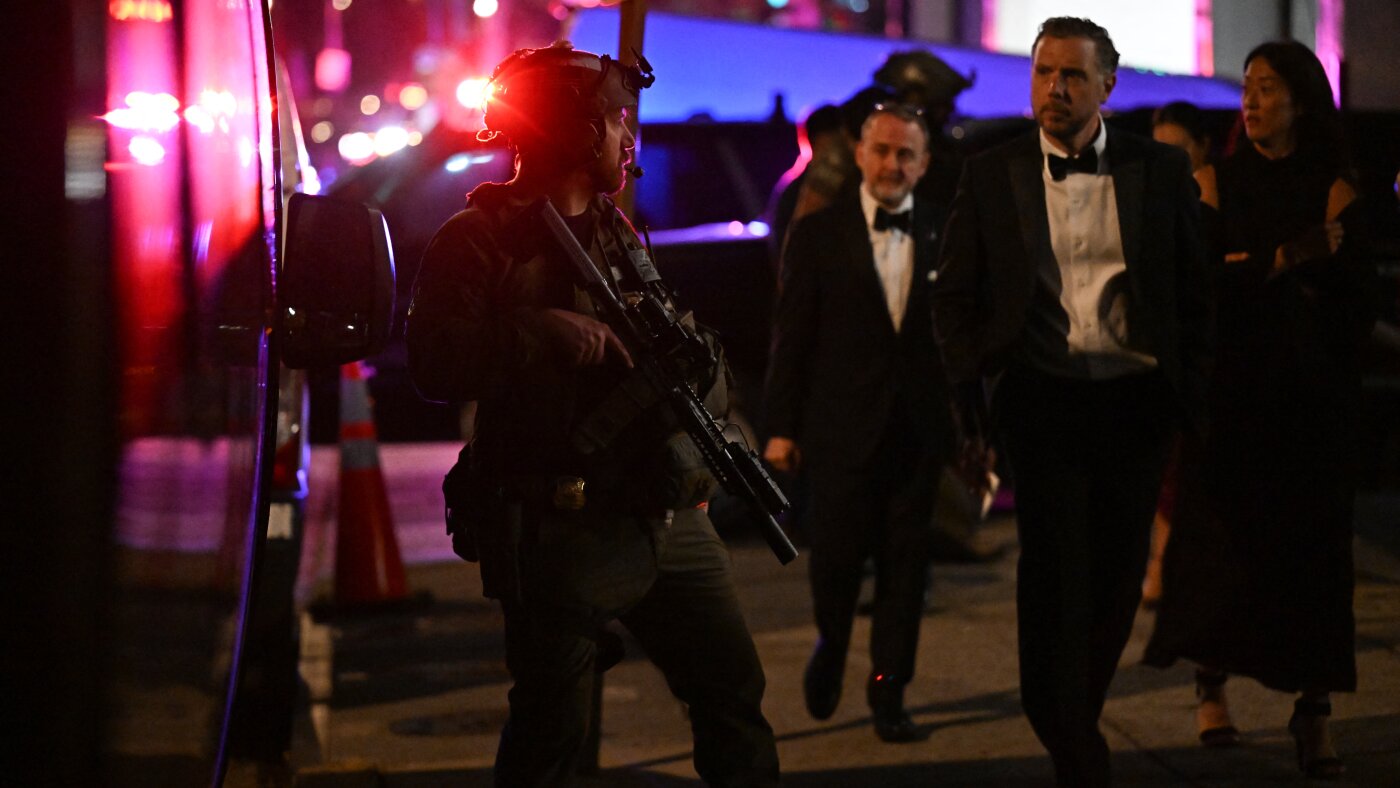
The image of armed commandos standing guard as guests are evacuated from a luxury hotel is a scene that feels increasingly familiar to the American public. On the evening of April 25, 2026, the annual White House Correspondents’ Association Dinner—usually a night of political satire and high-society glamour—was transformed into a crime scene when shots were fired at the Washington Hilton in Washington, D.C.
While the Secret Service successfully evacuated President Donald Trump, First Lady Melania Trump, and other high-ranking officials, the incident serves as a stark reminder of the pervasive nature of gun violence in the United States. For those in the “ballroom” of power, the event was a harrowing security breach; for millions of other Americans, it was simply another Saturday in a country where the threat of gunfire has become a background noise of daily life.
The tragedy of gun violence in the U.S. Is often framed through the lens of “mass shootings”—the high-profile events that dominate news cycles for days. However, the deeper, everyday tragedy lies in the steady, relentless stream of shootings that occur in neighborhoods, homes, and workplaces, often without ever making a national headline. It is a public health crisis that persists even as statistical trends show fluctuate, leaving a trail of trauma that spans generations.
The Statistical Paradox: Declining Numbers, Persistent Trauma
Analyzing the current landscape of gun violence reveals a complex paradox. On one hand, recent data suggests a downward trend in fatalities. According to a Pew Research Center analysis published in April 2026, approximately 44,000 people died from gun-related injuries in 2024. This marked the third consecutive year that the annual number of gun deaths fell, though it remained among the highest totals on record.
Further promising signs appeared in the first quarter of 2026. Reporting from The Trace indicates that there were 3,103 shooting deaths in Q1 2026, the lowest figure for a first quarter in the last twelve years. Preliminary data from the Council on Criminal Justice found that homicides in 35 major U.S. Cities were 21% lower in 2025 compared to 2024, representing 922 fewer homicides in those specific urban centers.
However, these percentages do not erase the human cost. A decline in the rate of violence is not the same as the absence of violence. For the families of the thousands who still die annually, the “downward trend” is a cold comfort. The tragedy is no longer just the spikes in violence, but the baseline—the fact that tens of thousands of deaths per year are accepted as a structural feature of American society.
From Ballrooms to Backyards: The Spectrum of Violence
The incident at the Washington Hilton on April 25, 2026, highlights the precariousness of safety, even for the most protected individuals in the world. The suspect, identified as Cole Tomas Allen, was subdued by the Secret Service near the magnetometer screening area before he could enter the ballroom. While the event resulted in the injury of one law enforcement officer, it mirrored the chaos that millions of citizens experience in less secure environments.

The “everyday tragedy” is most visible in the types of violence that rarely trigger a national conversation: domestic disputes that turn lethal, accidental discharges in the home, and the epidemic of gun-related suicides. Data from the Johns Hopkins Center for Gun Violence Solutions has previously highlighted that firearms have remained a leading cause of death for children and adolescents aged 1 to 17, often surpassing car crashes and overdoses.
When a shooting occurs at a high-profile event like the White House Correspondents’ Dinner, the response is immediate: increased security, multi-layered protection, and political discourse. But in marginalized communities, the response is often a cycle of grief and a reliance on community-led violence interruption programs as the state’s “protection” is either absent or perceived as a source of further instability.
The Political Stalemate and the Path Forward
Gun violence in the U.S. Is not merely a criminal justice issue; it is a political one. The tension between the Second Amendment and the urgent need for public safety has created a legislative stalemate. Even in the wake of the April 2026 Hilton shooting, the political reaction was fragmented. President Donald Trump used the incident to advocate for the construction of a dedicated White House ballroom to ensure future events could be held in a more controlled environment, rather than focusing on the broader issue of firearm accessibility.
Public health experts argue that the solution lies in treating gun violence as an epidemic rather than a series of isolated crimes. This approach emphasizes “community violence intervention” (CVI) and “extreme risk protection orders” (ERPOs), which allow families and law enforcement to petition a court to temporarily remove firearms from individuals posing a danger to themselves or others.
The impact of this violence extends far beyond the immediate victims. Every shooting leaves behind a “ripple effect” of trauma: witnesses who develop PTSD, children who grow up in “shooting-free” zones at school, and a general erosion of the feeling of safety in public spaces. When the most secure event in the capital can be breached, it reinforces the belief that no place is truly safe.
Key Trends in U.S. Gun Violence (2024–2026)
| Metric | 2024/2025 Data | 2026 (Q1/YTD) Trends |
|---|---|---|
| Annual Gun Deaths | ~44,000 (2024) | Downward trend continuing |
| City Homicides | 21% decrease in 35 cities (2025) | Preliminary declines reported |
| Q1 Shooting Deaths | Higher baseline (2021-2023) | 3,103 deaths (Lowest in 12 years) |
| Mass Shootings | Elevated post-COVID levels | Returning to pre-COVID levels |
What Happens Next?
As the U.S. Moves further into 2026, the focus remains on whether the recent decline in shooting deaths is a sustainable trend or a temporary fluctuation. Law enforcement agencies and public health officials continue to monitor the data from the Gun Violence Archive and the CDC to identify new patterns of violence, particularly among youth.
The next critical checkpoint for those tracking this issue will be the release of the full 2025 mortality data from the National Center for Health Statistics (NCHS), which will provide a definitive appear at whether the reported declines in city homicides translated to a national decrease in firearm deaths.
The tragedy of gun violence is not just that it happens, but that it has become an expected part of the American experience. Until the systemic causes are addressed, the “ballroom” of safety will remain an illusion for many.
Do you believe current trends in gun violence are a result of policy changes or social shifts? We invite you to share your thoughts and experiences in the comments below.
Related reading