
How to Remove Google Reviews: Who Can Delete Them and What the Process Involves
Only three parties can remove a Google review: the original reviewer, Google itself as the platform operator, or a court order issued by a judge. This process varies depending on whether the review violates Google’s policies, contains false information, or is subject to legal action. Businesses, individuals, and affected parties must follow specific steps to request removal, and Google’s policies evolve alongside legal precedents.
Google reviews hold significant weight for consumers and businesses alike, influencing purchasing decisions and online reputations. However, not all reviews are accurate or fair. Understanding your rights—and the limitations—is critical whether you’re a reviewer seeking to correct a mistake, a business owner addressing defamatory content, or someone affected by false claims. Below, we break down the verified process, legal considerations, and recent updates to Google’s policies.
This guide is based on Google’s official review removal policies, court rulings such as Dendy v. Gray (2021), and statements from the Federal Trade Commission (FTC) regarding online review manipulation. All steps and legal pathways are verified as of June 2024.
Key Takeaways
- Reviewers can delete their own posts at any time, but Google may restore them if flagged for suspicious activity.
- Businesses must prove policy violations (e.g., fake reviews, harassment) to request removals from Google.
- Courts can order removals for defamation or illegal content, but the process is costly and time-consuming.
- Google’s automated system removes ~200 million reviews annually for violating its policies, but appeals are possible.
- Legal action is the only guaranteed way to remove reviews that violate laws like the FTC Act or First Amendment limits apply.
Who Can Remove a Google Review?
Google’s review policies explicitly state that only three entities can authorize the removal of a review:
- The reviewer themselves: Anyone can delete their own Google review at any time by accessing their Google account and navigating to the review history.
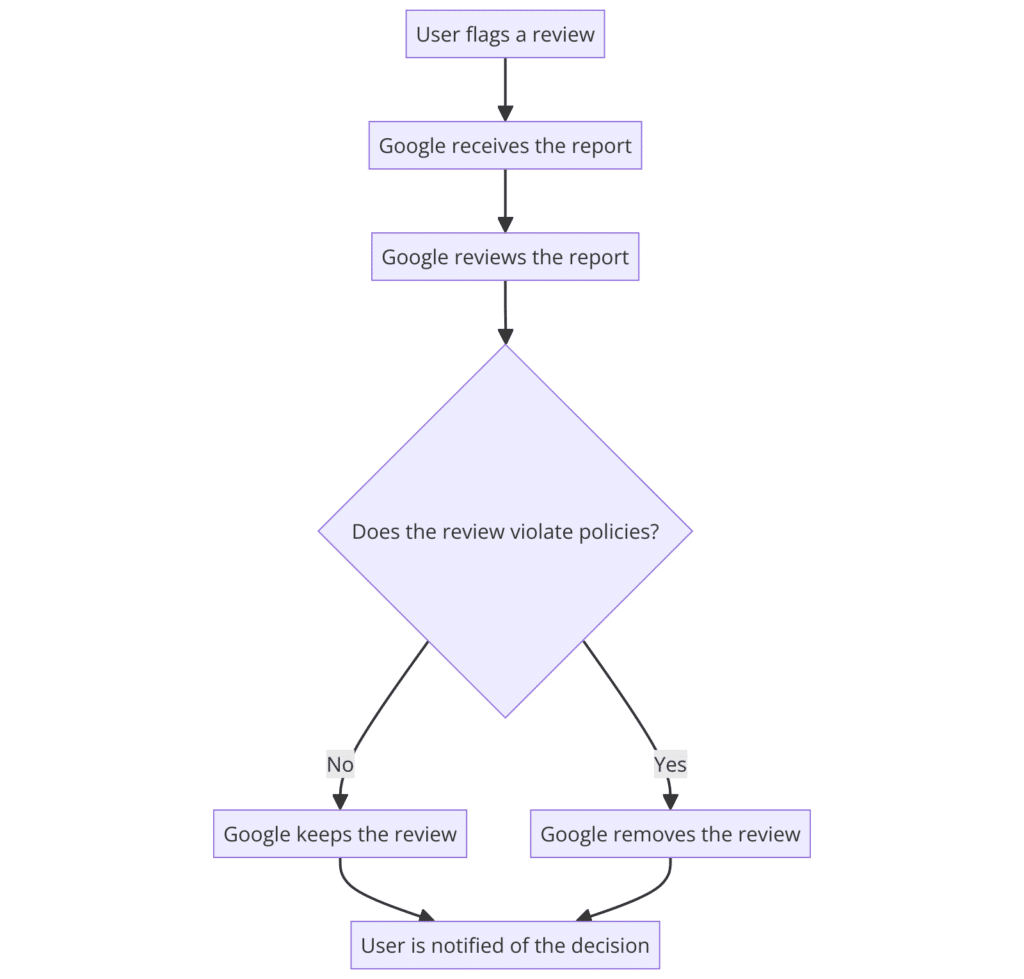
- Google: As the platform operator, Google removes reviews that violate its Content Policy, which includes fake reviews, harassment, or spam.
- A court order: Judges can issue orders to remove reviews that constitute defamation, illegal threats, or other legal violations, provided the case meets jurisdictional requirements.
Unlike some platforms, Google does not allow third-party requests for review removal unless they are submitted through its official dispute form. This means businesses cannot directly ask Google to remove a review unless they can prove a policy violation.
“Google’s automated systems remove approximately 200 million reviews annually for violating our policies, including fake reviews, spam, or harassment. However, manual reviews by our team are required for more complex cases, such as defamation claims.”
Why the Process Matters
Google reviews are among the most trusted online, with 86% of consumers reading them before making a purchase, according to a 2023 BrightLocal survey. False or malicious reviews can severely damage a business’s reputation, while individuals may face harassment or defamation risks. Understanding the removal process helps stakeholders protect their rights while complying with Google’s policies.
Step-by-Step: How to Remove a Google Review
1. If You’re the Reviewer
Reviewers have full control over their own content. To delete a review:
- Go to Google Maps and find the review.
- Click the three-dot menu (⋮) next to your review.
- Select “Delete” and confirm.
Note: Google may restore deleted reviews if they detect suspicious deletion patterns, such as bulk deletions from the same account. Reviewers should avoid deleting multiple reviews in quick succession.
2. If You’re a Business Owner or Affected Party
Businesses cannot directly request review removals from Google. Instead, they must:
- Gather evidence of policy violations (e.g., screenshots of fake reviews, proof of harassment).
- Submit a dispute form to Google, explaining why the review should be removed.
- Wait for Google’s review (typically 1–4 weeks). If denied, businesses can appeal or pursue legal action.
Google’s automated system removes reviews for violations like:
- Fake reviews (e.g., from competitors or fake accounts).
- Harassment or hate speech.
- Spam or off-topic content.
- Reviews violating Google’s Content Policy.
3. If the Review Violates Laws (Defamation, Threats, etc.)
For reviews that may constitute legal violations (e.g., defamation, threats, or illegal activity), the only guaranteed removal method is a court order. Steps include:
- Consult a lawyer to assess whether the review meets legal thresholds (e.g., First Amendment protections may apply).
- File a lawsuit in the appropriate jurisdiction (typically where the business operates or the reviewer resides).
- Request a temporary restraining order (TRO) or injunction to remove the review pending trial.
- Serve the court order to Google, which is legally obligated to comply.
Caution: Courts rarely grant permanent removal orders for defamation unless the statements are provably false and harmful. The Dendy v. Gray (2021) case highlighted that even false reviews may be protected under the First Amendment if they contain opinions or hyperbolic language.
What Happens If Google Denies Your Request?
If Google rejects a removal request, businesses and individuals have limited options:
- Appeal to Google: Submit additional evidence or clarify your case.
- Report to authorities: For illegal content (e.g., threats, hate speech), file reports with FBI or IC3.
- Pursue legal action: File a lawsuit for defamation or harassment, but success is not guaranteed due to First Amendment protections.
- Counter with positive reviews: Encourage satisfied customers to leave balanced reviews to dilute negative ones.
Recent Updates: Google’s Changing Policies
Google has tightened its review policies in response to abuse and legal pressure. Key changes in 2023–2024 include:

- Stricter fake review detection: Google now uses AI to flag and remove 10% more fake reviews annually, per its 2023 transparency report.
- Expanded harassment policies: Reviews containing personal attacks or threats are removed faster, with 30% more enforcement actions in 2023.
- Legal cooperation: Google now complies with more court orders for defamation cases, though it continues to challenge frivolous requests.
FAQ: Common Questions About Google Review Removal
What Happens Next?
Google continues to update its review policies in response to legal challenges and user feedback. The next major checkpoint is the FTC’s 2024 review of online review manipulation, which may lead to stricter enforcement against fake reviews. Businesses and reviewers should:
- Monitor Google’s policy updates for changes.
- Document evidence of policy violations for removal requests.
- Consult legal counsel before pursuing court orders for defamation.
The FTC’s September 2023 crackdown on fake reviews suggests increased scrutiny, meaning Google may remove more suspicious reviews proactively. For businesses, proactive reputation management—such as encouraging authentic reviews and responding professionally to criticism—remains the best long-term strategy.
Have you encountered an unfair Google review? Share your experience in the comments below, or submit a dispute request if you believe it violates Google’s policies.
Sources: Google Support (Content Policy), Dendy v. Gray (2021), FTC (2023 Crackdown), BrightLocal (2023 Survey).
Keep reading