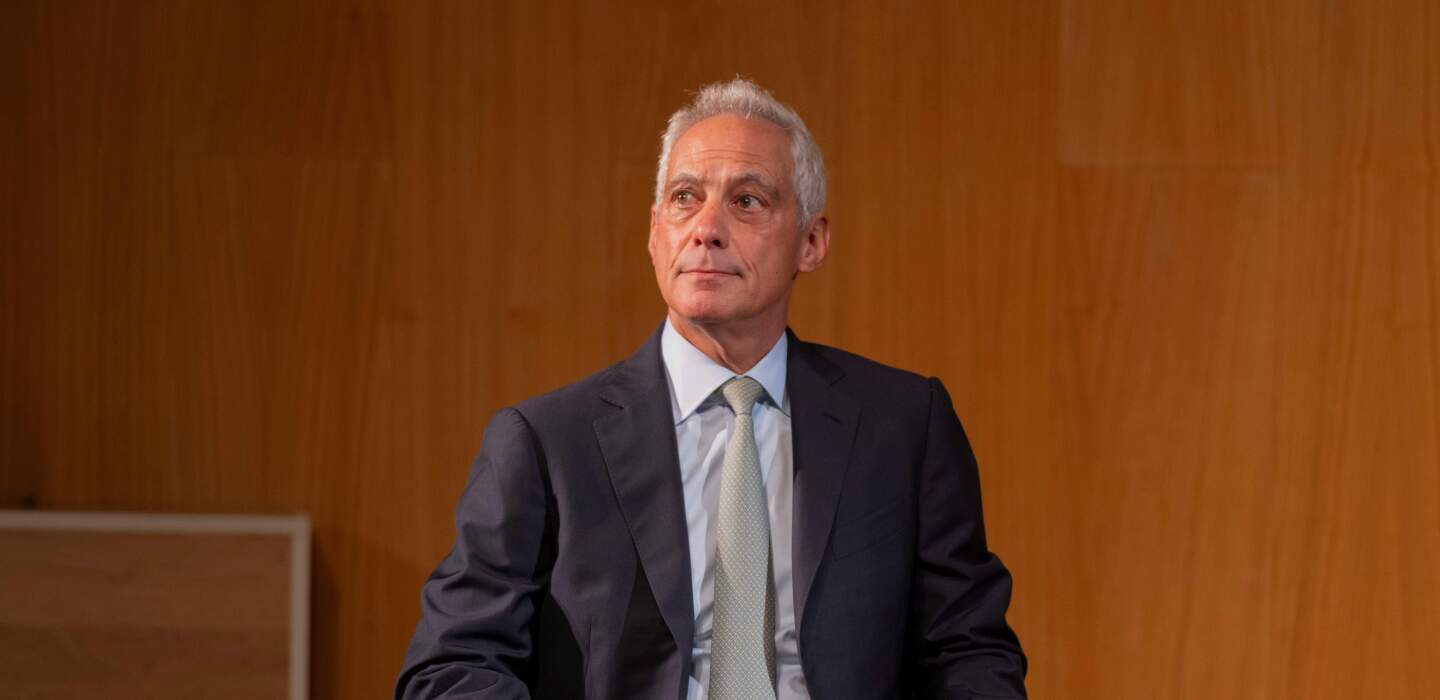
Rahm Emanuel, the current United States Ambassador to Japan, occupies a distinct position in American diplomacy, often characterized by the same assertive, “third-way” political pragmatism that defined his decades-long career in Washington and Chicago. Known widely by his nickname “Rahmbo”—a moniker earned during his time as a high-stakes political operative and Chief of Staff to President Barack Obama—Emanuel continues to exert influence on sensitive international issues, including the complex diplomatic landscape of the Middle East and the U.S.-Israel relationship. As of 2024, his approach remains a subject of intense scrutiny, reflecting a career built on navigating ideological divides within the Democratic Party.
The Evolution of a Political Strategist
Before his appointment as Ambassador to Japan in 2021, Rahm Emanuel served as the Mayor of Chicago from 2011 to 2019, a tenure marked by both significant urban development projects and intense political controversy. According to the U.S. Department of State, his background includes serving as a senior advisor to President Bill Clinton and as a member of the U.S. House of Representatives from Illinois’ 5th district. His reputation as a “third-way” Democrat—a faction associated with the centrist, market-oriented policies of the Democratic Leadership Council in the 1990s—has consistently shaped his legislative and executive actions.

The “Rahmbo” label, which emerged during his early years in national politics, reflects a style of governance that prioritizes results and tactical maneuvering over rigid ideological purity. This approach often placed him at the center of internal Democratic debates regarding the party’s direction on foreign policy, particularly concerning the U.S.-Israel alliance. Throughout his career, Emanuel has maintained a vocal, pro-Israel stance, often acting as a bridge between the traditional party establishment and the evolving progressive wing of the Democratic Party.
Diplomatic Posture in the Pacific and Beyond
Since assuming his role in Tokyo, Emanuel has focused heavily on strengthening the U.S.-Japan security architecture in response to regional shifts in the Indo-Pacific. However, his commentary frequently extends to broader geopolitical concerns, including the conflict in Gaza and the wider Middle East. According to reporting from Reuters, Emanuel has utilized his platform to advocate for a robust American presence, arguing that regional stability is intrinsically linked to global democratic values. This focus on “integrated deterrence” is seen by analysts as an extension of the same strategic pragmatism he utilized in domestic policy.

His commentary on Israel, often delivered via public statements or high-profile interviews, reflects a long-standing commitment to the U.S.-Israel security relationship. While some critics within the Democratic Party argue for a more critical approach toward Israeli government policies, Emanuel has historically emphasized the necessity of a strong, reliable alliance. This positioning underscores the ongoing tension within the Democratic Party regarding how to reconcile historical support for Israel with contemporary human rights concerns.
Navigating Ideological Tensions
The divide within the Democratic Party regarding Israel has become more pronounced in recent years, particularly following the events of October 7, 2023. As noted by the New York Times, party leadership faces increasing pressure from younger voters and progressive activists to leverage U.S. military aid to influence Israeli strategy. Emanuel’s career trajectory serves as a case study in the “third-way” philosophy, which seeks to preserve established institutional partnerships while adapting to new political realities.
For observers of U.S. foreign policy, Emanuel remains a key figure who embodies the institutional memory of the Clinton and Obama eras. His ability to maintain influence across different administrations—from his role in the 1990s peace process efforts to his current diplomatic assignment—demonstrates the durability of the centrist approach he champions. Whether this style of diplomacy remains effective in a polarized global environment remains a subject of ongoing debate among international relations scholars and political analysts.
Current Diplomatic Priorities
As of mid-2024, the U.S. Embassy in Tokyo continues to emphasize the “U.S.-Japan Global Partnership,” a framework designed to address economic security, supply chain resilience, and regional defense. According to the official U.S. Embassy and Consulates in Japan website, these efforts are aimed at countering coercive economic practices and maintaining a rules-based international order. Emanuel’s public remarks often highlight the importance of these alliances as a counterweight to authoritarian influence in the region.
The next major checkpoint for the U.S.-Japan security relationship involves ongoing discussions regarding the modernization of command and control structures, as outlined in recent joint statements from the White House. These high-level negotiations are expected to continue throughout the remainder of the year. Readers interested in the latest developments regarding Ambassador Emanuel’s activities can find official updates and transcripts of his public engagements through the official embassy portal. We invite our readers to share their perspectives on the evolution of U.S. diplomatic strategy in the comments section below.
Keep reading