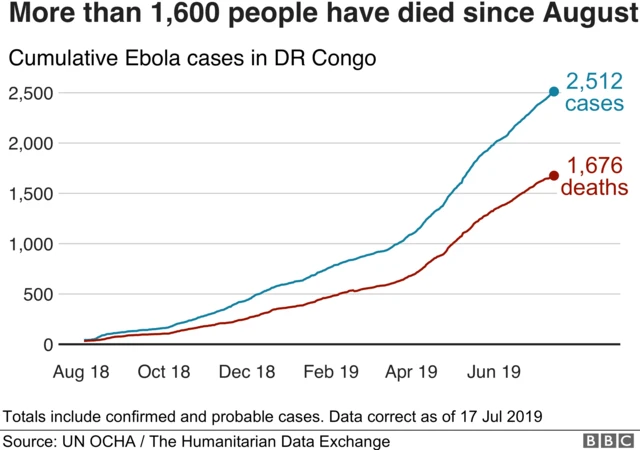
The World Health Organization (WHO) has indicated that the true scale of the ongoing Ebola epidemic in the Democratic Republic of the Congo (DRC) may be significantly larger than current official counts suggest, with estimates indicating the actual number of cases could be two to four times higher than reported. As of recent updates, the official death toll has surpassed 719, marking a severe escalation in one of the most challenging health crises in the region’s history, according to official data provided by the World Health Organization.
As a physician, I have followed the progression of this outbreak closely. The challenge in tracking this virus lies not just in its virulence, but in the volatile environment where it has emerged. The virus has now spread to two additional provinces, complicating containment efforts and increasing the strain on medical teams working on the ground.
The Current Scale of the Outbreak
The official count of 719 deaths represents a significant threshold in this epidemic. However, public health experts emphasize that these numbers reflect only the cases that have been laboratory-confirmed or officially registered. The, “two to four times larger” estimate accounts for suspected cases and deaths that have occurred in remote communities without official medical oversight.
The geographic expansion into two new provinces has further complicated the logistics of the response. Health authorities are now managing a wider perimeter, which requires additional resources and personnel.
Clinical Trials and Treatment Innovation
Amidst the rising death toll, medical researchers are accelerating the testing of experimental treatments. Physicians and aid organizations are currently administering various investigational medicines to patients in an effort to reduce the high mortality rate associated with this specific strain of the virus.
The testing process is rigorous, aiming to identify which therapies are most effective at different stages of the disease. While these trials offer a glimmer of hope, they are being conducted under extreme pressure. The safety of healthcare workers remains a paramount concern; the recent infection of a second American aid worker highlights the persistent risk faced by those on the front lines, reinforcing the necessity for strict adherence to biosafety protocols in all treatment centers.
Public Health and Future Outlooks
The international community, led by the WHO and local health ministries, continues to refine its strategy to address the gaps in reporting and the geographic spread of the virus. The focus remains on community engagement—building trust with local populations to ensure that symptoms are reported early and that burials are conducted in a safe, culturally appropriate manner. Public health policy during such outbreaks relies heavily on this intersection of clinical medicine and social science.
For those monitoring the situation, the next critical checkpoint will be the release of updated surveillance data from the WHO, which is expected to provide more clarity on whether the expansion into new provinces has been contained. As we look ahead, the priority remains the stabilization of the affected areas and the continued, transparent communication of risk and progress to the public. If you have questions regarding the response or want to stay informed, I encourage you to consult the WHO Regional Office for Africa’s dedicated Ebola portal for verified, daily updates.
The fight against this epidemic is far from over, and the data suggests that the burden of the disease is heavier than the official tally shows. We will continue to monitor the situation as new reports emerge. Please feel free to share your thoughts or questions in the comments section below.