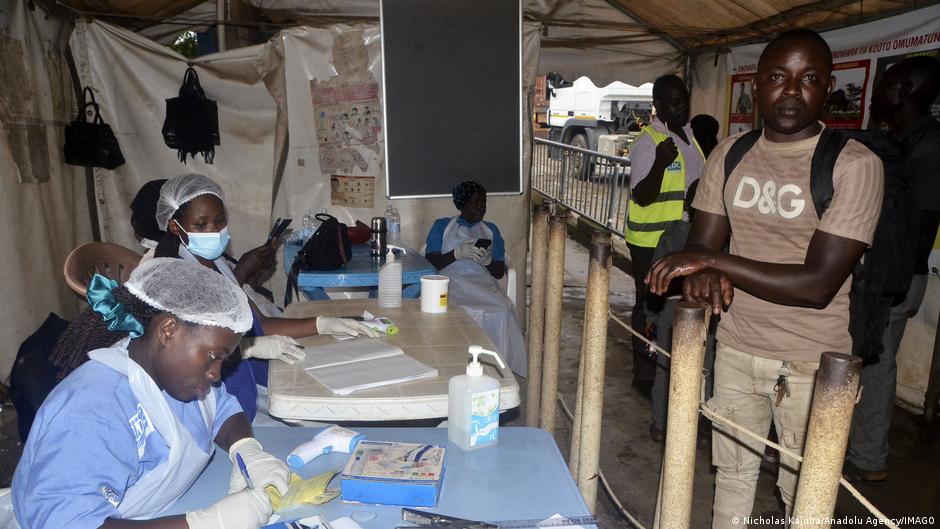
Sofia, Bulgaria — May 26, 2026 — The World Health Organization (WHO) has issued its starkest warning yet about the escalating Ebola outbreak in the Democratic Republic of Congo (DRC), declaring the situation “extremely severe” and “difficult to contain.” With confirmed cases surpassing 300 and fatalities climbing daily, health officials are racing against time to prevent the virus from spreading beyond the country’s borders. The outbreak, centered in North Kivu province, has already claimed dozens of lives and threatens to overwhelm already strained healthcare systems in one of the world’s most fragile regions.
In a rare move signaling the gravity of the crisis, WHO Director-General Dr. Tedros Adhanom Ghebreyesus is expected to travel to the DRC within the next 48 hours to assess the situation firsthand. His visit comes as international health agencies scramble to deploy additional resources, including accelerated vaccination campaigns and medical personnel, to stem the tide of infections. The outbreak’s rapid progression—fueled by armed conflict, misinformation, and logistical challenges—has raised alarms about the potential for regional transmission, particularly in neighboring countries with porous borders.
This is not the first time the DRC has faced an Ebola crisis, but the current strain—identified as Sudan ebolavirus—presents unique challenges. Unlike the more familiar Zaire ebolavirus, for which experimental vaccines have shown promise, there is no approved vaccine for the Sudan strain, complicating containment efforts. Meanwhile, local communities grappling with superstition and distrust of health workers have further hindered response teams’ ability to trace contacts and administer treatments. The situation underscores the fragile balance between scientific intervention and cultural realities in global health emergencies.
Why This Outbreak Demands Urgent Global Attention
The current Ebola outbreak in the DRC is unfolding against a backdrop of compounding crises. North Kivu, where the majority of cases have been reported, remains one of the most volatile regions in the world, plagued by decades of conflict between government forces and armed groups. This instability has disrupted critical infrastructure, including roads and communication networks, delaying the delivery of medical supplies and personnel to affected areas.
According to the latest WHO situation report released May 24, 2026, the outbreak has recorded 312 confirmed cases and 187 deaths as of May 25, with a case fatality rate exceeding 60%. The virus’s rapid transmission—particularly in densely populated urban centers like Butembo—has outpaced initial response efforts. “The scale and speed of this outbreak are unprecedented for Sudan ebolavirus,” said Dr. Matshidiso Moeti, WHO Regional Director for Africa, in a statement. “We are seeing transmission chains that are longer and more complex than in previous outbreaks.”
Adding to the challenge is the lack of an approved vaccine for the Sudan strain, which accounts for roughly 20% of all Ebola cases historically. While the rVSV-ZEBOV vaccine has proven effective against the Zaire strain—used extensively during the 2014–2016 West Africa outbreak—it offers no protection against Sudan ebolavirus. Researchers are urgently testing repurposed therapies, including monoclonal antibodies and convalescent plasma, but these remain experimental and in limited supply.
Misinformation and Cultural Barriers Complicate Response
Local health officials have reported that superstitious beliefs about the cause of Ebola—often attributed to witchcraft or divine punishment—are fueling resistance to medical interventions. In some communities, families have refused to hand over the bodies of deceased loved ones for safe burial, a critical step in breaking transmission chains. “We’re dealing with a perfect storm,” explained a senior WHO epidemiologist on condition of anonymity. “Distrust of authorities, armed groups blocking access to villages, and now this deadly strain with no vaccine. It’s a recipe for disaster.”
Efforts to combat misinformation have included partnerships with local religious leaders and traditional healers, who are being trained to disseminate accurate information about Ebola’s transmission, and prevention. However, progress has been slow, with some communities reportedly abandoning treatment centers out of fear of being “cursed.” The WHO has emphasized that Ebola spreads through direct contact with bodily fluids, not through air, food, or water—knowledge that remains elusive in affected areas.
Global Health Community Mobilizes Resources
In response to the escalating crisis, the WHO has activated its highest-level emergency response, declaring the outbreak a Public Health Emergency of International Concern (PHEIC)—a designation reserved for the most severe global health threats. The move triggers additional funding mechanisms, including a $50 million appeal launched by the WHO to support vaccination efforts, contact tracing, and infrastructure repairs in the DRC.

International partners, including the United States Centers for Disease Control and Prevention (CDC), the European Commission’s humanitarian aid arm (ECHO), and Médecins Sans Frontières (MSF), have pledged increased support. MSF, which has been on the ground since the outbreak’s detection in March, has already treated over 200 suspected cases and is expanding its facilities in Butembo and Beni. “We’re at a critical juncture,” said MSF’s emergency coordinator for the DRC. “If we don’t get more resources and cooperation from local leaders, this outbreak will spiral out of control.”
The CDC has deployed a team of 15 epidemiologists and lab technicians to assist with diagnostic testing and training local health workers. Meanwhile, the European Union has approved emergency funding to fast-track the development of a Sudan ebolavirus vaccine candidate, though clinical trials are not expected to yield results before late 2026.
Regional Risks: Could Ebola Cross Borders?
One of the greatest concerns among health experts is the potential for Ebola to spread beyond the DRC’s borders. The country shares porous land boundaries with Uganda, South Sudan, Rwanda, and Burundi—all of which have limited healthcare capacities. “The risk of regional transmission is real,” warned Dr. John Nkengasong, Director of the Africa Centers for Disease Control and Prevention (Africa CDC). “We’ve seen this movie before with the 2018–2020 outbreaks in Congo and Uganda. Containment requires more than just medical tools; it requires political will and regional cooperation.”
Uganda, which has experienced Ebola outbreaks in the past, has already heightened surveillance at border crossings and deployed rapid response teams. South Sudan, meanwhile, has reported a surge in suspected cases near its border with the DRC, though no confirmed infections have been verified as of this writing. The WHO has urged neighboring countries to enhance cross-border surveillance, including active screening of travelers and monitoring of animal movements, as bats—believed to be the natural reservoir for Ebola—are known to migrate across these regions.
What Happens Next: The Road Ahead
With Dr. Tedros’s visit imminent, the next 72 hours will be pivotal in determining the trajectory of the response. Key priorities include:
- Accelerated vaccination trials: Experimental therapies for the Sudan strain are being fast-tracked, with preliminary data expected by June 2026.
- Enhanced security for health workers: Armed escorts are being deployed to protect medical teams in high-risk areas.
- Community engagement campaigns: Local leaders are being trained to counter misinformation and encourage safe burial practices.
- Regional coordination: A summit of African health ministers is planned for June 1 to align response strategies.
The WHO has also called for global solidarity, urging countries with Ebola experience—such as Guinea, Liberia, and Sierra Leone—to share lessons learned from past outbreaks. “This is a test of our collective preparedness,” said Dr. Tedros in a pre-visit statement. “The world must act now before this outbreak becomes a catastrophe.”
Key Takeaways: What You Need to Know
- Strain matters: The current outbreak involves Sudan ebolavirus, for which there is no approved vaccine—unlike the Zaire strain targeted by existing vaccines.
- Fatality rate: Exceeds 60%, with 187 deaths confirmed as of May 25, 2026 (WHO mortality data).
- Transmission risks: Spreads via bodily fluids; not airborne. Safe burials are critical to stopping chains of infection.
- Regional threat: Neighboring Uganda and South Sudan are on high alert due to porous borders and limited healthcare infrastructure.
- Response challenges: Armed conflict, misinformation, and logistical hurdles are delaying containment efforts.
- Global funding gap: The WHO’s $50 million appeal is only 30% funded (donate here).
How You Can Help: Resources and Actions
If you’re looking to support the response or stay informed, here are verified channels:

- Official updates: Follow the WHO’s Ebola situation room here for real-time case counts and advisories.
- Donate: Contribute to the WHO’s emergency fund via their secure portal or support MSF’s DRC operations here.
- Travelers: Check the CDC’s level 4 travel health notice for DRC before planning trips.
- Researchers: Access preprints on Sudan ebolavirus therapies via medRxiv (non-peer-reviewed but rapidly shared data).
The next critical checkpoint will be the June 1 African Health Ministers’ Summit, where coordinated strategies for regional containment will be finalized. In the meantime, the WHO has urged the international community to treat this outbreak with the same urgency as COVID-19 or polio eradication efforts. “The window to act is closing,” warned Dr. Moeti. “We cannot afford to repeat the mistakes of the past.”
This is a moment that demands both scientific precision and human compassion. As the world watches, the response in the DRC will set the standard for how we confront future pandemics in conflict zones. Your attention—and action—could make the difference.
How do you think the global community should respond to this crisis? Share your thoughts in the comments below or on our social channels. For real-time updates, follow @WHO or @CDCemergency.
Worth a look