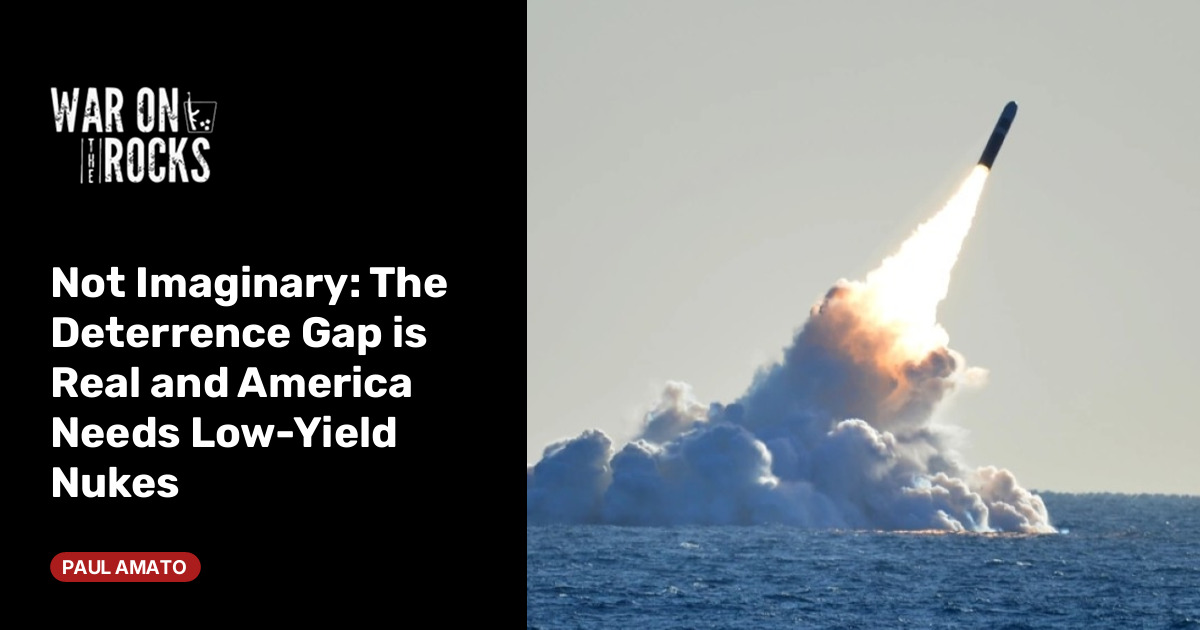
The United States maintains a strategic debate regarding the necessity of low-yield nuclear weapons to address potential gaps in deterrence, specifically concerning adversaries who may believe they could employ nuclear weapons in limited ways to escalate their way out of failed or failing conventional conflict. This policy discussion centers on the 2018 Nuclear Posture Review, which identified a need for supplemental low-yield nuclear capabilities to augment the U.S. nuclear arsenal.
I have tracked these developments through various shifts in international security policy. The core of the argument for low-yield systems rests on the theory that an adversary might perceive a “deterrence gap,” believing that a limited nuclear use would leave the United States with an unpalatable choice between an all-out strategic response or no nuclear response at all. By introducing lower-yield options, proponents argue that the U.S. can better signal that nuclear escalation will not yield a favorable outcome for any aggressor.
The Evolution of Modern Deterrence Policy
The 2018 Nuclear Posture Review (NPR) represented a formal shift in American defense planning. The review identified a need for supplemental low-yield nuclear capabilities to augment the U.S. nuclear arsenal. This was presented as an effort to raise the nuclear threshold of adversaries who may believe they could employ nuclear weapons in limited ways to escalate their way out of failed or failing conventional conflict.
The introduction of low-yield nuclear capabilities was a material outcome of this policy shift. This development sparked significant international discourse, with critics raising concerns about the potential for lowering the threshold for nuclear use, while supporters maintain that the capability is essential for ensuring that adversaries do not underestimate U.S. resolve.
Strategic Risks and the Deterrence Gap
The concept of a “deterrence gap” remains a polarizing subject within the global security community. Proponents of low-yield capabilities, such as those articulated in the 2018 NPR, suggest that the absence of such weapons creates a vulnerability. If an adversary believes they can employ a tactical nuclear weapon without triggering a massive strategic retaliation, the risk of miscalculation increases. By providing the President with a more tailored range of options, the U.S. aims to ensure that no conflict can be “won” through limited nuclear employment.
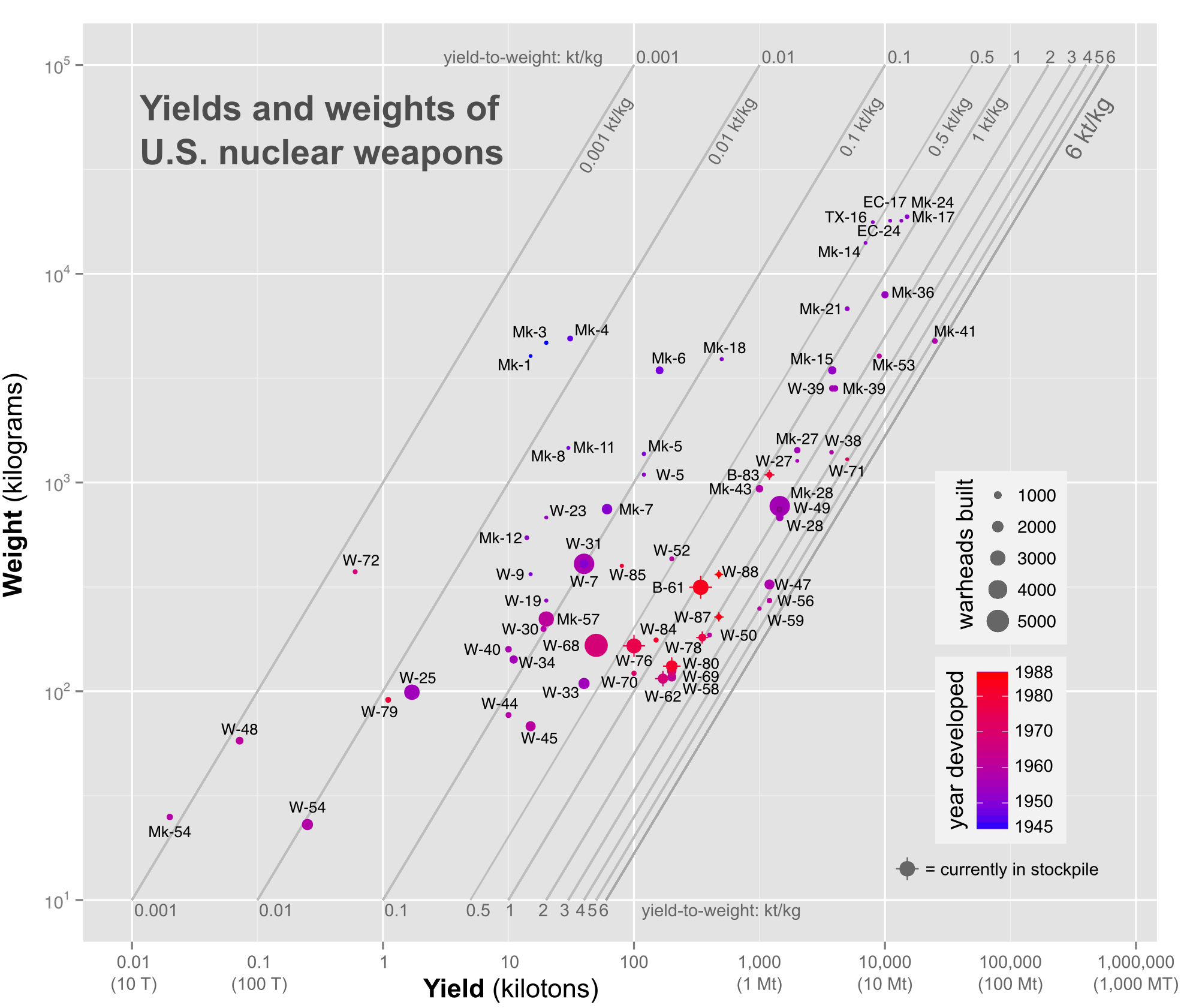
Conversely, various non-proliferation experts have argued that the distinction between low-yield and high-yield weapons is illusory in practice. The concern is that an adversary, observing a limited nuclear strike, might be unable to distinguish the yield of an incoming missile, potentially leading them to assume a full-scale attack is underway and prompting a preemptive, large-scale nuclear response.
Comparing Perspectives on Nuclear Flexibility
The debate often pits the need for military flexibility against the long-term goal of reducing global reliance on nuclear weapons. The following table highlights the contrasting views regarding the utility of low-yield nuclear systems.
| Perspective | Core Argument | Primary Concern |
|---|---|---|
| Advocates (NPR 2018) | Enhances deterrence by closing a perceived gap. | Adversaries may miscalculate U.S. resolve. |
| Critics | Lowers the threshold for nuclear conflict. | Increases risk of accidental escalation. |
This divergence in strategy underscores the complexity of modern geopolitics.
What Happens Next in Nuclear Policy
The future of U.S. nuclear policy remains a subject of ongoing review, influenced by shifting geopolitical alliances and technological advancements in missile defense and delivery systems. As international tensions fluctuate, the discussion regarding the balance between deterrence and proliferation will likely remain a central pillar of global security summits. We welcome your perspectives on these developments in the comments section below.
Keep reading