
The intersection of art and political history often sparks intense debate, but few songs carry as much weight in Italy as Bella Ciao
. On May 1, 2026, the Sicilian singer Delia found herself at the center of a national firestorm after performing a modified version of the iconic anthem during the Concertone in Rome’s Piazza San Giovanni in Laterano.
The controversy erupted when the artist chose to alter the lyrics of the song, which serves as the primary symbol of the Italian Resistance against fascism. Specifically, Delia replaced the word partigiano
(partisan) with essere umano
(human being). The performance, broadcast live on Rai 3, immediately triggered a wave of criticism across social media and traditional press outlets, with critics accusing the singer of erasing the specific historical identity of the Resistance in favor of a generalized, politically correct
interpretation.
For many, the change was seen as a dilution of the song’s ancestral power. Bella Ciao
is not merely a song of freedom in a broad sense, but a specific tribute to the fighters who risked their lives to liberate Italy during World War II. By removing the reference to the partisan, detractors argue that the song loses its historical anchor and its revolutionary purpose.
A Choice to Expand the Message
Following the backlash, Delia defended her creative decision, framing the modification as an attempt to make the song more inclusive and universal. The singer argued that the essence of the track remains rooted in the struggle for liberty, regardless of the specific terminology used.
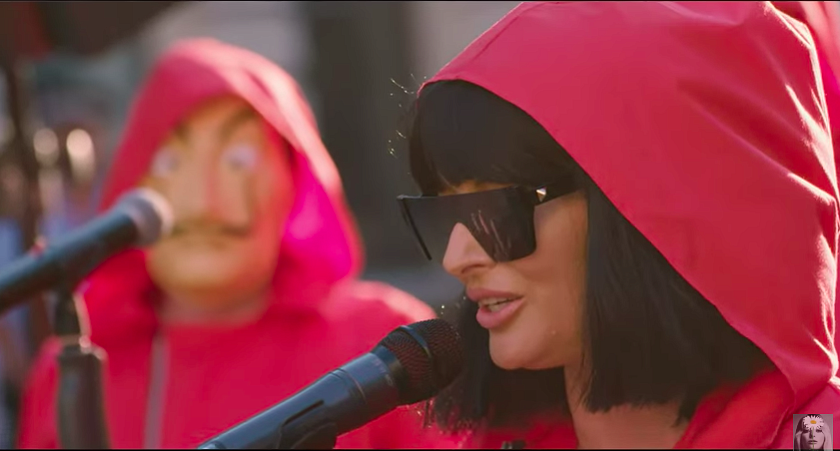
“Penso che fare questo cambio non sia non prendere una posizione, bensì allargare un po’. È stata una mia scelta” Delia, singer
Speaking after her performance, the artist emphasized that the song’s core message transcends a single historical era, suggesting that the fight for dignity is an ongoing global struggle. She stated that Bella Ciao
is a song that speaks of freedom and that it must continue to be sung as long as You’ll see those who claim the right to decide who lives and who dies.
The Concertone, an annual event promoted by the major trade unions CGIL, CISL, and UIL, typically serves as a gathering for labor rights and social justice. The choice to shift from a specific political identity (the partisan) to a universal identity (the human being) was viewed by some as a modern evolution of the anthem and by others as a betrayal of the historical memory of the 1940s.
The Historical Weight of ‘Bella Ciao’
To understand why the substitution of a single word caused such a reaction, one must look at the cultural significance of the term partigiano
. In the Italian consciousness, the partisans were not just soldiers, but civilians—men and women from all walks of life—who formed a clandestine army to fight the Nazi-Fascist occupation.
The song’s global popularity surged in recent years, partly due to its inclusion in popular culture and streaming series, which transformed it from a localized political anthem into a global hymn for oppression and liberation. However, within Italy, the song remains a sacred link to the Resistenza (Resistance). The accusation that Delia cancelled
the partisan is a reflection of a deeper cultural anxiety regarding the erasure of historical specifics in the age of globalized pop music.
Key Points of the Controversy
- The Modification: The word
partigiano
(partisan) was replaced withessere umano
(human being). - The Setting: The performance took place on May 1, 2026, at the Concertone in Piazza San Giovanni, Rome.
- The Artist’s Stance: Delia claimed the change was intended to
expand
the song’s reach and honor all who defend dignity and freedom. - The Public Reaction: A significant portion of the audience and social media users viewed the change as a loss of historical identity and an example of excessive political correctness.
The Broader Impact on Pop Culture and Memory
This incident highlights a recurring tension in contemporary entertainment: the balance between a performer’s right to reinterpret a work and the public’s expectation of historical fidelity. When a song becomes a symbol of national identity, it often ceases to belong solely to the artist and becomes a piece of collective heritage.
Critics of the performance argued that by turning the partisan
into a human being
, the song moves from a call to active, organized resistance to a vague sentiment of humanitarianism. This distinction is crucial for those who believe that freedom is won through specific political action and sacrifice, rather than general goodwill.
Conversely, supporters of the artist suggest that the song’s ability to adapt is exactly what has allowed it to survive for decades. By updating the lyrics, they argue, the song can resonate with new generations facing different forms of oppression—such as systemic inequality or human rights abuses—without requiring them to identify specifically with the mid-20th-century Italian military context.
As the debate continues to unfold on platforms like X (formerly Twitter) and Instagram, it underscores the power of Bella Ciao
to still provoke passion and disagreement in 2026. The song remains a mirror of Italy’s ongoing conversation about its past and its aspirations for the future.
There are currently no further scheduled performances by Delia that involve modifications to historical anthems, and no official statement has been released by the organizing unions (CGIL, CISL, UIL) regarding the lyrical changes.
World Today Journal encourages our readers to share their thoughts: Is it acceptable for artists to modify historical anthems to make them more inclusive, or should the original lyrics be preserved as a matter of historical record? Let us know in the comments below.