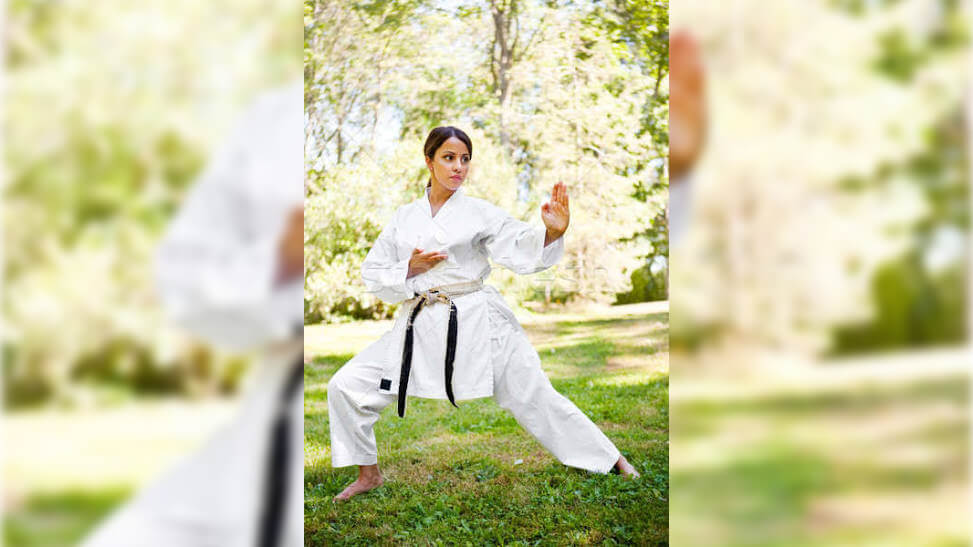
In the pursuit of mastery within the martial arts, consistency in training often outweighs raw natural talent. While athletic giftedness may provide an initial advantage, long-term proficiency in disciplines like karate relies on the cumulative effect of repetitive, disciplined practice known as shugyo. According to the World Karate Federation, the sport’s international governing body, the technical complexity of kata and kumite demands years of neurological and muscular adaptation that cannot be bypassed by aptitude alone.
For practitioners, the distinction between short-term performance and sustainable growth lies in the structure of daily habit. Research into motor learning suggests that the neural pathways required for the explosive speed and precise balance of a karateka are reinforced through high-frequency, low-intensity repetition, a process that favors the persistent student over the sporadic high-performer.
The Science of Motor Learning in Karate
Karate training functions as a form of deliberate practice. Unlike casual exercise, this methodology requires constant attention to form and the correction of minute technical errors. As noted by the National Center for Biotechnology Information, the acquisition of complex motor skills in combat sports is directly correlated with the volume of successful repetitions. When a student practices consistently, they move from conscious control—where every movement is mentally processed—to subconscious execution, commonly referred to as muscle memory.
Talent may assist a student in mimicking a movement correctly on the first attempt, but without the repetition required to solidify that movement, the skill remains fragile. Consistency bridges the gap between understanding a technique and owning it. In the context of the Olympic movement, where karate was introduced as a medal sport during the 2020 Tokyo Games, athletes demonstrated that the path to elite status is marked by years of unbroken training cycles rather than bursts of intense, irregular effort.
Discipline and the Philosophy of Shugyo
The traditional Japanese concept of shugyo—often translated as intense, disciplined practice—is central to the culture of the dojo. It emphasizes that the practice itself is the objective, rather than the acquisition of a belt or a trophy. This philosophy aligns with modern psychological findings on “grit,” a term popularized by researchers like Angela Duckworth, which identifies passion and perseverance toward long-term goals as the primary indicators of success.
In a dojo setting, consistency is institutionalized. Students are expected to attend classes on a set schedule, creating a feedback loop that discourages the peaks and valleys of irregular motivation. This environment provides the external accountability necessary to maintain consistency when internal motivation inevitably fluctuates. By showing up even on days when progress feels stagnant, the practitioner builds the psychological resilience that is as vital to the sport as physical conditioning.
Physiological Adaptations and Injury Prevention
From a physiological perspective, consistency is the primary safeguard against injury. Karate involves high-velocity movements and significant stress on joints and connective tissues. According to the British Journal of Sports Medicine, musculoskeletal adaptations—such as increased bone density and tendon strength—are cumulative results of gradual, sustained loading. When an athlete relies on “weekend warrior” training patterns, the body is subjected to intense stress without the necessary foundation, significantly increasing the risk of acute injury.
Furthermore, consistent training allows for the gradual refinement of biomechanics. A student who trains three times a week for an hour will generally progress faster and with fewer physical complications than one who attempts a single, six-hour session once a week. The frequency of the exposure allows the nervous system to recover and reorganize, facilitating the “supercompensation” effect where the body adapts to become stronger and more efficient than it was before the training stimulus.
The Path to Technical Mastery
Technical mastery in karate is not a destination but a continuous refinement of basic principles. Even high-ranking black belts return to the fundamentals of kihon (basics) to maintain their edge. This focus on the foundational elements is only possible through a commitment to daily or near-daily practice. When talent is the only factor, a practitioner may hit a performance plateau once the initial learning curve flattens. Consistency, however, provides a mechanism for breaking through these plateaus.
For those looking to deepen their practice, the World Karate Federation education portal offers resources on how to structure training to maximize technical development. Whether for sport competition or personal development, the takeaway remains the same: the most advanced practitioners are rarely the most naturally gifted, but rather those who have remained the most consistent in their commitment to the dojo floor.
The next major international event for the sport is the WKF World Senior Championships, where elite athletes will demonstrate the culmination of years of consistent, daily training. For those interested in tracking the sport’s development or finding authorized training centers, the federation provides regular updates on its official website. We encourage readers to share their own experiences with training consistency in the comments below.
Related reading