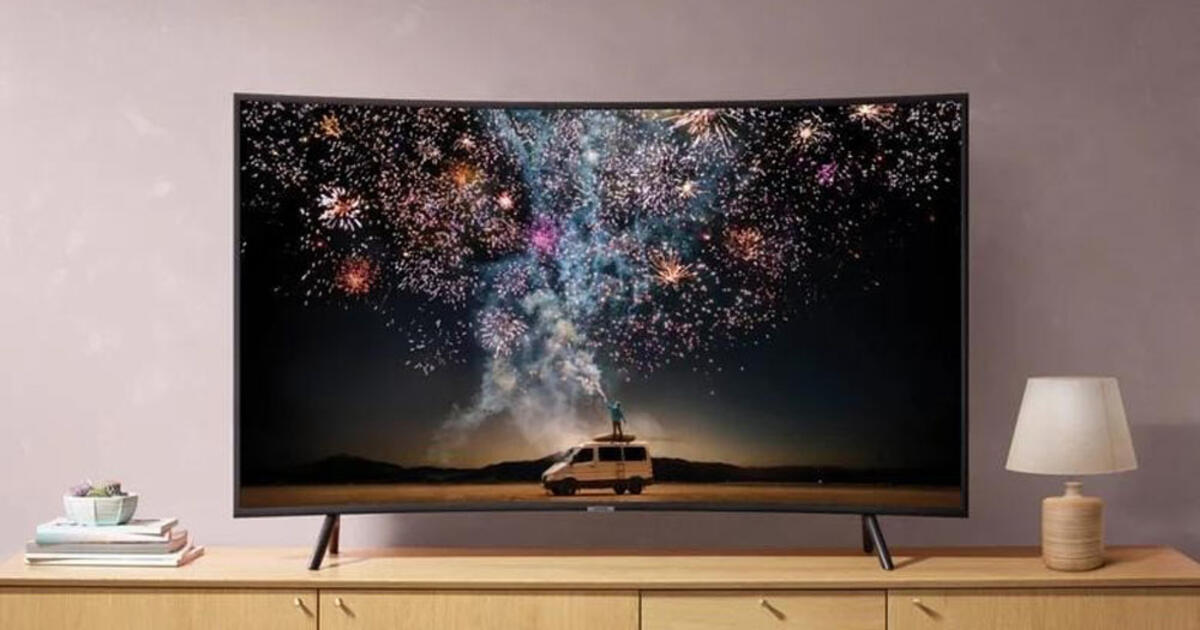
For a brief window in the mid-2010s, the home entertainment landscape was dominated by a bold architectural shift: the curved screen. Marketed as a revolutionary leap in immersion, curved televisions were positioned as the future of the living room, promising a more natural viewing experience that mirrored the human eye’s field of vision. However, as consumers and critics began to scrutinize the actual utility of the design, the momentum shifted.
The rise and fall of curved televisions serves as a case study in the tension between aesthetic innovation and practical functionality. While manufacturers pushed the “curved” narrative as a way to enhance the viewing angle and create a more cinematic atmosphere, the reality of the user experience often told a different story. Today, the reasons why curved televisions disappeared from the market are rooted in a combination of optical distortions, limited viewing angles, and a lack of genuine consumer demand.
The push for curved displays reached a peak around 2015, with major players like Samsung aggressively integrating the feature into their high-end lineups. For instance, the 9000-series Samsung SUHD televisions were released exclusively with curved screens, leaving consumers without a flat-panel alternative in that specific series technologijos.lt. This strategic pivot was intended to define a new era of hardware, yet it ultimately highlighted the gap between a manufacturer’s “know-how” and the actual needs of the global audience.
The Illusion of Immersion and Optical Reality
The primary selling point for curved televisions was the promise of a “wraparound” experience. Proponents argued that a curved screen allows for a wider field of view and reduces the distance between the viewer’s eyes and the edges of the screen, theoretically creating a more immersive environment. Some retailers continued to market these sets as providing an impressive viewing experience that allows the user to “dive into the image” Varle.lt.

However, this perceived benefit came with a significant trade-off: the distortion of the original content. Most films, television shows, and sporting events are produced for flat screens. When this content is stretched across a curved panel, it can distort the director’s original vision, creating an image that is not a true representation of the source material technologijos.lt. Instead of enhancing the image, the curvature often introduced visual artifacts that were distracting rather than immersive.
the “sweet spot” for viewing a curved TV is incredibly narrow. While a flat-screen television can be viewed comfortably from various points in a room, a curved screen is designed for a single, central viewing position. If a viewer moves to the side, the curvature creates glare and distorted perspectives, making the television less practical for social gatherings or large living rooms.
Market Fatigue and the ‘3D Revolution’ Parallel
Industry analysts have noted that the marketing of curved screens closely mirrored the trajectory of the 3D television trend. In both instances, manufacturers heavily promoted a specific hardware feature as a “revolution” that would fundamentally change how people consumed media. In the case of 3D, the requirement for cumbersome glasses and the lack of compatible content led to a rapid decline in interest. Curved screens suffered a similar fate, where the novelty of the shape did not provide enough tangible value to justify the cost technologijos.lt.
By the time 4K (Ultra HD) resolution became the industry standard, the focus shifted from the shape of the screen to the quality of the image. While 4K represented a genuine evolution in resolution and clarity, the curved screen remained a niche aesthetic choice. As consumers prioritized picture quality, HDR (High Dynamic Range), and smart integration over physical curvature, manufacturers began to pivot back to flat panels to meet actual market demand.
Key Factors Contributing to the Decline
- Content Distortion: The curvature often warped the intended visual composition of the media.
- Restrictive Viewing Angles: The immersive effect was only available to those sitting directly in front of the screen.
- Aesthetic Misalignment: Many users found that curved screens did not fit well against flat walls, creating an awkward gap.
- Cost vs. Value: The premium price associated with curved technology did not translate to a proportional increase in viewing quality.
The Shift Toward OLED and Flat-Panel Dominance
As the industry moved away from the curved experiment, the focus returned to panel technology. The emergence of OLED (Organic Light Emitting Diode) and advanced LED technologies provided the “black levels” and contrast that consumers actually desired, regardless of the screen’s shape. The market realized that a perfectly flat, high-contrast screen is more versatile and accurate for the vast majority of home environments.
The legacy of the curved TV has not vanished entirely, but it has migrated. While it failed to capture the living room, the curvature found a permanent home in the gaming monitor market. In a desktop setup, the user is seated much closer to the screen, and the narrow viewing angle is not a drawback but a benefit, as it helps fill the user’s peripheral vision without requiring a massive screen size.
the reasons why curved televisions disappeared from the mainstream market highlight a fundamental rule of consumer electronics: novelty cannot replace utility. When a feature is perceived as a marketing gimmick rather than a functional improvement, the market inevitably corrects itself in favor of practicality and accuracy.
For those tracking the evolution of home cinema, the current trend is moving toward larger, flat-panel displays with higher refresh rates and Mini-LED backlighting. There are no currently scheduled industry-wide returns to curved living room televisions, as the focus remains on refining resolution and color accuracy.
We invite our readers to share their experiences in the comments: Did you ever own a curved television, and did it live up to the hype? Share this analysis with your network to discuss the evolution of home entertainment technology.
Related reading