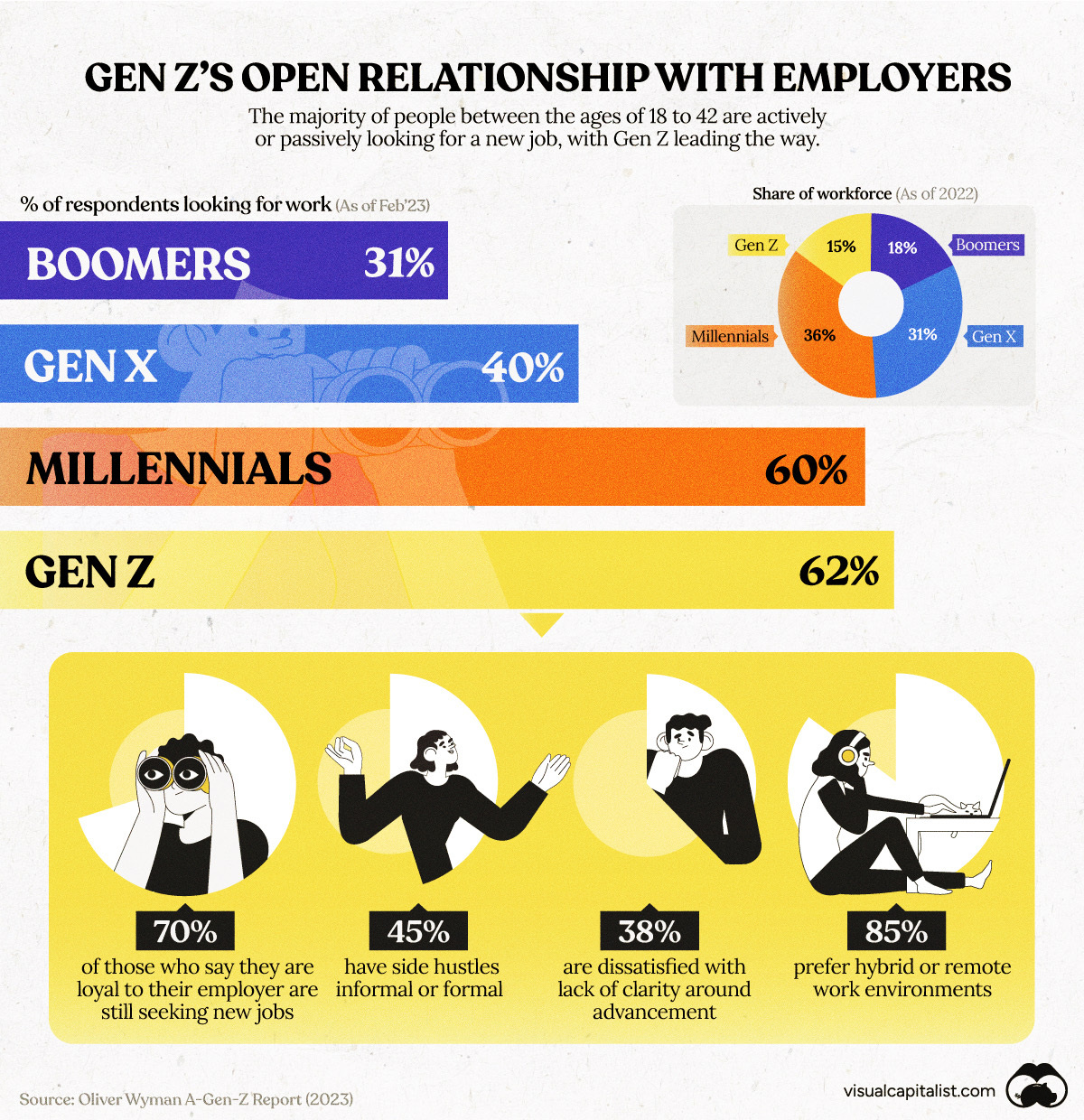
The traditional contract between employer and employee is undergoing a fundamental transformation, driven largely by the entry of Generation Z into the global workforce. As organizations worldwide grapple with shifting workplace expectations, the narrative of declining employee loyalty has moved from a boardroom concern to a central theme in modern economic discourse. The question is no longer merely about retention; it is about understanding the systemic misalignment between historical corporate structures and the values of a generation that prioritizes transparency, mental health, and purposeful work over traditional tenure.
In my eighteen years covering global markets, I have observed that the phenomenon of Gen Z workplace loyalty is frequently mischaracterized as a lack of commitment. In reality, data suggests it is a rational response to a rapidly changing economic environment. For employers, the challenge is to move beyond the outdated notion that a paycheck alone secures long-term dedication. Today’s talent expects a dynamic value proposition, and the firms that fail to adapt are finding that their recruitment and retention strategies are increasingly ineffective against a workforce that is well-informed, highly mobile, and unwilling to settle for stagnant professional environments.
According to the 2024 Deloitte Gen Z and Millennial Survey, work-life balance remains the top priority for young professionals, with many citing the desire for flexible working arrangements as a primary factor in their decision to remain with—or leave—an organization. When we examine the economic policy shifts since the pandemic, the labor market has moved toward a model where power has shifted toward the employee, particularly in sectors where technical and digital skills are at a premium.
The Myth of the ‘Disloyal’ Employee
To label Generation Z as inherently disloyal is a failure of analytical rigor. Economic indicators show that the average tenure across all age groups has been shifting in response to inflation, housing costs, and the gig economy’s expansion. Research from the U.S. Bureau of Labor Statistics, which tracks median years of tenure with current employers, highlights that economic uncertainty often drives workers to seek better conditions elsewhere. For younger workers, changing jobs is often the most effective strategy to keep pace with salary growth in an inflationary environment.
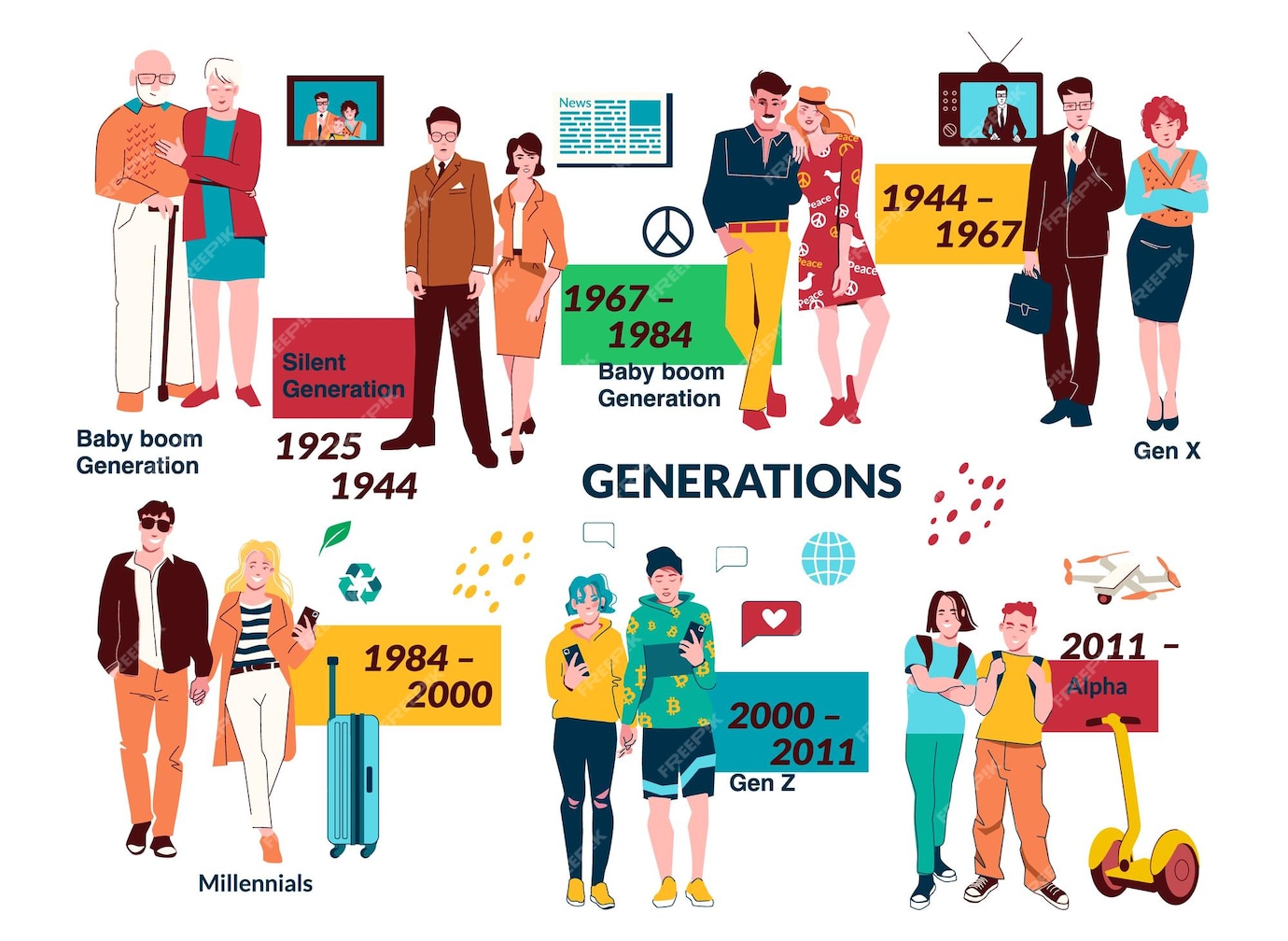
the “bepalizni” or “tricking” dynamic described in various European labor reports reflects a growing skepticism toward corporate branding. Gen Z has grown up in an era of unprecedented access to information. They are adept at researching company culture through platforms like Glassdoor, LinkedIn, and internal social networks, making it nearly impossible for firms to market a workplace culture that does not exist in practice. Authenticity has become the primary currency of recruitment.
Drivers of the Generational Shift
Several structural factors are influencing this trend. First, the erosion of the “pension-for-life” model means that the social contract that once guaranteed loyalty in exchange for stability has largely vanished. In its place, we see the rise of the “career portfolio,” where individuals view their professional journey as a series of skill-building projects rather than a linear climb up a single corporate ladder.
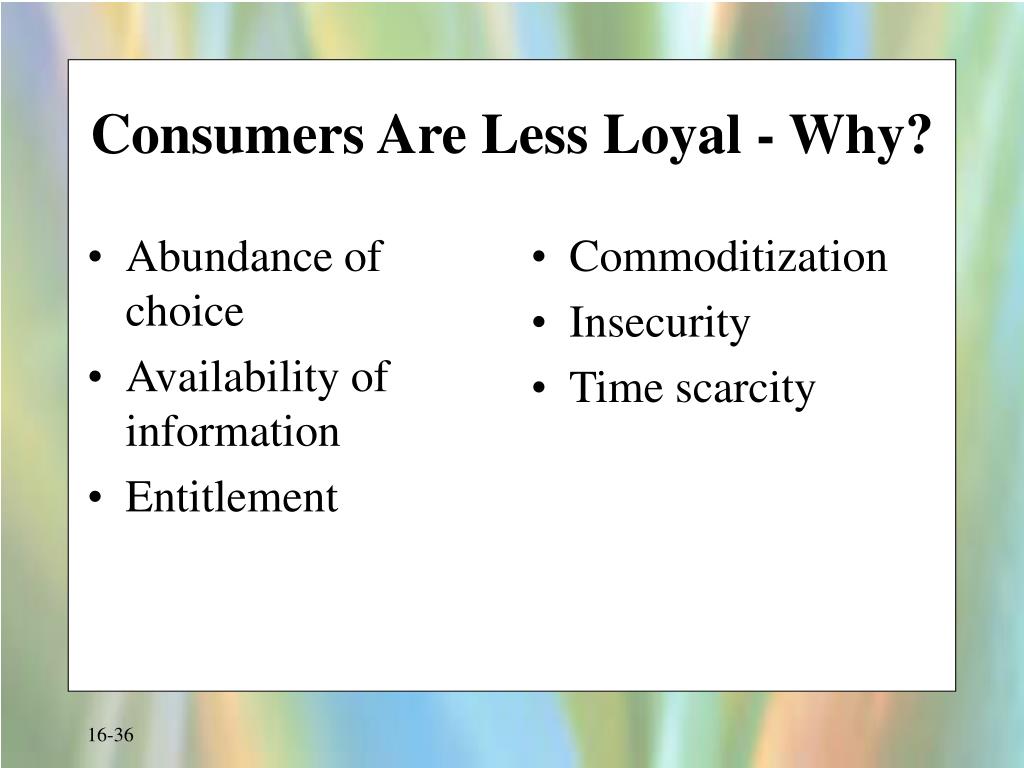
The World Economic Forum’s Future of Jobs Report 2023 emphasizes that agility and continuous upskilling are the most critical assets for the modern workforce. Gen Z, being the first truly digital-native cohort, understands that their market value is tied to their ability to adapt to new technologies. If an employer fails to provide adequate professional development, the employee is incentivized to look elsewhere to maintain their market competitiveness.
Key Factors Influencing Retention
- Purpose-Driven Work: A desire to work for organizations that align with their ethical and environmental values.
- Flexibility as a Standard: Remote and hybrid work models are no longer considered “perks” but essential requirements.
- Mental Health Awareness: A demand for workplace environments that actively support employee well-being rather than merely paying lip service to it.
- Transparency: Open communication regarding salary bands, promotion paths, and corporate strategy.
Responsibility: Who Owns the Problem?
The responsibility for this shift in loyalty does not lie with the employees, nor can it be blamed solely on the employers. It is a shared outcome of a changing global economy. However, the burden of adaptation rests firmly with organizational leadership. Companies that attempt to force a return to pre-2020 management styles are finding that they are losing the “war for talent.”
Leadership must acknowledge that the traditional hierarchy is being challenged by a more horizontal, collaborative structure. As noted in recent analysis from the Harvard Business Review, the managers who succeed in this environment are those who act as coaches and mentors rather than supervisors. This requires a significant investment in management training and a willingness to relinquish some degree of traditional control.
Looking Ahead: The Future of the Workplace
What happens next in the labor market will likely be defined by a “flight to quality.” As automation and artificial intelligence reshape job roles, the employees who possess high-level analytical and interpersonal skills will continue to have the leverage to choose their employers. Organizations will need to move toward a more human-centric model of management that treats retention as a continuous engagement process rather than a static goal.
The next major checkpoint for businesses will be the upcoming fiscal year-end reporting cycles, where companies will be forced to disclose more detailed human capital metrics, including turnover rates and employee engagement scores, as part of broader ESG (Environmental, Social, and Governance) reporting requirements. Investors are increasingly looking at these figures as indicators of long-term operational health.
the era of the “blindly loyal” employee is over. In its place is an era of the “engaged partner.” Businesses that recognize this shift and invest in genuine, transparent relationships with their staff will not only retain their talent but will likely outpace their competitors in innovation and market resilience.
What has been your experience with managing or working within a multi-generational team? Share your thoughts in the comments section below or join the conversation on our social channels.
Keep reading