
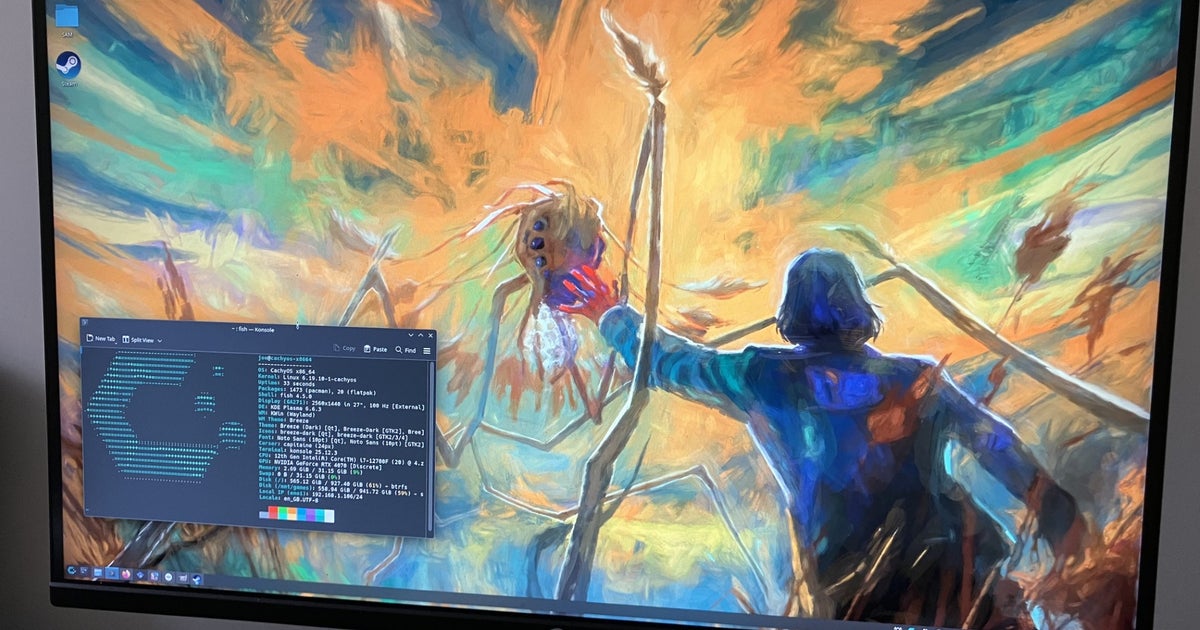
For decades, the prevailing wisdom for any serious PC gamer was simple: if you want the best performance and the least amount of friction, you run Windows. The ecosystem was designed around Microsoft’s operating system, leaving Linux enthusiasts to struggle with compatibility layers and complex installations. However, the landscape is shifting rapidly and Linux is better than ever for PC gaming, offering a viable and often superior alternative to the traditional Windows environment.
The catalyst for this change is largely attributed to the work Valve began with Proton in 2018, a compatibility layer that removes the necessity for developers to create native Linux versions of their games via XDA Developers. This technological leap has transformed Linux gaming from a niche hobby into a legitimate powerhouse, paving the way for specialized distributions like CachyOS to challenge the dominance of Windows 11.
CachyOS is now positioning itself not just as a compatible alternative, but as a performance leader. By optimizing the kernel and system settings for gaming, it is beginning to offer in-game experiences that are similar to, and in some cases superior to, those found on Microsoft’s OS. This shift is prompting users to move away from Windows 11, citing issues such as unexplained system slowdowns and the implementation of forced AI features.
Performance Showdowns: CachyOS vs. Windows 11
The transition from Windows to Linux is no longer just about philosophy or open-source ethics; it is increasingly about raw frames per second (FPS). Recent head-to-head comparisons show that CachyOS can outperform Windows 11 in several modern titles, effectively dethroning the OS that owned the gaming space for decades.
In a direct performance test featuring Crimson Desert, Windows 11 averaged 59 FPS, while CachyOS pushed ahead with an average of 63 FPS according to TechSpot. The performance gap became even more pronounced in Warhammer 40,000: Space Marine 2, where Windows 11 reached 68 FPS, but CachyOS climbed significantly higher to 81 FPS.
These numbers represent a fundamental shift in the gaming hierarchy. For years, the “Linux tax”—the loss of performance incurred by using compatibility layers—was a deterrent. Now, the optimization provided by CachyOS and the efficiency of Proton have turned that tax into a dividend, providing a smoother and more responsive gaming experience than the native Windows environment.
Why the Shift is Happening Now
The accessibility of Linux has improved dramatically. While switching used to require deep technical knowledge and a willingness to spend hours in a command-line interface, modern distributions have streamlined the process. The ability to run a wide array of Windows games through Proton means that the library of playable titles has expanded exponentially, making the switch far less risky for the average consumer.
user frustration with Windows 11 is reaching a tipping point. Gamers are reporting unexplained slowdowns and a growing dissatisfaction with Microsoft’s integration of agentic AI plans into the OS. For many, the move to CachyOS is as much about escaping a bloated and intrusive operating system as it is about chasing higher frame rates.
Understanding the Technical Leap: The Role of Proton
To understand why Linux gaming is suddenly viable, one must understand Proton. Developed by Valve, Proton is a compatibility layer based on Wine (Wine Is Not an Emulator). It allows Windows-based games to run on Linux by translating Windows API calls into something the Linux kernel can understand in real-time.
Before Proton, gaming on Linux was largely dependent on whether a developer explicitly coded a Linux-compatible version of their game. If a developer neglected the Linux build, players had to rely on community-made Wine configurations, which were often unstable or challenging to set up. Proton has standardized this process, allowing a massive catalog of games to work “out of the box” on compatible Linux distributions.
CachyOS takes this a step further by focusing on extreme optimization. By utilizing specialized kernels and performance tweaks, it ensures that the hardware is utilized to its maximum potential, which explains the FPS gains seen in titles like Space Marine 2. This combination of Valve’s compatibility and CachyOS’s optimization is what makes the transition from the “C: drive” to the “/mnt/s” directory a practical choice for enthusiasts.
| Game Title | Windows 11 Average FPS | CachyOS Average FPS |
|---|---|---|
| Crimson Desert | 59 FPS | 63 FPS |
| Warhammer 40,000: Space Marine 2 | 68 FPS | 81 FPS |
The Practicality of Switching
For those considering the jump, the process is significantly more accessible than it was a few years ago. CachyOS provides a streamlined installation process that reduces the “hassle factor” that once defined the Linux experience. The ability to maintain a high-performance gaming rig without the overhead of Windows’ background processes and forced updates is a significant draw.

The impact of this shift extends beyond individual gamers. It puts pressure on operating system developers to prioritize user experience and performance over forced feature implementation. As more users migrate to Linux for gaming, we may see a broader shift in how PC hardware and software are optimized, potentially leading to a more open and competitive ecosystem.
Key Takeaways for Prospective Switchers
- Performance Gains: CachyOS has demonstrated the ability to beat Windows 11 in FPS for specific titles, such as Warhammer 40,000: Space Marine 2.
- Compatibility: Valve’s Proton layer has removed the need for native Linux ports for many games, greatly expanding the playable library.
- User Experience: The move is often driven by a desire to avoid Windows 11’s forced AI implementations and unexplained system slowdowns.
- Ease of Entry: Modern distributions like CachyOS are far more accessible to non-technical users than previous Linux iterations.
As the gaming community continues to test the limits of CachyOS and other Linux distributions, the “decade-classic advice” that gaming machines must run Windows is being systematically dismantled. While Windows still holds a massive market share, the technical barriers have fallen, and the performance incentive has arrived.
The next major milestone for the community will be the continued integration of more AAA titles and the further refinement of the Proton layer to ensure day-one compatibility for new releases. As these tools evolve, the gap between the two operating systems will likely continue to close, or in the case of performance, potentially widen in favor of Linux.
Do you think Linux will eventually replace Windows as the primary OS for gamers? Share your thoughts in the comments below and let us know if you’ve made the switch to CachyOS.