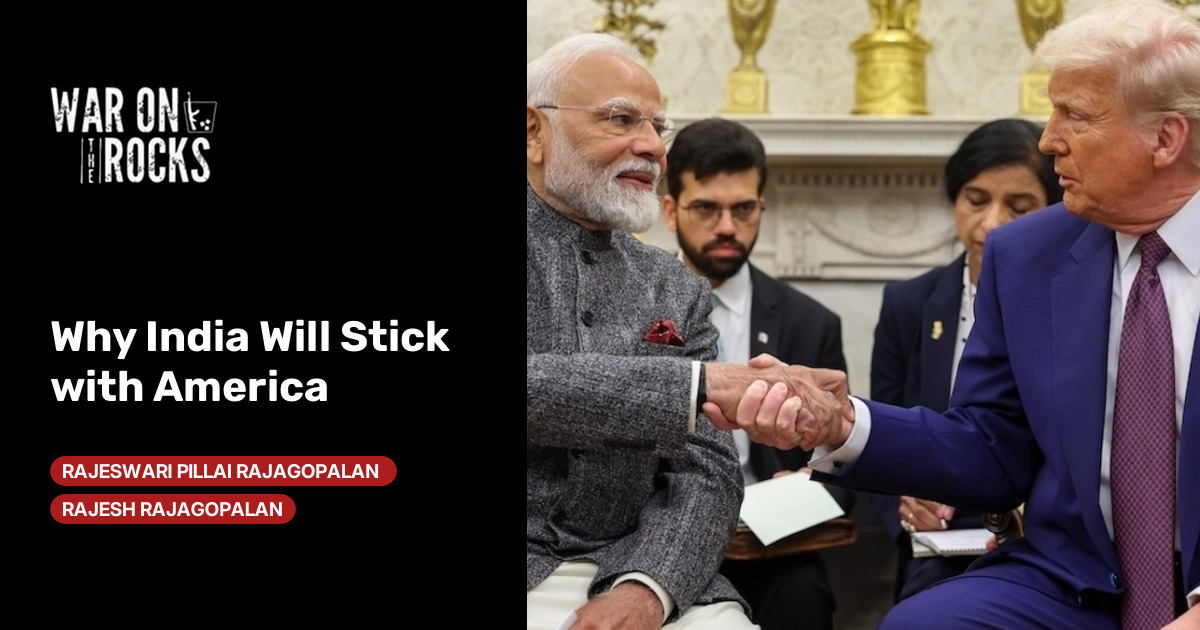
India’s commitment to a robust strategic partnership with the United States remains resilient despite significant geopolitical friction and shifting domestic political pressures. While observers often point to trade disputes, visa policies, or divergent stances on international conflicts as potential ruptures, the bilateral relationship is underpinned by long-term structural interests that transcend the tenure of any single administration. According to the U.S. Department of State, the comprehensive global and strategic partnership between the two nations is anchored in shared democratic values and a mutual interest in maintaining a stable, rules-based Indo-Pacific order.
The endurance of this alliance is rooted in India’s strategic calculus regarding its regional security environment. For New Delhi, the United States represents a vital counterweight to the rising influence of China across the Asian continent. Data from the Center for Strategic and International Studies (CSIS) indicates that defense and security cooperation has grown steadily over the last two decades, evolving from tentative engagement to high-level intelligence sharing and joint technological development. This trajectory suggests that New Delhi prioritizes long-term security architecture over short-term diplomatic irritants.
The Strategic Logic of Alignment
India’s decision to maintain close ties with Washington is not merely a matter of convenience; it is a calculated response to the realities of 21st-century power dynamics. The 2023 joint statement released by the White House following the state visit of Prime Minister Narendra Modi highlighted the “Initiative on Critical and Emerging Technology” (iCET). This agreement focuses on deepening cooperation in artificial intelligence, space exploration, and semiconductor manufacturing, areas where India requires American capital and expertise to achieve its modernization goals.
Critics frequently highlight domestic criticism within India regarding the country’s perceived subservience to American interests. However, the Indian government maintains that its foreign policy is characterized by “strategic autonomy”—a doctrine that allows New Delhi to engage with all major powers while pursuing its national interests. By keeping the U.S. partnership intact, India ensures it retains access to advanced military hardware and diplomatic support in multilateral forums like the G20, where India has sought to position itself as a “Voice of the Global South,” as noted in reports by the Observer Research Foundation.
Managing Bilateral Friction
Diplomatic relations between Washington and New Delhi have not been without periods of tension. Trade protectionism and disputes over market access have surfaced periodically, often causing friction within the business communities of both nations. According to the Office of the United States Trade Representative (USTR), ongoing dialogues—such as the U.S.-India Trade Policy Forum—are designed specifically to manage these disagreements without allowing them to spill over into the broader security and geopolitical agenda.
The ability of both governments to compartmentalize these issues is a hallmark of the relationship’s maturity. When trade disputes arise, they are typically handled through established legal frameworks rather than retaliatory measures that could destabilize the broader partnership. This institutionalized approach to conflict resolution ensures that the “frequent and friendly conversation” between leaders, as described in recent diplomatic briefings, remains the primary mechanism for navigating complex policy differences.
Future Outlook and Institutional Stability
The path forward for U.S.-India relations is increasingly dictated by institutional structures rather than personal political dynamics. The U.S. Department of Defense has formalized several roadmaps for industrial cooperation that extend well beyond the current electoral cycle. These frameworks ensure that even if political leadership changes, the foundational work—such as the co-production of jet engines and the expansion of maritime domain awareness—continues with minimal disruption.
For observers, the key indicator of the relationship’s strength will be the implementation of the “Defense Industrial Cooperation Roadmap,” which aims to streamline technology transfers and accelerate the integration of defense supply chains. As noted by the Ministry of External Affairs of India, the focus remains on transforming the bilateral bond into a “partnership for the global good,” emphasizing climate action, energy security, and regional stability as the pillars of future engagement.
As both nations continue to navigate an increasingly volatile international landscape, the evidence suggests that the structural incentives for cooperation far outweigh the risks of alienation. The upcoming meetings of the 2+2 Ministerial Dialogue remain the primary checkpoint for assessing the progress of these initiatives. Readers interested in the latest official developments can monitor the State Department’s country portal for updates on pending trade agreements and joint defense project announcements. We encourage our readers to share their perspectives on the evolution of this partnership in the comments section below.
Keep reading