For any smartphone user, there is perhaps no greater digital anxiety than the sudden appearance of the “No Service” icon in the status bar. Whether you are navigating a foreign city, commuting through a rural valley, or standing in a crowded stadium, the “dead zone” remains the Achilles’ heel of the mobile experience. For iPhone users, the promise of eliminating these gaps has long centered on the ability to leverage multiple networks simultaneously.
The conversation around “zero dead zones” often points toward a specific technical dream: the ability for an iPhone to utilize multiple SIM cards at once—not just for receiving calls on two different lines, but for bonding cellular data streams. While the industry has moved toward eSIMs and Dual SIM capabilities, the reality of how iPhones handle data has remained restrictive. However, a shift in how operators collaborate through network-sharing agreements and joint infrastructure ventures is beginning to change the connectivity landscape.
As a technology journalist with a background in software engineering, I have tracked the evolution of the Universal Integrated Circuit Card (UICC) and the transition to the embedded SIM (eSIM) for years. The goal has always been seamlessness. The current trajectory of the telecom industry suggests that the solution to dead zones isn’t just about the hardware in your pocket, but about the “invisible” agreements between the companies providing the signal.
The Dual SIM Reality: Standby vs. Active
To understand why “zero dead zones” is such a challenge, we first have to clarify what iPhone’s current Dual SIM functionality actually does. Since the introduction of the iPhone XS and XR, Apple has supported Dual SIM, allowing users to have a physical SIM and an eSIM, or in newer models, two active eSIMs. This is primarily marketed as a way to separate business and personal lines or to add a local data plan while traveling.
However, there is a critical technical distinction that often confuses users: the difference between Dual SIM Dual Standby (DSDS) and Dual SIM Full Active (DSFA). IPhones utilize DSDS. In this configuration, both SIMs can be “active” in the sense that they can both receive a call or a text. But when it comes to cellular data, the iPhone can only use one network at a time. You cannot “bond” the data from a T-Mobile SIM and a Verizon SIM to create a faster, more stable connection.
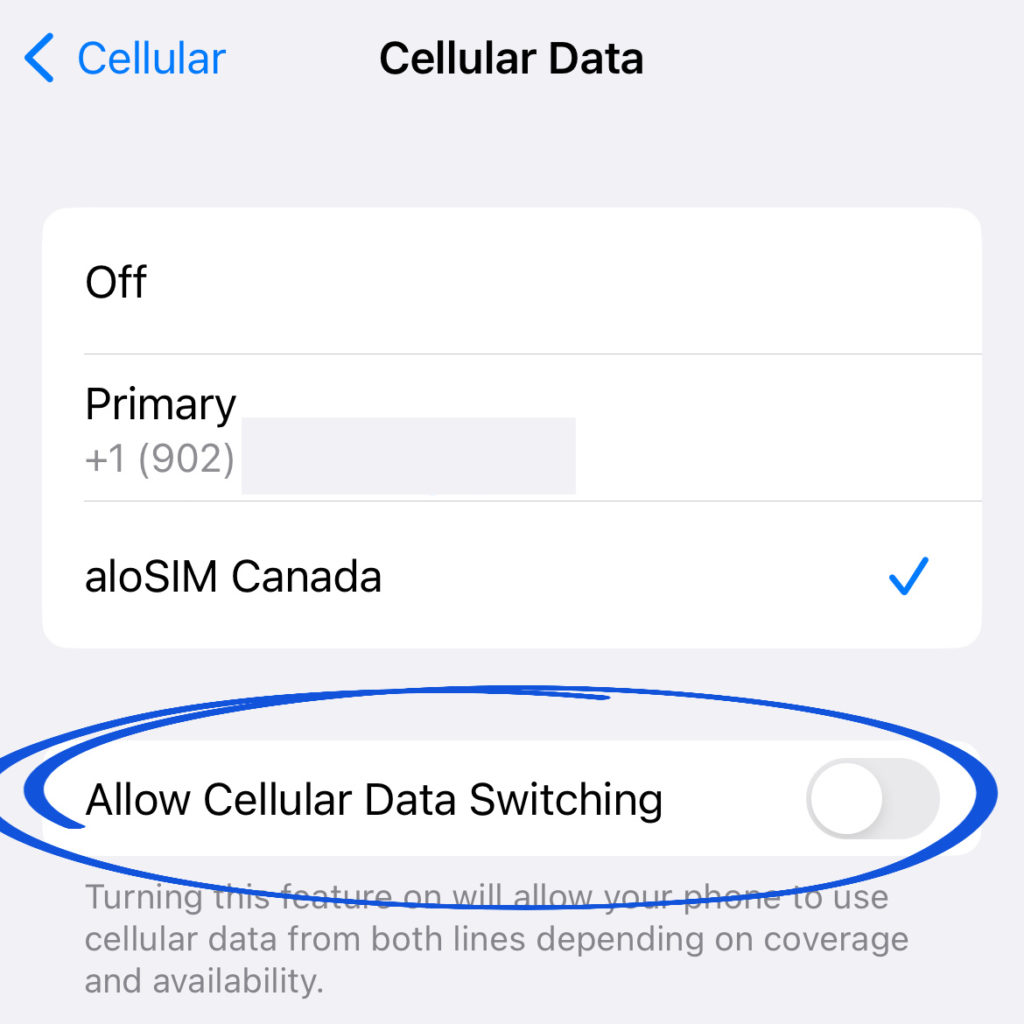
If you are in a dead zone for your primary carrier, the iPhone can be set to “Allow Cellular Data Switching.” This allows the device to automatically switch to the second line’s data if the first is unavailable. While this reduces the frequency of dead zones, it is a “failover” system, not a simultaneous one. For a truly “zero dead zone” experience, the device would need to aggregate packets from multiple carriers in real-time—a feature that would require significant changes to both the iOS networking stack and how carriers bill for data.
Network Sharing Agreements: The Invisible Joint Venture
While hardware-level data bonding remains elusive, the industry is solving the “dead zone” problem through a different kind of joint venture: Network Sharing Agreements (NSAs). Rather than relying on the phone to jump between two separate SIMs, operators are increasingly collaborating to share the same physical infrastructure—towers, antennas, and spectrum.
In these arrangements, two or more operators agree to share a “passive” infrastructure (the actual tower) or “active” infrastructure (the radio equipment). This means that even if you are with a smaller carrier, you may be utilizing a network footprint provided by a larger partner. This effectively eliminates dead zones by ensuring that the “reach” of a network is not limited to the towers owned by a single company.

These joint ventures are particularly common in European and Asian markets, where geography and regulation make it more efficient to share infrastructure than to build redundant towers. For the iPhone user, this happens entirely in the background. Your phone doesn’t see two different networks; it sees one seamless coverage map, even though the signal may be coming from a partner’s tower. This is the most practical path toward the “zero dead zone” goal, as it removes the burden of connectivity from the device’s battery and software and places it on the network architecture.
The Role of eSIM in Modern Connectivity
The transition from physical plastic cards to eSIM technology has been the catalyst for these connectivity improvements. An eSIM allows users to store multiple cellular profiles on a single chip. This flexibility is essential for the modern traveler and the professional who cannot afford a dropped connection.
According to Apple Support, users with compatible iPhones can manage multiple plans, labeling them as “Business” or “Personal” to easily designate which number handles data. The ability to download a travel eSIM instantly upon landing in a new country has already eliminated the “dead zone” period that used to occur between arriving at an airport and finding a local SIM kiosk.
The next evolution of this technology likely involves “Dynamic Network Selection.” Imagine an iPhone that doesn’t just switch data when a signal is lost, but proactively monitors the signal quality of multiple available eSIM profiles and switches to the strongest one before the user even notices a dip in performance. This would effectively simulate a “zero dead zone” experience without requiring the complex data-bonding hardware that would drain battery life.
Why Simultaneous Data Bonding is Difficult
Many users ask why Apple and carriers haven’t simply enabled the ability to use two data plans at once to increase speed. From a software engineering perspective, this is a massive undertaking. To combine two different cellular connections into one logical pipe, the device would need to implement a form of Multipath TCP (MPTCP) or a similar bonding protocol at the system level.
- Battery Drain: Maintaining two active high-speed data radios simultaneously would significantly increase power consumption, potentially reducing battery life by a meaningful margin.
- Carrier Conflict: Carriers make money by selling data packages. If a user could bond two different carriers, it would complicate billing, data caps, and “fair use” policies.
- Latency Jitter: Data packets traveling over two different networks would arrive at different times. Reassembling these packets in the correct order to avoid “jitter” in a video call or game requires significant processing power.
Because of these hurdles, the industry has pivoted toward the aforementioned network sharing. By solving the problem at the tower level, operators provide the same result—consistent coverage—without taxing the iPhone’s hardware.
Comparison: Current Dual SIM vs. Network Sharing
| Feature | Dual SIM (DSDS) | Network Sharing Agreements |
|---|---|---|
| Mechanism | User switches between two plans | Carriers share the same tower |
| User Effort | Manual or semi-automatic setup | Completely transparent/automatic |
| Data Speed | Limited to the single active SIM | Optimized by the strongest available tower |
| Battery Impact | Moderate (two radios in standby) | Low (single radio connection) |
| Primary Benefit | Redundancy and travel flexibility | Expanded geographical coverage |
What This Means for the Global User
For the average person, the “joint venture” between operators is a win. It means that the gaps in coverage—the “black holes” on the map—are shrinking. As more carriers enter into infrastructure-sharing agreements to reduce the astronomical cost of 5G deployment, the likelihood of encountering a dead zone decreases.
For the power user, the strategy should be to optimize their current eSIM setup. By utilizing a primary home carrier and a secondary, low-cost data-only eSIM from a different network provider, you can create your own personal redundancy system. When your primary network fails in a specific building or city, the iPhone’s “Allow Cellular Data Switching” feature acts as a safety net.
the rise of global eSIM providers has democratized access to these networks. You no longer need to be a corporate executive with a specialized roaming plan to access multiple networks; a few taps in the Settings app can connect you to a local partner network in almost any country on earth.
Looking Ahead: The Future of iPhone Connectivity
As we look toward future iterations of iOS and iPhone hardware, the focus will likely shift toward AI-driven network management. We can expect the system to learn your movement patterns—knowing, for example, that you lose signal in a specific part of your commute—and preemptively switching your data source to the most reliable partner network before the disconnection occurs.
The dream of “zero dead zones” is less about a single “magic” update and more about the convergence of three trends: the ubiquity of eSIMs, the intelligence of iOS network switching, and the pragmatic collaboration between global telecom operators. When these three elements align, the “No Service” icon will finally become a relic of the past.
The next major milestone for connectivity will likely be the further integration of satellite-to-cell technology, which aims to fill the remaining gaps where towers cannot reach. While currently limited to emergency services and basic messaging, the expansion of these capabilities will be the final piece of the puzzle in achieving total connectivity.
What has your experience been with dead zones in your city? Do you use a secondary eSIM for backup, or do you rely on a single carrier? Share your thoughts in the comments below.
Worth a look
- Is the UK Tech Sector Becoming More Regional? New Research Reveals Trends
- Halo: Campaign Evolved Reviews: Backlash, PlayStation Launch, and Xbox Strategy Controversy
- Why Your Printer Needs Color Ink to Print in Black and White (daybreakwire.com)
- PA School Bus Aide Arrested for Assaulting Special Needs Student (archyde.com)