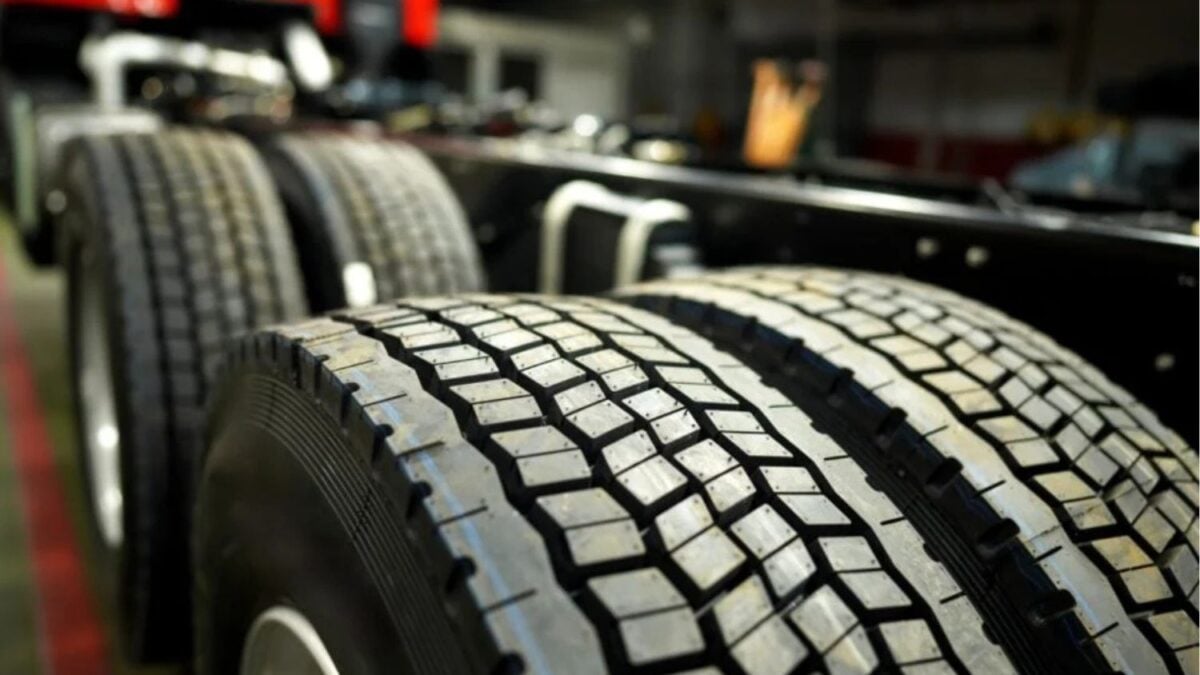
For over a century, scientists have puzzled over what makes rubber so remarkably resilient. This everyday material stretches under pressure and snaps back to its original shape with little permanent deformation—a property essential to everything from car tires to medical devices. Now, after 100 years of inquiry, researchers believe they have finally uncovered the molecular mechanism behind rubber’s enduring elasticity.
The breakthrough centers on the behavior of polymer chains within natural and synthetic rubber. When force is applied, these long, spaghetti-like molecules unwind and slide past one another. But instead of permanently deforming, they are drawn back together by weak intermolecular forces and entropy-driven recoil, allowing the material to return to its resting state. This insight resolves a long-standing question in materials science about how rubber balances flexibility with durability.
Natural rubber, harvested from the Hevea brasiliensis tree, consists primarily of polyisoprene—a polymer made of repeating isoprene units. Synthetic versions, such as styrene-butadiene rubber (SBR), mimic this structure using petroleum-based precursors. In both cases, the key to resilience lies not in strong covalent bonds along the chain, but in the temporary entanglements and elastic recoil of the polymers when stress is released.
Researchers at institutions including the University of Cambridge and the Max Planck Institute for Polymer Research used advanced spectroscopy and computational modeling to observe how these chains behave under strain. Their findings, published in peer-reviewed journals over the past decade, show that rubber’s resistance to permanent deformation arises from a balance between chain mobility and the tendency of disordered states to maximize entropy—a principle rooted in thermodynamics.
This explanation builds on early 20th-century work by scientists like Werner Kuhn, who first applied statistical mechanics to polymer elasticity in the 1930s. While Kuhn’s laid the theoretical groundwork, modern tools have now allowed direct observation of the nanoscale dynamics he predicted. The confirmation marks a rare instance where a century-old hypothesis has been validated through empirical evidence.
Understanding rubber’s resilience has practical implications across industries. In automotive engineering, it informs the design of longer-lasting tires and vibration dampeners. In healthcare, it guides the development of elastic bandages and implantable materials that must withstand repeated stress without degrading. Even in consumer goods—from shoe soles to waterproof clothing—this knowledge helps manufacturers improve product longevity and performance.
Environmental considerations also benefit from this insight. By clarifying how rubber degrades—or resists degradation—under UV exposure, ozone, and temperature fluctuations, scientists can better predict lifespan and develop more sustainable formulations. Some researchers are exploring ways to enhance recyclability by modifying polymer architecture while preserving elastic properties.
Though natural rubber remains a strategically vital crop, with major production in Thailand, Indonesia, and Vietnam, synthetic alternatives continue to evolve. Innovations in bio-based monomers and green chemistry aim to reduce reliance on fossil fuels without sacrificing performance. These efforts are guided by a deeper understanding of what makes rubber work at the molecular level.
The discovery underscores how fundamental scientific questions can persist for generations before yielding to technological progress. What began as curiosity about a bouncy ball or a stretchy band has led to insights that touch nearly every sector of modern industry. As materials science advances, such foundational knowledge becomes the bedrock for innovation.
For now, the mystery of rubber’s resilience appears solved—not with a single eureka moment, but through the cumulative weight of evidence from physics, chemistry, and engineering. It serves as a reminder that even the most familiar materials can hold profound secrets, waiting only for the right tools to reveal them.
To stay updated on developments in materials science and polymer research, follow publications from the American Chemical Society, Nature Materials, and the Journal of Polymer Science. These sources regularly feature peer-reviewed studies that build on discoveries like this one.
What everyday material would you like to see explained next? Share your thoughts in the comments below, and pass this article along to anyone curious about the science behind the things we employ every day.