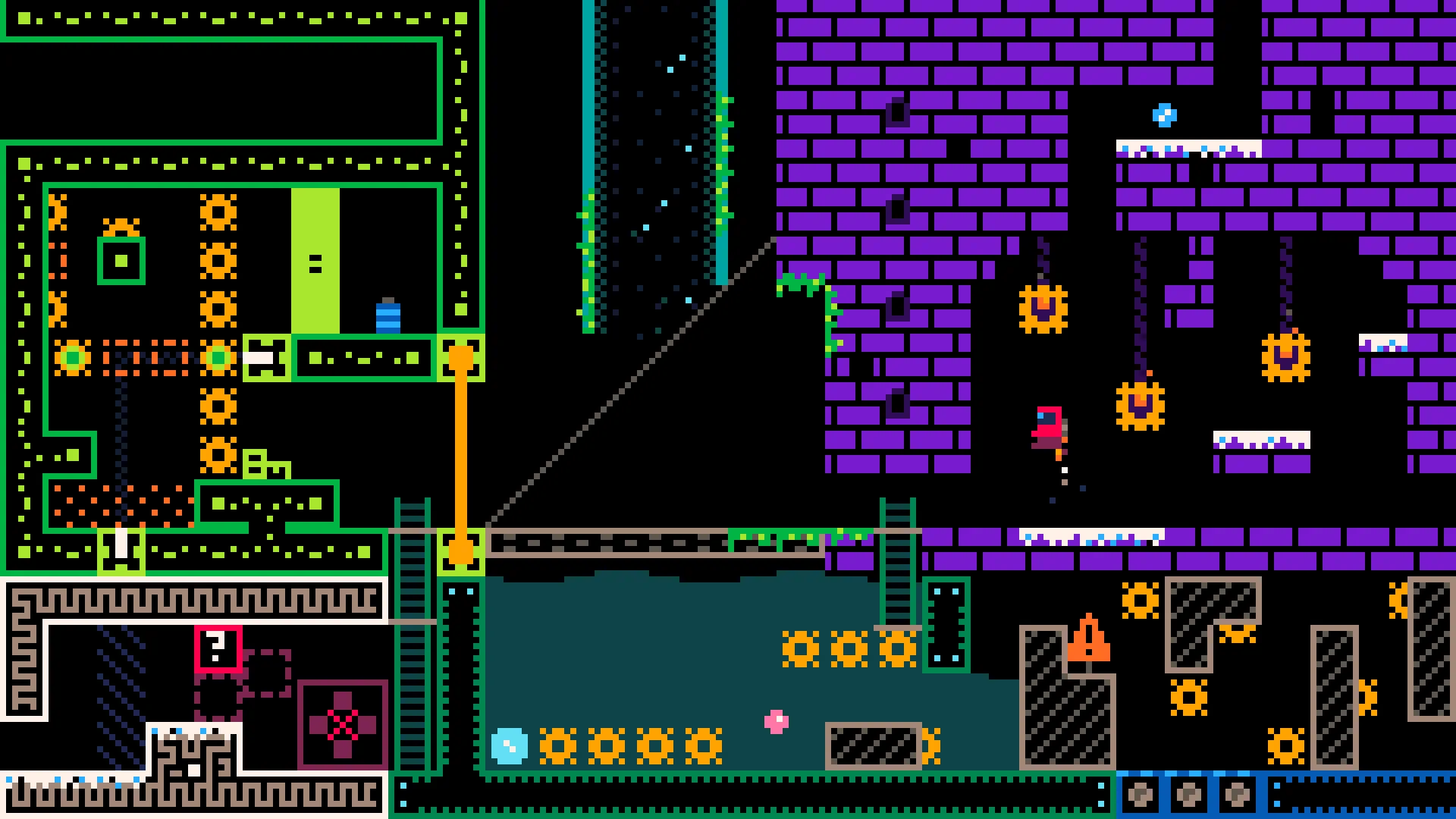
The world of indie gaming is often defined by its passionate, sometimes polarizing, discourse. Recently, the action-platformer Derelict Star became the subject of intense debate after developer Jonathan Blow, known for Braid and The Witness, publicly expressed frustration with the game’s opening sequences. Blow’s critique, which sparked a broader conversation about game design philosophy, centered on the game’s perceived lack of polish and its approach to player progression.
For many enthusiasts of the movement platformer genre, however, Derelict Star represents a masterful exercise in precision and momentum. The game, which tasks players with controlling an astronaut stranded on an abandoned freighter, has quietly built a dedicated following since its release in early April. While some critics argue that its mechanics are initially opaque or frustrating, proponents suggest the game is actually a highly refined experience that prioritizes deep, systemic movement over traditional puzzle-adventure structures.
The core of the disagreement lies in what players expect from the genre. Derelict Star is built around a metroidvania-style structure containing roughly 500 discrete screens. Its visual aesthetic, reminiscent of the imaginary Pico-8 console, utilizes chunky pixel art that occupies a space between the Atari 2600 and the 8-bit era. This design choice is not merely stylistic; the clarity of the pixel geometry serves a functional purpose, allowing players to navigate the game’s demanding precision jumps with high visibility.
The Philosophy of Movement
At its heart, Derelict Star is a study in momentum. Players navigate the environment using only the astronaut’s legs and a jetpack, with success depending on a nuanced understanding of how speed and physics interact. Unlike many modern platformers that prioritize forgiving controls, this title demands a period of adjustment. According to the game’s creator, John Williams—who operates under the handle “gate”—the intention was to create a system that rewards players for mastering subtle, physics-based inputs.
Williams notes that the jetpack mechanic was chosen as a visual metaphor to make certain movements more intuitive, particularly those inspired by the complexity of SNES-era classics. “The astronaut in my game has a jetpack because that’s the visual metaphor I chose to make that mechanic more intuitive,” Williams explained. He emphasized that for him, the pleasure of the genre comes from the “lithesome digital ballet” of character control, a quality he feels is becoming increasingly rare in contemporary indie titles.

This focus on physics is further highlighted by the game’s unique button input display, situated at the bottom of the screen. This interface includes a meter reminiscent of the P-Meter from Super Mario Bros. 3. Raigan Burns, developer of the acclaimed platformer N++, suggests that this implementation is a sophisticated evolution of classic mechanics. “What I love about this game is that someone took an existing ‘old’ mechanic, the P-meter from SMB3/SMW, and then made a mutant-freak modern reimagining of it, souping it up to be the central ‘puzzle’ mechanic rather than sort of a trivial detail as it was in the Mario games,” Burns noted.
Addressing the Criticism
The friction between Blow’s critique and the developer’s intent provides a rare window into the subjective nature of game design. Blow, in his initial comments on social media, expressed frustration that he felt “hard” jumps were “gated” behind clunky controls, suggesting that if a game intends to offer a deeper puzzle-adventure experience, those elements should be more accessible. He specifically characterized the game’s design choices as “clunky” and lacking polish.
Williams, however, views this as a fundamental misunderstanding of the game’s primary goal. “I do think Blow misunderstood what the game is about,” Williams stated. He argues that the game is not intended to be a puzzle-adventure in the vein of Fez or Animal Well, but rather a singular focus on movement. Williams rejects the idea of “objectively bad” design, asserting that every decision involves trade-offs based on the designer’s specific goals.
“There are no universal truths in game design; everything has trade-offs,” Williams said. “Every decision emphasizes some aspects and de-emphasizes others, and it’s up to the designer to make choices that consistently align with their design goals.”
Why Momentum Matters
The debate underscores a significant divide in the indie community regarding what constitutes “fine” movement. Williams points out that many modern indie platformers suffer from a lack of true momentum, which he believes makes the second-to-second gameplay feel stagnant. By inheriting momentum from platforms and conveyors, Derelict Star forces the player to engage with the physics of the world rather than simply moving a character sprite across a background.
This approach has clearly resonated with a niche audience that values the difficulty and technical mastery required to navigate the game’s 500 screens. For these players, the “clunkiness” cited by critics is actually the learning curve of a deep, expressive system. As players begin to understand the nuances of wall-bouncing and speed management, the game transitions from an unwieldy experience to one of fluid, intentional movement.
As the conversation continues, Derelict Star serves as a reminder that the “correct” way to design a game is often subject to the vision of the creator. Whether it is hailed as a masterpiece of movement or criticized for its initial accessibility, the title has undeniably succeeded in sparking a dialogue about the mechanics that define the platforming genre. For those interested in exploring these systems, the game remains available for players to experience firsthand.
We invite our readers to share their thoughts on this design debate. Do you prefer the precision of momentum-based movement, or do you find it an unnecessary barrier to enjoyment? Let us know in the comments below.