A long-term malaria control initiative in the Brazilian Amazon successfully reduced annual infection rates in the city of Altamira from over 1,200 cases to fewer than 60 between 2013 and 2017. However, following the conclusion of the program, infections rebounded to more than 700 cases per year within a few years. Research published July 9 in the journal GeoHealth identifies the primary driver of this resurgence as the “forest edge”—the specific boundary where intact rainforest meets cleared or developed land—rather than simply the total amount of deforestation.
The Altamira case serves as a critical example of how environmental factors, when paired with the withdrawal of localized health resources, can rapidly reverse public health gains.
The Ecological Drivers of Malaria Transmission
The study, which analyzed 15 years of malaria surveillance data from 150 health centers in Altamira, found that the malaria-carrying mosquito Nyssorhynchus darlingi thrives at the interface of forest and cleared land. In these zones, the mosquitoes benefit from a combination of shade provided by the tree line and sunlit, standing water pools—ideal conditions for their larvae to develop. According to the research, for every 1% increase in the perimeter of the forest edge, malaria cases rose by approximately 0.7%. Furthermore, for every 1% increase in the human population living at these forest edges, cases rose by about 1.4%.
This geographic concentration suggests that malaria risk is not uniform across a landscape. The researchers noted that while the city center of Altamira remained relatively protected, the burden of the disease shifted heavily toward remote, rural communities near the forest boundary. This indicates that the environmental configuration of land-use changes—such as those driven by cattle ranching, logging, and infrastructure development—creates a persistent, predictable risk that demands specific, targeted surveillance.
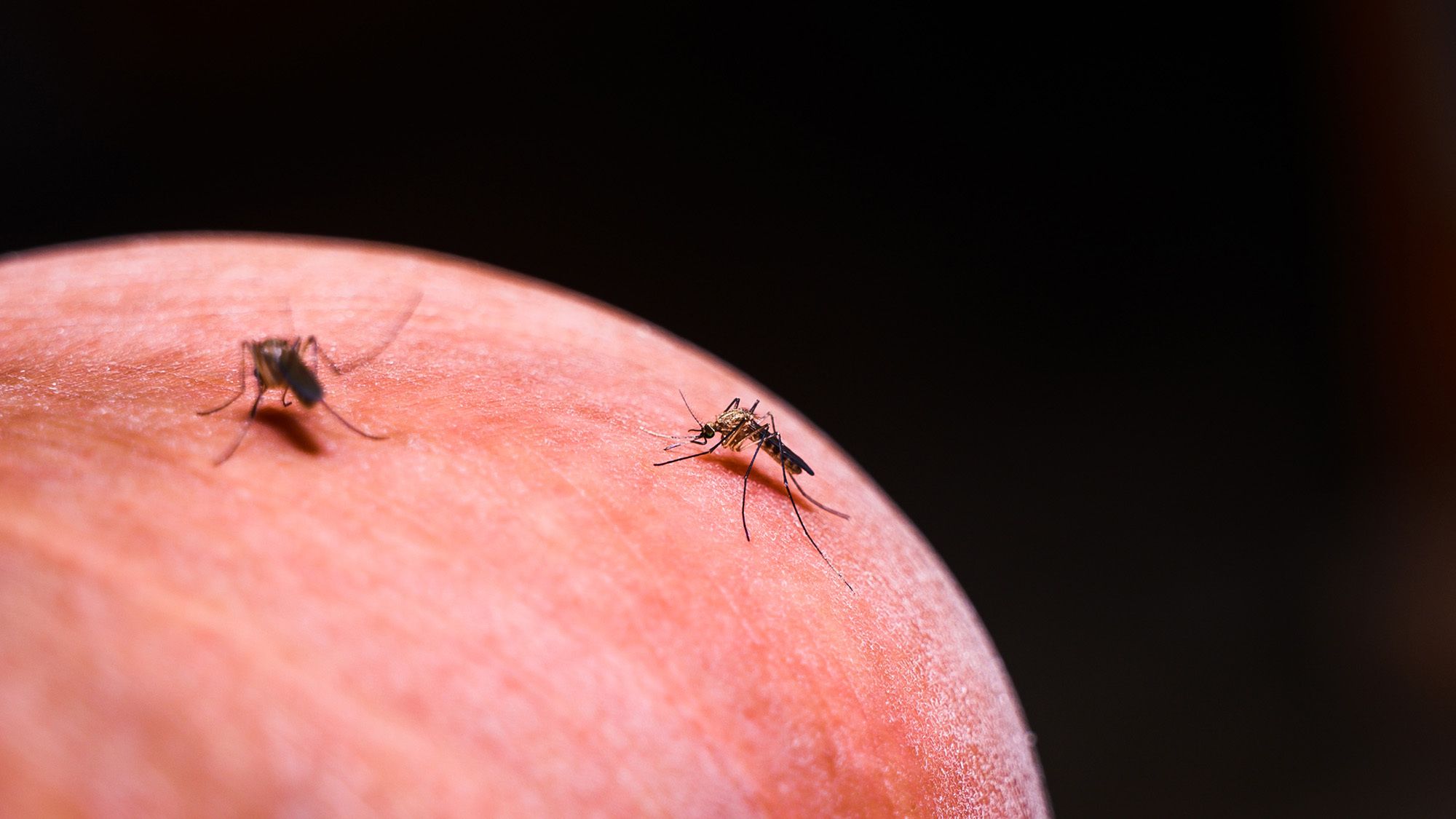
Nyssorhynchus darlingi, the mosquito that spreads malaria in the Amazon, breeds in partially shaded bodies of water. (Image credit: Sabrina Simon)
The Impact of Temporary Funding Cycles
The malaria control program in Altamira was heavily tied to the construction phase of the Belo Monte Dam, one of the world’s largest hydroelectric projects. During the construction period, developers and local health authorities implemented an intensive mitigation strategy that included indoor insecticide spraying, the distribution of mosquito nets, and rapid diagnostic testing and treatment. By treating infected individuals quickly, the program effectively broke the transmission chain, keeping case numbers low despite the influx of thousands of workers to the region.
Once the construction phase concluded, the dedicated funding for these intensive health measures ended. Eloise Skinner, an epidemiologist and postdoctoral research fellow at the University of Queensland and a co-author of the study, noted that the resurgence was not diffuse but was concentrated in communities that are the most difficult for the public health system to reach. “When the funded program wound down, malaria came back to the communities that are hardest for the health system to reach,” Skinner stated. “The city stayed protected, most likely because fast diagnosis and treatment are easier to deliver and keep going in a town.”
Strategic Planning for 2035
Brazil has set an official goal to eliminate locally acquired malaria by 2035. The findings from Altamira provide a cautionary framework for this national objective. Because the resurgence of the disease occurred in predictable locations—specifically rural forest-edge communities—scientists argue that future elimination efforts should prioritize these high-risk landscapes with sustained, rather than temporary, investment.
The study suggests that the “natural experiment” created by the dam’s construction and subsequent program withdrawal demonstrates that ecological risk factors must be integrated into public health planning from the outset. Rather than relying on sporadic interventions, effective malaria control in the Amazon will likely require permanent, decentralized health services capable of reaching the populations living at the forest edge, where the environmental conditions for the Nyssorhynchus darlingi mosquito are most favorable.
The researchers emphasize that the predictability of these outbreaks is a tool for policymakers. By mapping forest edges and monitoring population clusters in these specific high-risk zones, health officials may be able to allocate limited resources more efficiently, ensuring that the progress toward the 2035 goal is not undermined by the expiration of short-term project funding.
The scientific findings discussed in this report were published in the peer-reviewed journal GeoHealth on July 9. We welcome your thoughts on how public health infrastructure can better adapt to environmental shifts in your community.