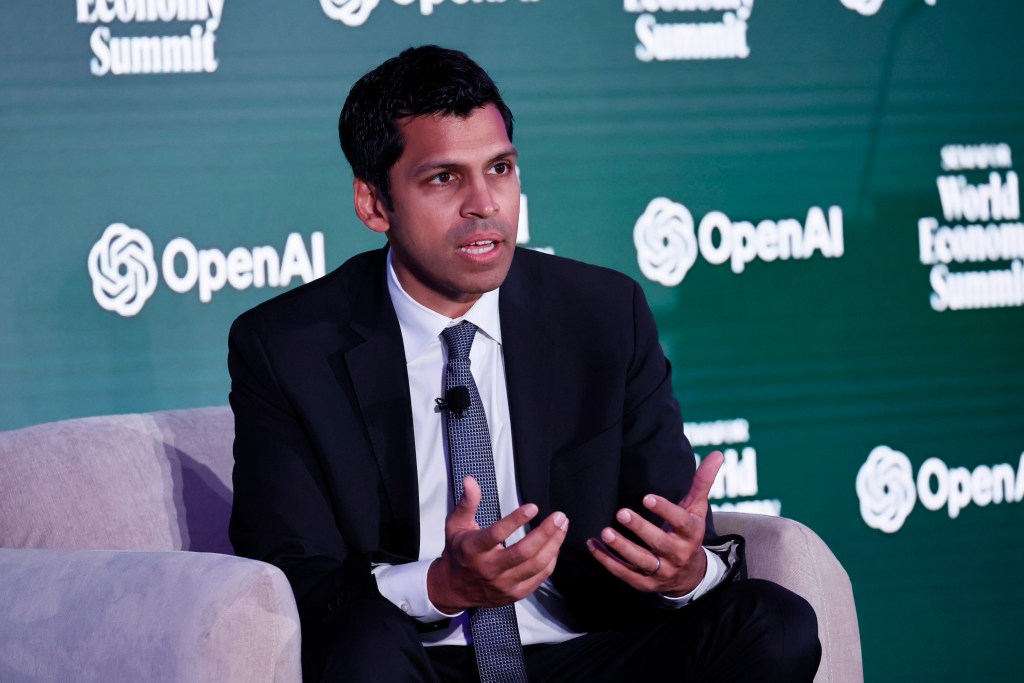
Job-seekers navigating a competitive hiring market should discard conventional career strategies that treat professional advancement as a rigid, linear climb, according to OpenAI Chief Economist Ronnie Chatterji. Speaking on recent economic shifts and workforce dynamics, the corporate leader argued that standard advice regarding long-term planning and strict career ladders often misleads modern professionals in an economy reshaped by artificial intelligence and rapid technological innovation.
The guidance challenges decades of traditional Human Resources doctrine, which historically emphasized staying within a single industry, acquiring specialized credentials, and mapping out five-to-ten-year plans. Instead, economic researchers and industry analysts suggest that adaptability, continuous cross-functional skill acquisition, and comfort with career pivots have become far more critical for sustained employment stability.
As organizations across technology, finance, and healthcare integrate generative artificial intelligence tools into daily workflows, labor economists are closely tracking how hiring practices evolve. While automated systems alter entry-level tasks and mid-level administrative duties, executive leadership across major technology firms maintain that human problem-solving and contextual reasoning remain highly valued.
Shifting Workforce Expectations in the Age of Automation
The traditional advice of picking one narrow discipline and climbing an organizational hierarchy ignores the fluid nature of modern job markets. According to labor data from the U.S. Bureau of Labor Statistics, workers change roles and industries at rates significantly higher than previous generations, making rigid career blueprints obsolete.
Rather than focusing solely on deep specialization within a declining niche, workforce experts recommend cultivating a portfolio of transferable skills. This approach allows employees to transition smoothly when automation or economic shifts alter industry demand. The shift requires a fundamental reevaluation of how workers prepare for interviews, present their resumes, and evaluate potential employers.
Major enterprise employers increasingly look for demonstrated adaptability over static university credentials. Corporate hiring managers want to see how applicants handle ambiguous problems, learn new software frameworks, and collaborate across multidisciplinary teams.
Practical Implications for Job-Seekers and Hiring Managers
For professionals currently looking for work, abandoning outdated job-search habits means revising how networking and skill-building are approached. Instead of cold-applying to hundreds of automated job postings, career coaches advise building targeted professional relationships and focusing on projects that showcase tangible problem-solving abilities.
Educational institutions and workforce development boards are also adjusting their curricula. Programs funded through the Employment and Training Administration increasingly emphasize modular credentialing, short-term bootcamps, and technical certifications that align directly with current employer needs.
Economic analysts note that while artificial intelligence creates anxiety regarding job displacement, it simultaneously lowers the barrier to entry for learning new technical domains. Professionals who leverage AI tools for self-directed upskilling often find themselves better positioned to adapt to shifting workplace requirements.
Next Steps and Where to Find Verified Workforce Data
Workers seeking official guidance on labor trends, occupational outlooks, and regional employment statistics can consult public databases provided by the Occupational Outlook Handbook. These resources offer objective, data-driven insights into which industries are expanding and what specific skills employers demand.
As corporate hiring committees continue to refine their automated screening tools and interview processes, further updates regarding employment trends and economic forecasts are expected from labor market researchers later this year.
Share your thoughts on these evolving career strategies in the comments below, or pass this article along to someone navigating a career transition.
Related reading