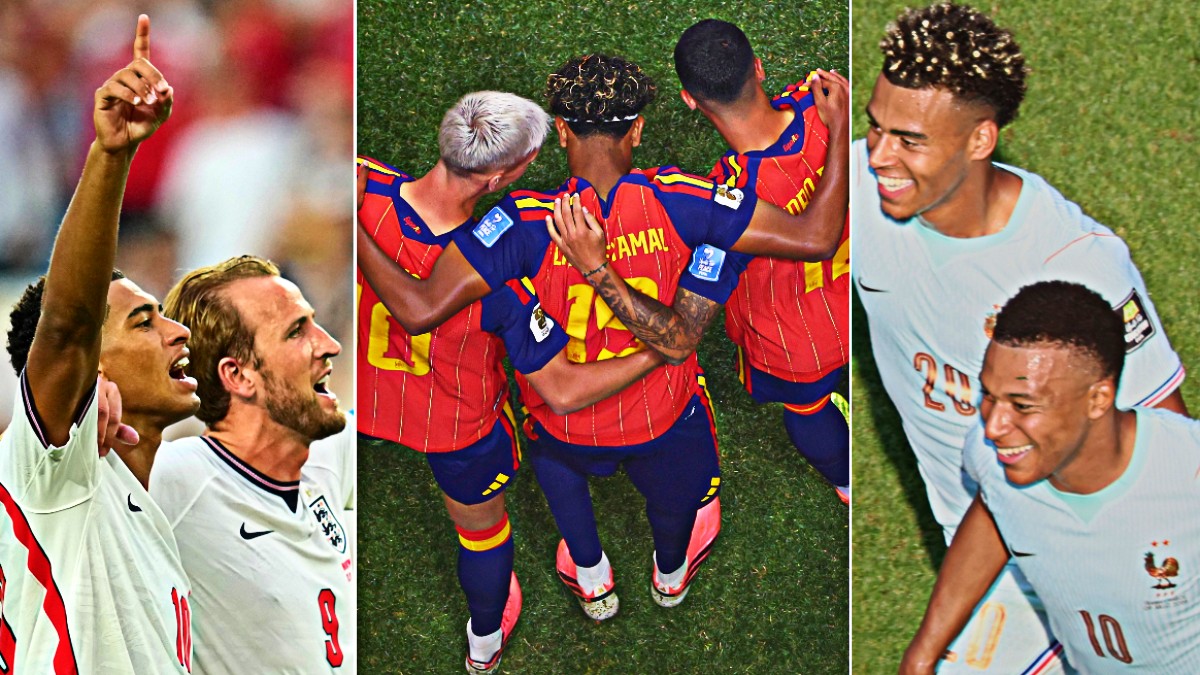
Modern political movements face increasing difficulty in leveraging international football tournaments for nationalist messaging, as the sport’s globalized structure and the diverse, multi-ethnic composition of contemporary national teams complicate traditional populist narratives. While history—from the 1934 FIFA World Cup in Italy to the 1978 tournament in Argentina—shows how regimes have historically sought to claim sporting success as proof of ideological superiority, the modern digital era and the changing demographics of elite squads have made such instrumentalization significantly harder to sustain.
As the Sports Editor at World Today Journal, I have followed the intersection of global football and domestic politics for over a decade. The transition from the mid-20th century, where national teams were often viewed as homogenous extensions of the state, to today’s reality, where squads frequently reflect post-colonial migration and globalized talent pools, has fundamentally altered the playbook for political actors.
The Shifting Demographics of National Identity
The primary challenge for political groups seeking to use the World Cup as a vehicle for ethno-nationalist identity is the composition of the teams themselves. In recent decades, major European football powers have fielded rosters that highlight the integration of immigrant communities. According to research from the CIES Football Observatory, the prevalence of dual-national players and those born outside their country of representation has reached record levels in major tournaments, making it difficult for right-wing movements to frame the team as a symbol of “purity” or exclusive national identity.

When political figures attempt to co-opt the success of these teams, they are often met with friction. For instance, the French national team’s victory in the 2018 World Cup triggered a complex public discourse in France. While the team was celebrated as a symbol of “Black, Blanc, Beur” (Black, White, Arab) unity, some right-wing political figures struggled to reconcile the team’s success with their own restrictive immigration platforms. This tension illustrates a broader trend: the football pitch has become a site of contestation rather than a reliable stage for nationalist propaganda.
The Impact of Global Media and Fan Activism
Beyond the roster composition, the nature of football fandom has evolved. The influence of social media allows players to bypass state-controlled narratives and engage directly with global audiences. Modern athletes are increasingly vocal on issues of social justice, racism, and human rights. This professional autonomy limits the ability of politicians to dictate the “official” narrative of a tournament.

Data from the FIFA official reports on tournament engagement shows that global audiences now prioritize player-led social initiatives, such as the “No Room for Racism” campaigns or kneeling before matches, which often stand in direct opposition to nationalist or populist agendas. When politicians attempt to force a nationalist framing onto these moments, the backlash is often immediate and global, rather than contained within national borders.
Historical Precedents Versus Modern Realities
The reliance on the “World Cup effect”—where a victory creates a temporary boost in government approval ratings—is also under threat. Political scientists have long studied the “rally ’round the flag” effect, but recent data suggests this boost is increasingly ephemeral and susceptible to polarization. A study by the Pew Research Center on national identity indicates that, in many Western democracies, the definition of what constitutes a “nation” has become deeply divided along partisan lines, meaning a single sporting event can no longer provide a unifying nationalist veneer.

For the political right, the difficulty lies in the fact that football is no longer a closed system. It is a hyper-connected industry where the economic interests of clubs, sponsors, and global governing bodies often prioritize inclusivity to maintain market access. This commercial imperative often forces national associations to adopt policies that prioritize diversity, further distancing the sport from exclusionary political rhetoric.
The Future of the Sporting Stage
The next major checkpoint for these dynamics will be the 2026 FIFA World Cup, hosted across North America. As the tournament expands to 48 teams, the global representation will be more diverse than ever, likely intensifying the disconnect between nationalist political agendas and the inclusive reality of the sport. We will continue to monitor how these intersections play out on the field and in the legislative chambers.
How do you see the role of national teams changing in the coming years? Does the global nature of the sport effectively neutralize political co-optation, or will we see new, more sophisticated methods of ideological framing? Share your thoughts in the comments below.
Related reading