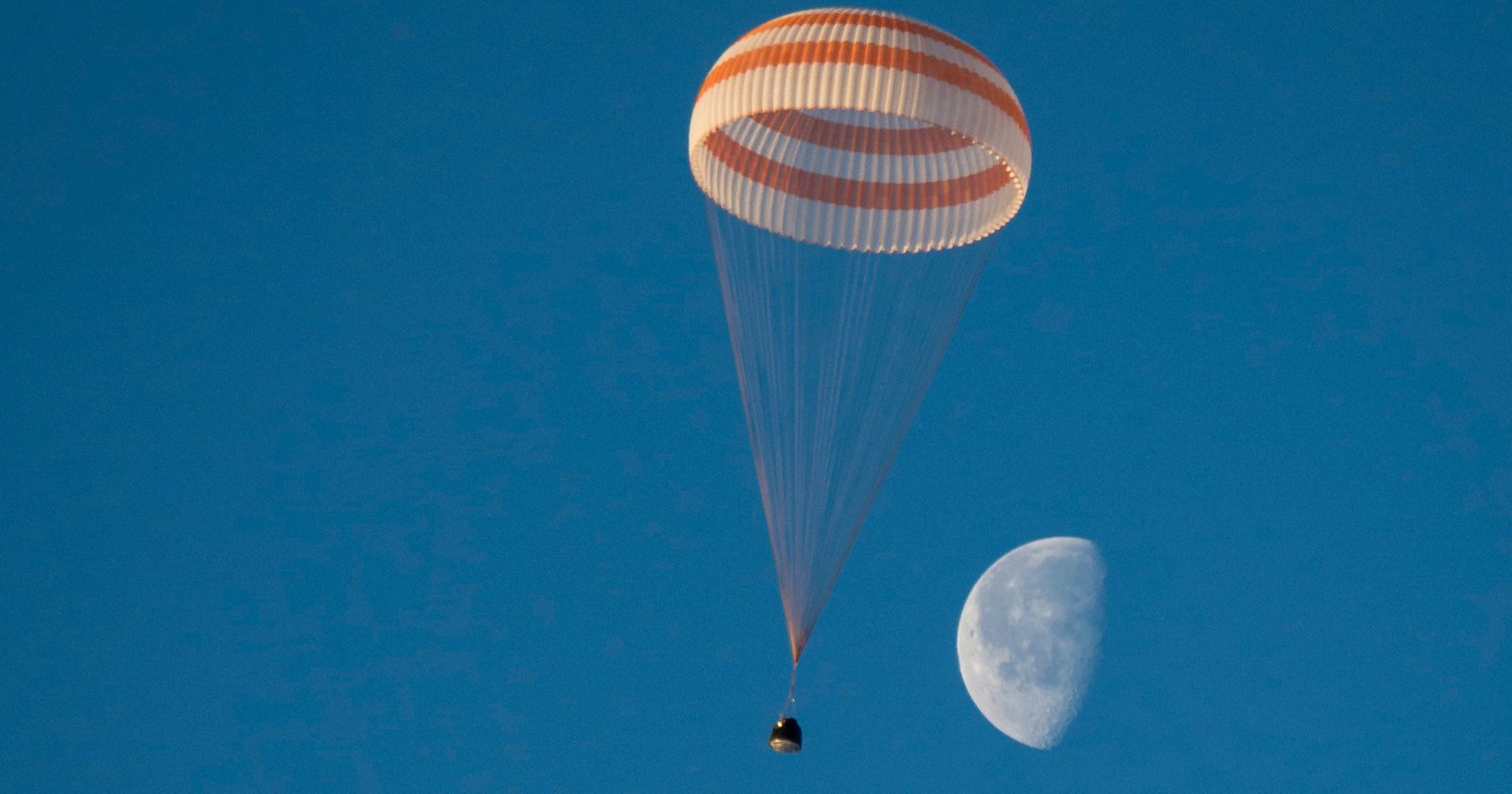
Astronauts returning from long-duration missions on the International Space Station (ISS) undergo physical changes—most notably spinal elongation—that necessitate the custom-molding of their Soyuz return seats. Because microgravity allows the human spine to decompress, crew members can grow up to five centimetres (approximately two inches) during their time in orbit. Consequently, a seat cast to fit an astronaut’s body on Earth would no longer accommodate their altered frame for the high-G forces of atmospheric reentry, according to historical documentation from NASA and the Roscosmos State Corporation.
The practice of creating custom seat liners is a standard safety protocol for the Russian-made Soyuz spacecraft. Each crew member provides a plaster cast of their body weeks before launch. These casts are used to create form-fitting polyurethane foam liners that hold the astronaut securely in place during the descent. This precision is vital because, during the intense deceleration of reentry, the human body must be perfectly supported to prevent injury and ensure the crew remains positioned for the spacecraft’s complex landing sequence.
The Physics of Spinal Elongation in Space
Human height increases in microgravity because the spine is no longer subjected to the constant downward pressure of Earth’s gravity. On the ground, the intervertebral discs are compressed throughout the day. In orbit, this pressure is relieved, allowing the discs to expand and the spine to lengthen. Research conducted during the NASA Twins Study, which monitored astronaut Scott Kelly during his 340-day mission, confirmed these physiological shifts. According to NASA, Kelly experienced significant spinal elongation, a phenomenon that underscores why rigid or pre-formed seating is insufficient for long-duration spaceflight participants.

The extent of this growth varies by individual, but the impact on a spacecraft’s ergonomics is consistent. The Soyuz descent module is designed with limited space, and the seating configuration is integral to the craft’s safety systems. If an astronaut’s spine has elongated beyond the dimensions of the initial mold, the seat would fail to provide the necessary support for the spine and neck during the ballistic descent. By taking the molds shortly before the mission, engineers ensure the liners reflect the body’s state as closely as possible to the conditions expected during the return trip.
Engineering for Reentry Safety
The transition from a microgravity environment back to Earth’s gravity is a physically taxing process. Upon reentry, astronauts experience several Gs of force, and the body must be stabilized to manage the physical strain. The custom-molded seat liner serves as a critical interface between the astronaut and the spacecraft’s structure. Without this bespoke fit, the risk of spinal injury during the high-impact landing—or the violent shaking associated with atmospheric friction—would increase significantly.
The process of creating these liners is a blend of low-tech craftsmanship and high-stakes aerospace engineering. The custom molds are specifically designed to distribute forces evenly across the astronaut’s body. By maintaining a consistent, snug fit, the liner prevents the body from shifting within the seat. This level of customization is a testament to the rigorous safety requirements that govern human spaceflight, where even a few centimetres of difference in body length can have serious implications for mission success.
The Future of Space Seating
As human spaceflight evolves and missions extend beyond the duration of typical ISS rotations, the challenge of managing physiological changes remains a priority for engineers. While the Soyuz system utilizes the tried-and-true method of plaster casting, newer spacecraft designs are exploring alternative materials and adjustable seating technologies. However, the requirement for a perfect, body-conforming fit remains an immutable law of space travel.

The NASA and Roscosmos collaborative efforts on the ISS continue to provide valuable data on how the human body adapts to long-term exposure to space. For now, the custom-molded seat remains an essential, if low-tech, solution to a high-tech problem. The next scheduled crew rotations will continue to rely on these precision-engineered liners, ensuring that regardless of how much an astronaut grows while in orbit, they return to Earth safely secured.
Readers interested in the latest mission updates and technical specifications for upcoming ISS expeditions can monitor the official ISS mission portal for ongoing status reports. We encourage our readers to share their thoughts on the evolution of spacecraft ergonomics in the comments section below.