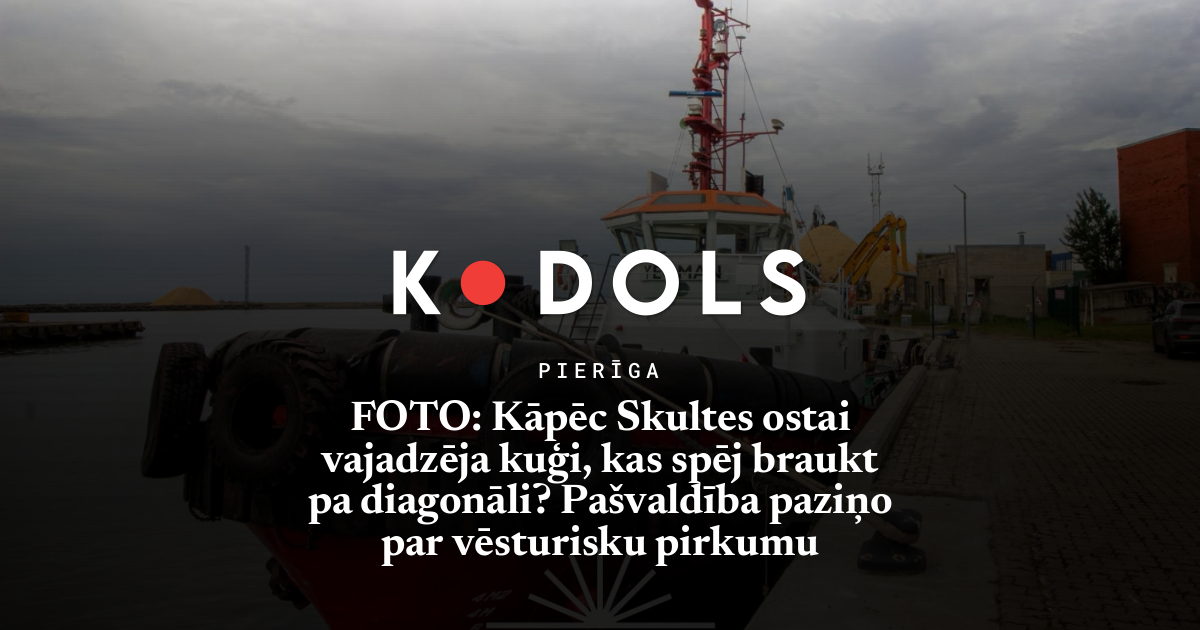
The Skulte port authority in Latvia has acquired a specialized vessel capable of lateral movement to improve dredging and maintenance operations within the harbor. The purchase, described by local officials as a historic investment, provides the port with a ship that can “drive diagonally,” allowing for precise maneuvering in the shallow and narrow waters of the Gulf of Riga.
According to reports from the Rīgas apriņķa portāls, the new vessel is designed to address specific geographical challenges that previously hindered the port’s efficiency. The ability to move sideways or diagonally—a feature typically found in ships with specialized thrusters or azimuth propulsion—allows the crew to navigate tight spaces and perform maintenance without the need for extensive tugboat assistance.
The acquisition is part of a broader effort by the local municipality to modernize the Skulte port infrastructure. By increasing the technical capabilities of the port, officials aim to attract more maritime traffic and support the local fishing and tourism industries, which rely on the harbor’s accessibility.
Why the Skulte port needed a vessel with diagonal movement
Standard vessels move primarily forward and backward, which can be problematic in small harbors with significant silt accumulation or narrow channels. According to the port’s announcement, the “diagonal” capability refers to the ship’s ability to translate laterally, meaning it can move side-to-side while facing the same direction.
This maneuverability is critical for dredging operations. In the shallow waters surrounding Skulte, precision is required to remove sediment without damaging existing piers or disturbing the seabed in unauthorized areas. A vessel that can shift laterally can maintain a more consistent dredging line and operate in corners of the port where traditional ships would struggle to turn.
The investment targets the reduction of operational costs. Previously, complex maneuvers in the port often required the coordination of multiple vessels. With the new ship, the port can handle these tasks independently, reducing the time and money spent on external maritime services.
The impact on local maritime infrastructure
The purchase is framed as a strategic move for the municipality to ensure the long-term viability of the Skulte harbor. By owning the equipment necessary for constant maintenance, the port can guarantee a minimum depth for incoming vessels, making it a more reliable destination for commercial and recreational boats.

Local officials noted that the acquisition is a “historic” step because it moves the port from a reactive maintenance model—where dredging is done only when necessary—to a proactive model. This ensures that the harbor remains open and navigable regardless of seasonal sediment shifts in the Gulf of Riga.
For the local economy, this means a more stable environment for the fishing fleet. Reliable port depths prevent delays in unloading catches and reduce the risk of vessels running aground during low tide or after heavy storms have shifted the sandbars.
Technical advantages of lateral propulsion in small ports
While not common in large cargo ships, lateral movement technology (often utilizing bow and stern thrusters or omnidirectional pods) is a significant asset for utility vessels. In the context of the Skulte port, this technology allows the vessel to “crab” or slide sideways.
This capability is particularly useful during the following scenarios:
- Precision Docking: The ship can align itself perfectly with a pier without needing a wide turning basin.
- Sediment Removal: The vessel can move slowly sideways while the dredging equipment is active, ensuring a uniform clearing of the channel.
- Emergency Response: In the event of an obstruction in the water, the ship can maneuver around the obstacle more effectively than a traditional vessel.
The municipality’s decision to invest in this specific technology reflects a shift toward specialized maritime equipment tailored to the unique environmental conditions of the Latvian coast.

The port authority has not yet released the full financial details of the purchase or the specific make and model of the vessel, though it has confirmed the ship is now operational. Further updates regarding the port’s expanded dredging schedule are expected to be released through official municipal channels as the new equipment is integrated into daily operations.
Readers interested in the development of Latvian maritime infrastructure can follow official announcements from the local municipality for updates on harbor depth and available docking services. Please share your thoughts on this infrastructure project in the comments below.