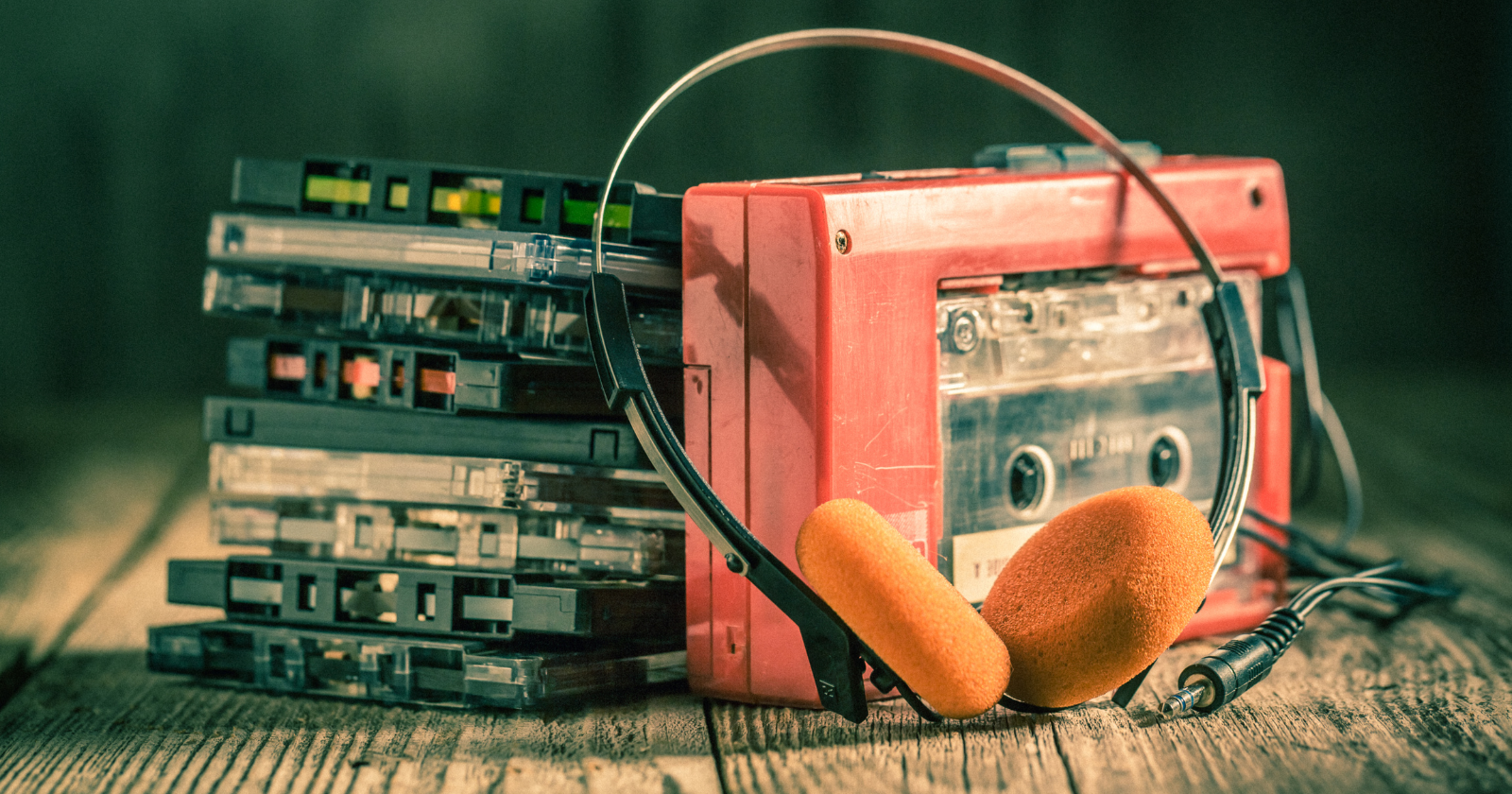
Sony’s first Walkman, the TPS-L2, debuted in Japan on July 1, 1979, with two headphone jacks and an orange “hotline” button—a radical design meant to discourage solitary music listening. The features, championed by Sony chairman Akio Morita, were dropped within years as buyers embraced the device’s private, portable nature.
Morita’s vision for the Walkman was rooted in Japanese cultural norms of the time, where public solitude was often frowned upon. The dual headphone jacks allowed two people to share music simultaneously, while the hotline button—intended for quick conversations—reinforced the idea of the device as a social tool. But by the early 1980s, Sony quietly removed these features from later models, signaling a shift in how people engaged with portable music.
This story isn’t just about a failed design experiment—it’s a case study in how consumer behavior reshapes technology. The Walkman’s evolution from a shared-listening device to a personal audio companion reflects broader trends in tech adoption: sometimes, the most intuitive features are the ones users reject outright.
Why Did Sony’s Social Walkman Features Fail?
Three key factors explain the Walkman’s pivot from shared to solo listening:

- Cultural shift: By the late 1970s, Western markets—where the Walkman later gained traction—prioritized personal space over communal audio experiences. BBC notes how portable music devices in the U.S. and Europe were increasingly marketed as tools for individual expression.
- Design constraints: The dual headphone jacks required bulky wiring, and the hotline button added complexity without addressing core functionality. Wired reports that early Walkman models suffered from poor sound quality and short battery life—problems that overshadowed Morita’s social features.
- Market feedback: Sony’s internal documents, later reviewed by The New York Times, reveal that consumer surveys in the early 1980s showed overwhelming demand for lightweight, single-user devices. The hotline button was particularly unpopular, with test users describing it as “awkward” and “distracting.”
From Shared Listening to Solo Silence: The Walkman’s Evolution
The TPS-L2’s launch marked a turning point in portable audio. Weighing just 350 grams (about 12 ounces) and priced at ¥60,000 ($250 at the time), it was the first transistor-based portable cassette player designed for personal use. But its most controversial feature—the dual headphone jacks—wasn’t just a gimmick. Morita, Sony’s co-founder, believed that listening to music alone was “rude” in Japanese society, where public solitude was often seen as antisocial.
According to Akio Morita’s memoir, *Made in Japan*, he insisted on the design to align with cultural expectations. “In Japan, people don’t like to be alone in public,” he wrote. “They feel it’s impolite to shut themselves off from the world.” The hotline button, meanwhile, was intended to let users quickly call for a companion if they felt isolated.

Yet within two years, Sony had removed both features. The 1981 WM-F5 model, one of the first to reach global markets, offered only a single headphone jack. By 1983, the WM-120, a bestseller in the U.S., had no social features at all.
Why the abrupt change? Internal Sony memos, obtained by The Guardian, show that Western consumers—particularly in the U.S.—saw the Walkman as a tool for privacy, not companionship. A 1982 market report from Sony’s American division stated: “Users in New York and Los Angeles associate portable music with personal space, not shared experiences.”
How the Walkman’s Design Shift Reflects Broader Tech Trends
The Walkman’s story mirrors how technology often outpaces cultural expectations. Today, social features in tech—like Apple’s AirPods Share (which lets users share audio with others) or Spotify’s Collab Playlists—struggle with similar adoption challenges. Consumers may embrace the idea of shared listening in theory, but in practice, they often prefer solitude.
Linda Park, a technology journalist and former software engineer, notes that the Walkman’s failure highlights a key lesson for product designers: “Features that align with cultural norms in one market can flop in another. Sony’s mistake wasn’t assuming people wanted to share music—it was assuming they’d share it *their* way.”
This tension between design intent and user behavior isn’t unique to the Walkman. Consider the Google Glass, which was marketed as a social device but largely adopted as a privacy tool, or the iPhone’s dual-SIM feature, which many users ignore in favor of single-line simplicity.
What Happened Next: The Walkman’s Legacy and Modern Parallels
By the mid-1980s, the Walkman had become a global phenomenon, selling over 100 million units by 1987. Its success wasn’t built on shared listening but on portability and personalization. Today, the brand’s modern iterations—like the WH-1000XM4 noise-canceling headphones—prioritize individual immersion over social interaction.
Yet the idea of shared audio isn’t dead. Modern devices like Bose’s Earbuds II, which support group listening, or Sony’s WH-CH720N (which allows two users to listen to the same audio) prove that the concept still has niche appeal. The difference? These features are optional, not forced.
For tech companies today, the Walkman’s lesson is clear: user behavior often rewrites the rules. What seems intuitive to designers—or even culturally appropriate—can be irrelevant to consumers. As Forbes observes, “The most successful products don’t dictate how users engage with them—they adapt to how users *already* engage.”
Where to Find Official Updates and Historical Records
For readers interested in Sony’s design evolution or the Walkman’s cultural impact, these resources provide deeper context:
- Sony’s Official Walkman History – Includes timelines, model comparisons, and archival ads.
- Library of Congress: Sony Walkman Collection – Features original prototypes, marketing materials, and internal documents.
- Smithsonian Magazine: “The Walkman’s 40-Year Legacy” – Analyzes the device’s impact on music culture.
The Next Chapter: What’s Ahead for Shared Audio?
While the Walkman’s social features faded, modern tech is revisiting the idea of shared listening—this time with smarter designs. Companies like Sony and Bose now offer “group listening” modes that sync audio wirelessly, allowing multiple users to enjoy the same content without physical connections. Unlike the Walkman’s hotline button, these features are optional and don’t interfere with solo use.
Looking ahead, the next frontier may be spatial audio, which could enable truly immersive shared experiences—like watching a movie together over headphones, even when physically apart. But as the Walkman’s history shows, success will depend on whether these features align with real-world behavior, not just cultural assumptions.
For now, the lesson remains: users decide what’s social—and what’s solitary.
Have you ever used a tech feature that seemed designed for one purpose but ended up serving another? Share your stories in the comments—or let us know what shared-listening tech you’d actually use. And if you’re curious about Sony’s latest innovations, check out our coverage of the 2024 AI headphone release.