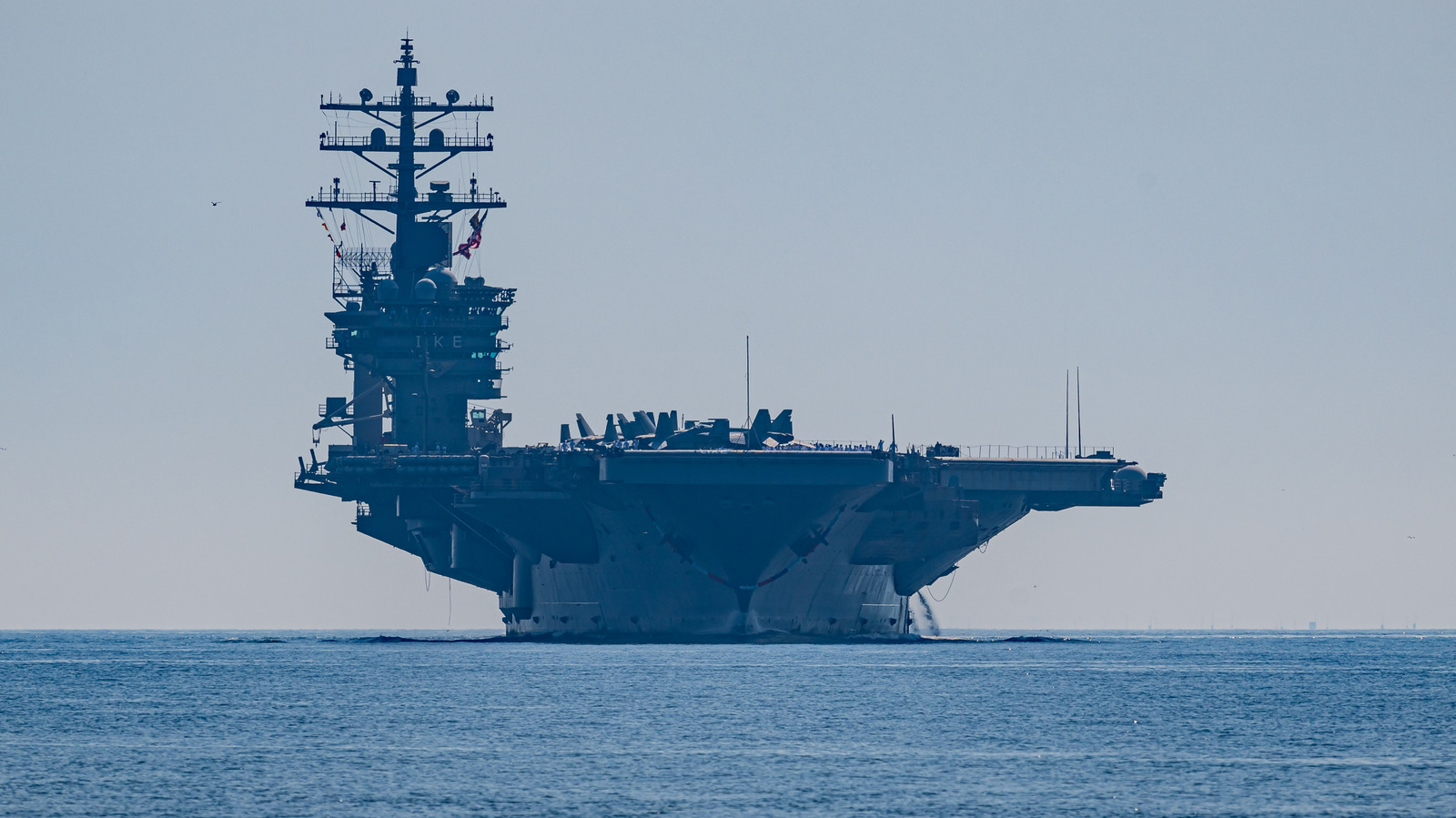
The U.S. Navy currently maintains a fleet of 11 active aircraft carriers to meet strategic requirements, but only a small fraction of these vessels are deployed forward in international waters at any given time. According to official U.S. Navy records, the fleet operates on a rotational cycle where ships move between active deployment, maintenance, and training phases to ensure operational readiness.
While the 11-carrier requirement is a benchmark for global power projection, the number of carriers actually “deployed”—meaning stationed outside their home ports in a designated theater of operations—typically fluctuates between three and five ships. This gap between total active inventory and deployed presence is a result of the Optimized Fleet Readiness and Maintenance Cycle, which prevents the Navy from deploying the entire fleet simultaneously without compromising the structural integrity of the ships.
The current deployment landscape is heavily influenced by geopolitical tensions in the Indo-Pacific and the Middle East. The U.S. Navy utilizes Carrier Strike Groups (CSGs), consisting of a carrier and its escort ships, to maintain a persistent presence in these regions. However, the logistical strain of maintaining this presence often leads to “surge” deployments, where ships remain on station longer than their scheduled rotations.
Current Deployed Carrier Status and Theater Assignments
The U.S. Navy’s deployment strategy focuses on two primary hubs: the Seventh Fleet in the Pacific and the Fifth Fleet in the Middle East. According to recent U.S. Navy operational updates, the Nimitz-class and Gerald R. Ford-class carriers are the primary assets used for these missions. The Nimitz-class remains the backbone of the fleet, while the newer Ford-class introduces electromagnetic aircraft launch systems (EMALS) to increase sortie rates.

In the Indo-Pacific, the Navy frequently deploys carriers to the South China Sea and the Philippine Sea to conduct freedom of navigation operations. In the Middle East, carriers are stationed in the Red Sea or the Arabian Gulf to deter regional aggression and protect maritime trade routes. Because the Navy cannot keep all 11 carriers at sea, it rotates these assets based on the perceived threat level in each theater.
The distinction between “active” and “deployed” is critical for understanding naval readiness. An active carrier is one that is commissioned and manned, but it may be docked in Norfolk, Virginia, or San Diego, California, for crew certifications or pier-side repairs. Only those designated as “forward-deployed” are considered operational assets in a foreign theater.
The 11-Carrier Requirement and the Maintenance Cycle
The mandate to maintain 11 active aircraft carriers is designed to allow the U.S. to sustain a global presence while accounting for the inevitable downtime required for repairs. A carrier cannot operate indefinitely; it requires periodic Dry Docking Selected Restricted Availability (DSRA) and Complex Overhauls (COH) to maintain its nuclear propulsion systems and flight deck capabilities.

According to the Department of the Navy, the maintenance cycle is often the primary bottleneck in deployment schedules. When a carrier enters a long-term overhaul, it is removed from the “active” deployment pool, effectively reducing the number of ships available for immediate tasking. If multiple carriers enter maintenance simultaneously, the Navy may struggle to meet the deployment needs of both the Pacific and Atlantic commands.
The transition to the Gerald R. Ford-class is intended to mitigate some of these issues. These ships are designed for higher availability and lower manning requirements, which the Navy claims will reduce the strain on the overall fleet. However, the integration of new technology has occasionally led to “growing pains,” including software glitches and mechanical issues with the new catapult systems, which can temporarily sideline a vessel.
Strategic Impact of Limited Forward Deployment
The reliance on a handful of deployed carriers creates a “single point of failure” risk. If a deployed carrier suffers a mechanical failure or is forced to return to port, the U.S. loses a significant portion of its air superiority in that region until a replacement can be surged from the U.S. West or East Coasts.
Military analysts often point to the “tyranny of distance” in the Pacific. Moving a carrier from California to the South China Sea takes weeks, meaning the Navy must predict where it needs its assets long before a crisis emerges. This is why the U.S. emphasizes “Dynamic Force Employment,” a strategy aimed at making carrier movements less predictable to adversaries while maintaining a baseline presence.
The current fleet composition includes the following primary classes:
- Nimitz-class: Nuclear-powered carriers that have served as the primary power projection tool since the 1970s.
- Gerald R. Ford-class: The newest generation, featuring advanced power generation and automated weapons handling.
Comparison of Fleet Status: Active vs. Deployed
| Category | Quantity/Status | Primary Purpose |
|---|---|---|
| Total Active Inventory | 11 Ships | Overall strategic capacity and reserve |
| Average Deployed | 3–5 Ships | Immediate theater response and deterrence |
| Maintenance/Training | 6–8 Ships | Overhauls, crew certification, and refueling |
This distribution ensures that the Navy does not exhaust its personnel or equipment. A carrier strike group involves thousands of sailors and hundreds of aircraft; deploying all 11 carriers at once would leave the U.S. with no reserve capacity to respond to a new emergency and would accelerate the wear and tear on the ships’ nuclear reactors.

The next major checkpoint for the fleet’s capacity will be the continued rollout of the Ford-class carriers and the scheduled decommissioning of older Nimitz-class vessels. The Navy’s long-term shipbuilding plan, outlined in various Department of the Navy budget requests, aims to maintain the 11-carrier floor as a non-negotiable requirement for national security.
For the latest updates on fleet movements and official deployment schedules, readers can monitor the U.S. Navy’s official newsroom and the Department of Defense briefings. We welcome your thoughts on the balance between fleet size and deployment readiness in the comments below.