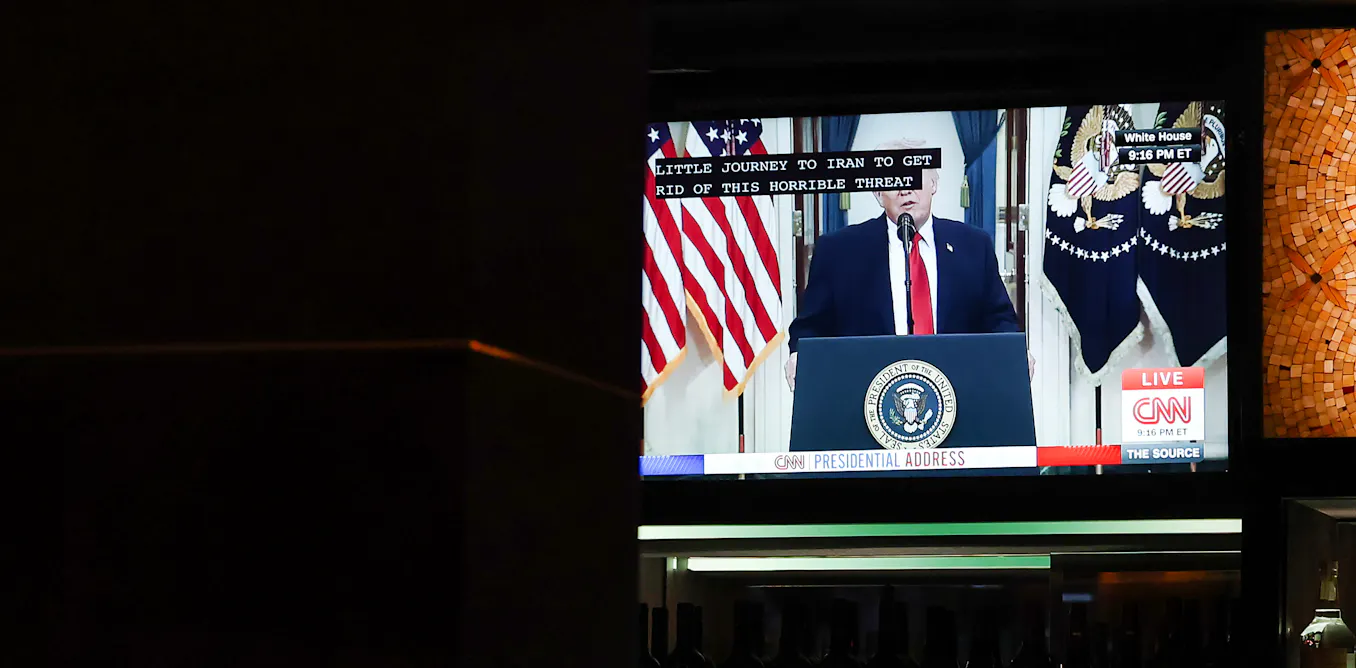
The United States government is currently locked in a high-stakes constitutional standoff over the limits of presidential power. On May 1, 2026, a critical 60-day window expired for Operation Epic Fury in Iran, a date that theoretically requires a president to either secure congressional approval for unilateral military action or wind down the operation. However, the Trump administration has signaled that it does not view this deadline as a binding constraint, highlighting a long-standing tension between the executive branch and the legislative intent of the War Powers Resolution of 1973.
This dispute is not merely a legal disagreement but a reflection of how the 60-day War Powers Resolution deadline has evolved into a symbolic milestone rather than a functional legal trigger. While the resolution was designed to ensure the collective judgment of both Congress and the president in the introduction of U.S. Armed forces into hostilities, decades of judicial rulings and executive interpretations have eroded its ability to actually halt military campaigns.
The current friction reached a peak on April 30, 2026, during testimony before the Senate Armed Services Committee. Secretary of Defense Pete Hegseth argued that the 60-day clock is not currently running, stating that the U.S. Is in a cease-fire. This interpretation suggests that a cessation of active hostilities effectively pauses the statutory clock, a claim that has drawn sharp criticism from lawmakers. Senator Tim Kaine of Virginia described the threshold as a source of legal question
and constitutional concerns
.
The Mechanics and Intent of the War Powers Resolution
Passed in 1973 against the backdrop of the Vietnam War, the War Powers Resolution was an attempt by Congress to reassert its constitutional authority to declare war. Under the U.S. Constitution, war powers are shared between the president and Congress. The resolution asserts that the president’s power to conduct war is subject to specific conditions: a formal congressional declaration of war, specific statutory authorization, or a national emergency resulting from an attack on the U.S., its territories, or its armed forces.

For military campaigns that do not meet these criteria, the resolution establishes a strict timeline. The president must report the action to congressional leadership within 48 hours of its commencement. This triggers a 60-day clock, after which the president must either obtain legislative authorization or terminate the use of U.S. Forces. This window can be extended to 90 days if the president certifies an unavoidable military necessity respecting the safety of United States Armed Forces
during the withdrawal process.
To prevent the executive branch from bypassing this intent, the resolution explicitly states that neither existing treaties nor new budget appropriations can serve as a substitute for legislative authorization. Despite these safeguards, the practical application of the law has been undermined by a series of legal and political shifts.
How the ‘Legislative Veto’ Was Lost
The original strength of the War Powers Resolution relied on the concept of a concurrent resolution—a mechanism that allowed Congress to terminate an unauthorized operation without the president’s signature. This acted as a “legislative veto.” However, this mechanism was dismantled by the judiciary.
In 1983, the Supreme Court ruled that legislative vetoes were unconstitutional, asserting that any action by Congress that has the force of law must be presented to the president for signature or veto. This ruling fundamentally changed the power dynamic. Now, if Congress wishes to stop a presidential military campaign, it must pass a disapproval resolution. Because What we have is a standard bill, the president can veto it.
To override such a veto and force the removal of troops, Congress would need a two-thirds supermajority in both chambers. In practice, this means Congress must vote twice—once to disapprove and once to override—to stop an operation it never approved in the first place. This high bar has rendered the 60-day deadline largely toothless. During his first term, President Donald Trump vetoed a disapproval resolution, and Congress lacked the necessary two-thirds majority to override that decision.
Historical Precedents: Kosovo and Libya
The current standoff over Operation Epic Fury mirrors previous conflicts where presidents of both parties bypassed congressional authorization. In 1999, President Bill Clinton initiated NATO-led operations against the Federal Republic of Yugoslavia (FRY) in Kosovo. On March 26, 1999, Clinton sent a War Powers Resolution letter to Congress, asserting his authority as Commander in Chief and stating that the duration of the operation was difficult to predict.

Throughout March and April 1999, the House and Senate failed to either approve or disapprove of the action. While the operation ended after 78 days, the legal battle continued. A lawsuit led by Representative Tom Campbell, a California Republican, alleged that Clinton had violated the War Powers Resolution. However, a federal appellate court eventually rejected the claim, ruling that the lawmakers’ injury was not reviewable by the court.
A similar pattern emerged during the presidency of Barack Obama. On March 21, 2011, two days after NATO operations began in Libya, President Obama sent a War Powers Resolution letter to Congress. He had not received prior legislative authority. The operation lasted 222 days, and despite efforts by Representative Dennis Kucinich and a group of mostly Republican House members to stop the president via lawsuit, the legal challenges failed. The House and Senate never reached an agreement to either formally approve or disapprove of the intervention.
The Current Legal Strategy for Operation Epic Fury
Operation Epic Fury began on February 28, 2026. Following the established protocol, President Trump sent the required report to Congress on March 2, 2026. In the memo, the president stated that while the U.S. Desires peace, it is not possible at this time to know the full scope and duration of military operations that may be necessary
.
The administration’s legal defense relies on the interpretation of the president’s role as Commander in Chief and Chief Executive. This position has been supported by various legal opinions from the Department of Justice’s Office of Legal Counsel (OLC). For instance, the OLC published a memo in December 2025 defending the capture of Nicolás Maduro in January 2026, and the State Department issued a defense of the Iran actions on April 21, 2026.
Since the start of the Iran operation, the House and Senate have attempted to pass legislation to halt the military action six times. All six attempts have failed, including the most recent vote on April 30. Democrats have suggested they may file suit against the administration if operations continue beyond the 60-day mark without authorization. However, historical precedent suggests that federal courts are generally reluctant to intervene in constitutional disputes involving the War Powers Resolution, particularly when the plaintiffs are members of Congress.
Comparison of Presidential Unilateralism
| Conflict | President | Congressional Action | Outcome |
|---|---|---|---|
| Kosovo (1999) | Bill Clinton | Failed to approve/disapprove | Court rejected lawmaker lawsuit |
| Libya (2011) | Barack Obama | Failed to approve/disapprove | Lawsuit to stop president failed |
| Iran (2026) | Donald Trump | Six failed attempts to stop | Administration ignoring 60-day deadline |
Conclusion: The Shift Toward Political Rather Than Legal Resolution
The evidence from the last five decades suggests that the War Powers Resolution is less a legal mandate and more a political framework. Until Congress can muster a bipartisan supermajority to override a presidential veto, the executive branch retains significant autonomy in deciding when and how the United States enters a conflict. In the absence of a binding legal clock, presidential decisions are often influenced more by public opinion and economic indicators than by the statutory requirements of 1973.
The next critical development will be whether Democratic lawmakers proceed with legal action following the expiration of the May 1 deadline, and whether the administration continues to maintain that a cease-fire pauses the statutory clock. We will continue to monitor the Senate Armed Services Committee for further testimony regarding the 2027 budget and its implications for ongoing military operations.
Do you believe the War Powers Resolution should be amended to provide more binding constraints on the presidency? Share your thoughts in the comments below.