
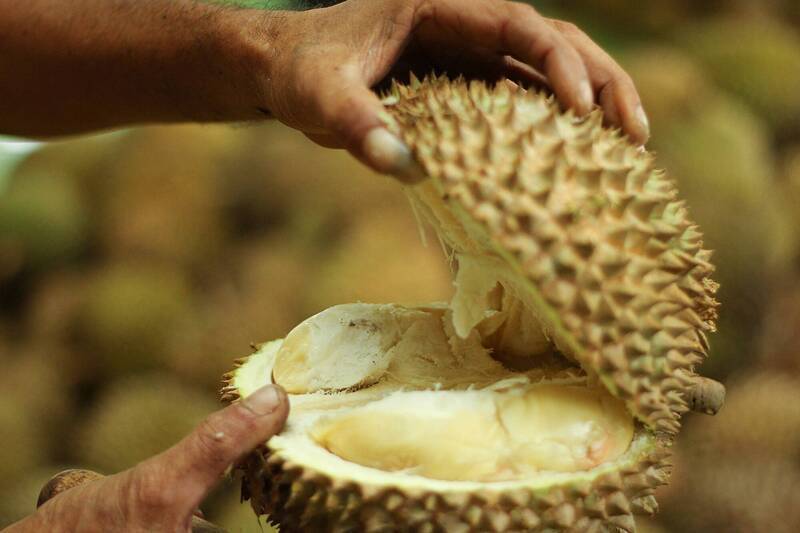
The “king of fruits” has encountered a devastating bottleneck at the border. In a sudden paralysis of the agricultural supply chain, nearly 2,000 containers of fresh durians have become stranded at border checkpoints and warehouses, sparking a localized Vietnam durian export crisis that threatens the livelihoods of thousands of growers in the Central Highlands.
The crisis centers on a critical failure in the certification process required for entry into the Chinese market. For high-value agricultural exports, the journey from the orchard to the consumer is governed by strict phytosanitary standards and safety certifications. When the laboratories authorized to conduct these mandatory tests ceased operations, the pipeline stopped. What followed was a rapid accumulation of perishable cargo, plummeting market prices, and a race against time to prevent massive spoilage.
The epicenter of the fallout is Dak Lak province, one of Vietnam’s most productive durian hubs. Here, the intersection of rigid import regulations and a lack of redundant testing infrastructure has created a perfect storm. As shipments are held for 10 to 15 days, the biological clock of the fruit—which ripens and degrades rapidly—has turned a logistical delay into a financial catastrophe for small-scale farmers.
The Technical Bottleneck: Cadmium and Auramine O
The primary cause of the stagnation is the temporary closure of laboratories authorized to test for specific contaminants. To maintain access to the Chinese market, Vietnamese exporters must provide safety certificates proving that their produce is free from harmful substances. Specifically, the labs were halted while conducting tests for cadmium, a toxic heavy metal, and auramine O, a synthetic dye.

Cadmium is a heavy metal that can accumulate in crops through contaminated soil or certain fertilizers. Because it is toxic to humans, importing nations like China enforce strict maximum residue limits (MRLs). Auramine O, is a yellow dye that has been used illegally in some regions to enhance the visual appeal of fruit, making them appear riper or more vibrant than they actually are. Both substances are strictly prohibited under international food safety standards, and the absence of verified testing means that no “safety certificates” can be issued.
According to Le Anh Trung, president of the Dak Lak Durian Association, the laboratories responsible for pesticide residue testing stopped accepting new samples on Oct. 11 and failed to release results for batches that had already been submitted. This administrative vacuum left exporters unable to prove the safety of their goods, forcing a total suspension of procurement activities across the region.
Economic Fallout in Dak Lak Province
The immediate result of the testing halt was a sharp correction in the price of fresh grade A durians. In the warehouses of Dak Lak, prices plummeted from over 100,000 Vietnamese dong (approximately $3.80) per kilogram to around 80,000 dong ($3.04) per kilogram. This 20% drop in value reflects the desperation of growers facing the imminent risk of their harvest rotting on the vine or in storage.
For the farmers of Dak Lak, the timing could not be worse. The crisis hit during the peak harvest season, a period when cash flow is most critical. With exporters unable to obtain the necessary certifications, hundreds of orchards are now facing a grim choice: sell their produce at steep discounts to small-scale local traders or watch the fruit fall and rot after ripening.
The logistical strain is exacerbated by the nature of the “cold chain.” Fresh durians require precise temperature and humidity control to survive the journey to China. When containers are stranded at border checkpoints for two weeks, the energy costs to maintain refrigeration rise, while the quality of the fruit declines. Once the window for “premium grade” export closes, the value of the cargo vanishes almost entirely.
Systemic Vulnerabilities in the Export Pipeline
This incident highlights a dangerous “single point of failure” within Vietnam’s agricultural export infrastructure. The reliance on a small number of authorized laboratories means that a simple system maintenance window can paralyze an entire industry. One laboratory in northern Vietnam informed companies that it would suspend sample registration and collection from Oct. 21 to 27 for system maintenance to ensure equipment stability and testing accuracy after a period of continuous operation during the peak season.

While the laboratory framed the suspension as a necessary step to ensure “testing accuracy,” the lack of an overlapping or redundant testing facility meant that the entire export flow stopped. This reveals a critical gap in the strategic planning of the agricultural supply chain: the assumption that laboratory capacity would remain constant during the highest period of demand.
The dependence on the Chinese market further amplifies this risk. China is the primary destination for Vietnamese durians, and Beijing’s phytosanitary requirements are non-negotiable. Without the specific paperwork generated by these authorized labs, the border is effectively closed, regardless of the actual quality of the fruit.
What Which means for Global Agricultural Trade
The Vietnam durian export crisis serves as a cautionary tale for other developing economies that rely heavily on a single export market. The “China-Vietnam trade corridor” is one of the most active agricultural routes in Asia, but it is also one of the most sensitive to regulatory changes and technical failures.

Industry analysts suggest that to avoid future bottlenecks, Vietnam must invest in:
- Laboratory Redundancy: Increasing the number of certified laboratories across different provinces to ensure that a shutdown in one region does not freeze the entire national export.
- Digital Certification: Moving toward more integrated, real-time digital tracking of phytosanitary certificates to reduce the time between testing and border clearance.
- Market Diversification: Reducing the extreme reliance on a single destination by expanding durian exports to other high-demand markets in the West and the Middle East.
The volatility seen in Dak Lak is not merely a local issue but a symptom of the fragility of modern “just-in-time” agricultural logistics. When the gap between harvest and export is measured in days, any administrative or technical glitch is amplified into an economic disaster.
Next Steps and Recovery
As of late October, operations at the affected northern laboratory were expected to resume on the afternoon of Oct. 27. However, the backlog of nearly 2,000 containers cannot be cleared overnight. Exporters must now prioritize the remaining viable shipments while writing off the losses from spoiled cargo.
The Dak Lak Durian Association and local government officials are expected to review the capacity of current testing facilities to prevent a recurrence during the next harvest cycle. The immediate focus remains on clearing the border checkpoints and stabilizing the price for farmers who have already suffered significant losses.
The next critical checkpoint will be the release of the pending test results for the batches submitted prior to the Oct. 11 shutdown. These results will determine how many of the stranded containers can still be salvaged for export to China.
Do you think agricultural nations are too dependent on single-market exports? Share your thoughts in the comments below or share this report with your network to discuss the future of global food supply chains.