
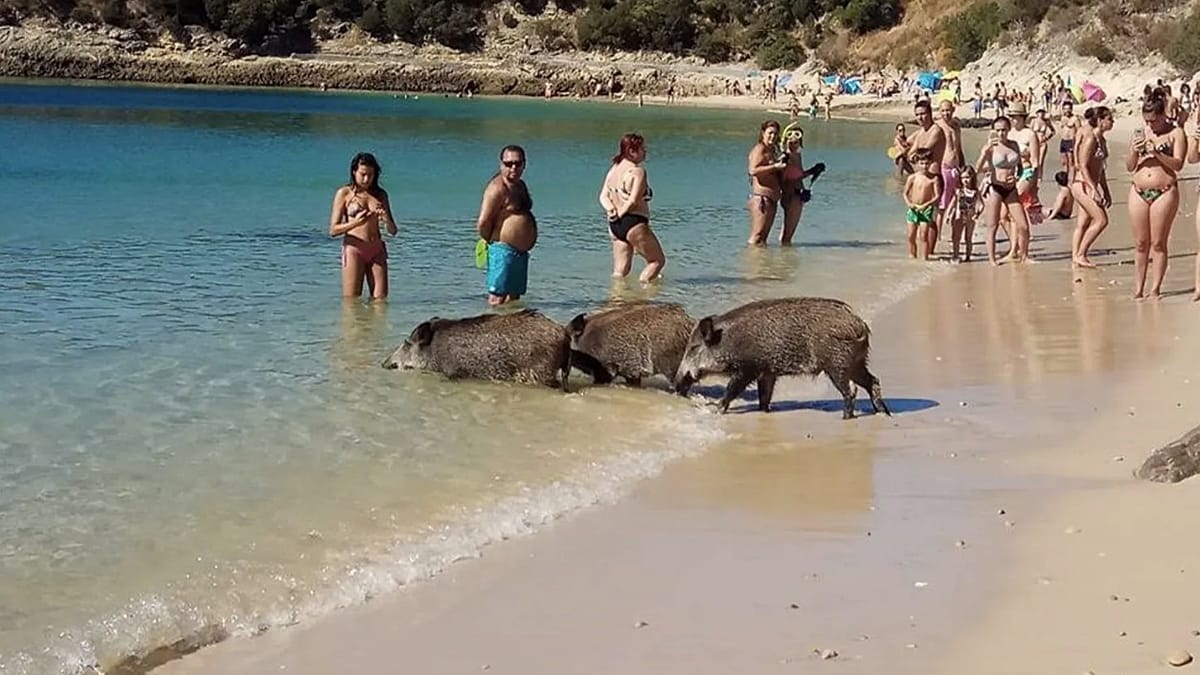
Wild boars have increasingly ventured onto the sands of Portinho da Arrábida in Portugal, frequently approaching beachgoers to scavenge for food left unattended on towels. As these encounters become more common, local authorities and wildlife experts are urging visitors to maintain a safe distance and secure their belongings to prevent human-wildlife conflict in this protected coastal area.
Portinho da Arrábida, located within the Arrábida Natural Park, is a popular destination known for its turquoise waters and proximity to the Serra da Arrábida mountain range. The rugged terrain of the park provides a natural habitat for wild boar (Sus scrofa), which are opportunistic foragers. While these animals typically avoid human contact, the availability of easily accessible food on the beach has begun to alter their natural behavior, leading to a pattern of what experts describe as habituation.
Why wild boars are approaching beachgoers
The primary driver behind these sightings is the easy availability of food. According to the Institute for Nature Conservation and Forests (ICNF), which manages Portugal’s protected areas, wild animals often lose their natural fear of humans when they associate people with food rewards. When a boar successfully steals a sandwich or bag of chips, it learns that the beach is a reliable source of nutrition, reinforcing the behavior and encouraging the animals to return to the shoreline.
This behavior is not unique to the Arrábida region. Across Europe, wild boars have been observed entering urban and recreational areas in search of sustenance. Ecologists note that as natural habitats are encroached upon or as food sources fluctuate due to environmental factors, these animals are forced to expand their foraging range. In the case of Arrábida, the proximity of the dense forest to the beach makes it simple for the animals to descend from the hills during quieter hours or when the scent of food is particularly strong.
Safety guidelines for visitors
While wild boars are generally not aggressive unless they feel threatened or are protecting their young, they are powerful, unpredictable animals. The VisitPortugal tourism authority advises that visitors should never attempt to feed or approach the animals. Feeding wildlife is illegal in many protected areas and poses a significant risk to both the visitor and the animal, as it can lead to the necessity of culling “problem” animals that have become too bold around humans.

To ensure safety, the following precautions are recommended for those visiting natural sites like Portinho da Arrábida:
- Store all food in sealed, hard-sided containers that are difficult for animals to open.
- Never leave belongings unattended on the beach, especially bags containing food.
- Keep a respectful distance; if you spot a boar, do not attempt to take photographs from close range.
- Dispose of all trash in secure, animal-proof bins or take it with you when you leave the beach.
- If a boar approaches, remain calm, move away slowly, and do not make sudden movements or loud noises that could startle the animal.
The environmental impact of human interaction
The presence of wild boars on the beach is part of a broader challenge in managing the Arrábida Natural Park, an area established in 1976 to protect its unique Mediterranean ecosystem, as detailed by the official ICNF park portal. The park serves as a critical refuge for various species, but the increase in human tourism often clashes with conservation goals. When wild animals become dependent on human food, their nutritional health can suffer, and they may pass on these behavioral traits to their offspring.
Furthermore, the increased human traffic in the park can lead to habitat degradation. Conservationists emphasize that maintaining the “wild” nature of these animals is vital for the health of the park’s biodiversity. By adhering to strict “leave no trace” principles, visitors play an essential role in keeping the boars in their natural habitat and away from the beach towels of holidaymakers.
What happens next
Management of the wild boar population in Portugal is overseen by regional authorities who monitor wildlife populations to ensure they remain within sustainable levels. While no specific cull or major intervention has been announced for the immediate Portinho da Arrábida area, the ICNF continues to conduct periodic assessments of wildlife behavior in the Arrábida Natural Park. Future updates regarding access to specific beach areas or new safety regulations will be posted through official ICNF announcements.

Visitors are encouraged to check local notices at the entrance to the park or speak with local rangers if they have concerns about wildlife sightings. Staying informed and exercising caution remains the best way to enjoy the natural beauty of the region without contributing to the disruption of local wildlife. Have you encountered wildlife during your travels? Share your experiences or tips for responsible tourism in the comments below.