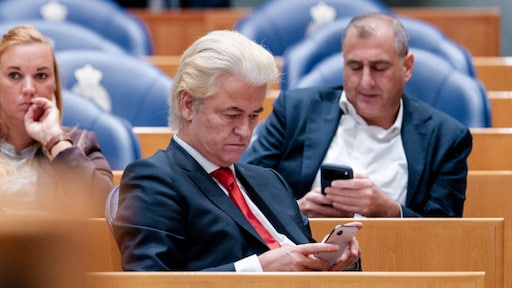
The Netherlands’ political landscape is once again navigating turbulent waters as revelations emerge regarding tactics employed by far-right politician Geert Wilders during the recent election campaign. Newly surfaced app messages indicate a deliberate effort by Wilders to avoid participation in televised debates, specifically those hosted by RTL, a major Dutch broadcaster. The disclosures, reported by RTL Nieuws and stemming from an investigation by the Volkskrant newspaper, paint a picture of a campaign team scrambling to concoct excuses to keep their leader away from direct scrutiny.
The messages reveal a series of increasingly urgent appeals from Wilders to his then-trusted aide, Gidi Markuszower, requesting assistance in fabricating a reason for his absence. “Please, please, please,” Wilders reportedly texted Markuszower, highlighting the intensity of his desire to sidestep the debates. This behavior raises questions about Wilders’ commitment to engaging with voters and addressing critical issues in a public forum, particularly as he now prepares to potentially lead the country as prime minister following the recent election results.
Wilders’ Apparent Avoidance of Debate and the Search for an Excuse
According to RTL Nieuws, the app correspondence details Wilders’ growing anxiety in the lead-up to the scheduled debates. In early October, he expressed a clear preference to “skip” the debates altogether, despite acknowledging his prominent position in public discourse. When Markuszower pointed out his high profile, Wilders retorted, “Why do I have to go to those stupid debates?” and directly requested, “Invent a trick.” The exchange underscores a calculated strategy to minimize potential challenges and maintain control over his campaign narrative.
The urgency escalated on October 10th, just two days before the first major RTL debate. Wilders texted Markuszower, claiming to feel unwell and lacking the motivation to participate. He explicitly asked for a believable excuse to avoid attending, even voicing concern about being labeled a “coward” if his reason wasn’t convincing. The fact that Wilders actively sought to avoid debate, and was concerned about the public perception of doing so, is a significant detail in understanding his campaign strategy. The Volkskrant’s investigation, which uncovered these messages, was prompted by the recent departure of seven PVV (Party for Freedom) members from the parliamentary faction in January, suggesting internal dissent over Wilders’ leadership and approach.
The Broader Context: Election Results and Political Fallout
The revelations come after a closely watched election in the Netherlands, where Wilders’ PVV secured a surprising victory, winning the most seats in parliament. However, forming a governing coalition remains a complex undertaking, as most mainstream parties have expressed reluctance to collaborate with Wilders due to his anti-Islam rhetoric and controversial views. Reuters reported that Wilders faces significant hurdles in securing enough support to become prime minister.
The timing of these disclosures is particularly sensitive, as potential coalition partners assess Wilders’ suitability for leadership. The reported attempts to evade public debate could reinforce concerns about his willingness to engage in constructive dialogue and compromise, essential qualities for a successful coalition government. The departure of Gidi Markuszower, the aide involved in these exchanges, is also linked to Wilders’ perceived passivity during the campaign, further highlighting internal tensions within the PVV.
JA21’s Potential Gains from Wilders’ Absence
While Wilders’ absence from the RTL debates was notable, it created an opportunity for other parties to gain prominence. Menszine.nl reported that Joost Eerdmans, the leader of JA21, a right-wing party, was reportedly pleased with Wilders’ decision not to participate. This allowed JA21 to more effectively represent right-wing viewpoints during the debate, potentially attracting voters who might otherwise have supported the PVV. Political analysts suggest that JA21 has been gaining momentum, partly due to a shift in support from the PVV, with some voters viewing JA21 as a more inclusive and pragmatic right-wing option.
The second RTL debate, held on October 19th, saw Jimmy Dijk of the SP (Socialist Party) take Wilders’ place. This decision was based on the Peilingwijzer, a Dutch polling aggregator, which identified the SP as the next largest party. The debate itself focused on key issues such as housing, migration, and healthcare, with the participating leaders presenting their respective plans to address these challenges. Renze Klamer hosted the debate, with political correspondent Frits Wester providing analysis.
Concerns Over Threats and Debate Participation
Recent reports suggest that Wilders’ decision to skip debates may also be linked to security concerns. Socialnieuws.nl indicates that a threat against Wilders may have contributed to his absence from the RTL debates, and potentially other public appearances. While the nature of the threat has not been publicly disclosed, it raises questions about the safety of politicians and the challenges of conducting a free and open election campaign. It remains unclear whether Wilders will participate in future debates, including the first RTL debate scheduled for a date in the near future.
The situation highlights the delicate balance between ensuring the safety of political figures and upholding the principles of democratic debate. The Dutch authorities are likely to be reviewing security measures to protect Wilders and other politicians during this sensitive period. The absence of a key candidate from crucial debates inevitably impacts the quality of public discourse and the ability of voters to make informed decisions.
The Implications for Dutch Politics
The revelations surrounding Wilders’ attempts to avoid the RTL debates add another layer of complexity to an already challenging political landscape. His willingness to seek excuses to sidestep scrutiny raises questions about his leadership style and his commitment to transparency. As negotiations continue to form a new government, potential coalition partners will undoubtedly scrutinize these disclosures and assess their implications for a future collaboration.
The situation also underscores the growing fragmentation of the Dutch political system, with a proliferation of parties vying for influence. The rise of JA21, and its potential to attract voters from the PVV, demonstrates the fluidity of the electorate and the importance of effective communication and debate. The Dutch public will be closely watching how these developments unfold and whether Wilders can overcome the obstacles to forming a stable and effective government.
The next key development will be the outcome of the ongoing coalition talks. The ability of Wilders to secure the support of other parties will determine whether he can ultimately become prime minister and implement his political agenda. The Dutch political landscape remains highly uncertain, and the coming weeks will be crucial in shaping the future of the country.
Key Takeaways:
- Geert Wilders actively sought to avoid participation in RTL televised debates during the recent Dutch election campaign.
- App messages reveal Wilders requested aide Gidi Markuszower to fabricate an excuse for his absence.
- Wilders’ behavior raises questions about his commitment to public engagement and transparency.
- The situation impacts coalition negotiations and the potential for JA21 to gain support.
- Security concerns may also be a factor in Wilders’ decision to skip debates.
This is a developing story. We will continue to provide updates as more information becomes available. Share your thoughts and reactions in the comments below.
Worth a look