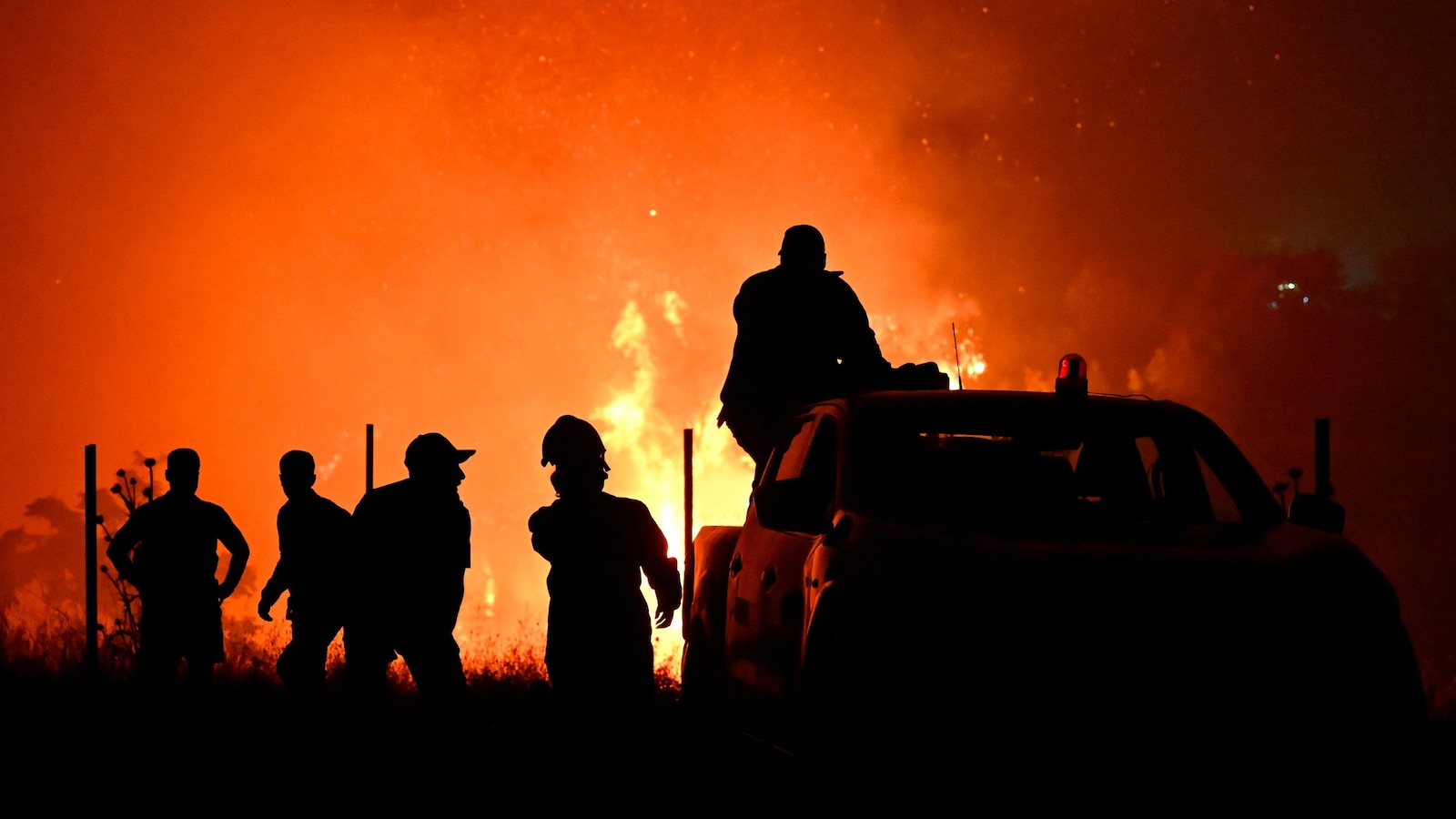
Emergency crews in Portugal and Greece are currently engaged in extensive operations to contain multiple wildfires, as high temperatures and strong winds continue to complicate firefighting efforts across Southern Europe. In Portugal, hundreds of firefighters are working to suppress large blazes, while Greek authorities have issued urgent health warnings regarding hazardous air quality caused by thick, toxic smoke blanketing several regions.
The intensity of these wildfires has prompted significant international concern, as climate conditions—characterized by prolonged heatwaves and arid landscapes—create a high risk for rapid fire spread. According to the European Forest Fire Information System (EFFIS), the Mediterranean region is currently experiencing a heightened fire danger index, which tracks meteorological conditions that facilitate the ignition and growth of wildfires.
The Situation in Portugal
In Portugal, civil protection authorities have deployed significant resources to combat wildfires that have broken out in several districts. The National Emergency and Civil Protection Authority (ANEPC) reports that hundreds of ground personnel, supported by aerial firefighting aircraft, are working to establish containment lines around active fires. These operations are critical, as the fires threaten both rural areas and proximity to residential zones.

The Portuguese government regularly provides updates on the status of these incidents through the ANEPC official portal, where they categorize fire risk levels based on temperature, humidity, and wind speed. The current operational strategy prioritizes the protection of human life and infrastructure, with local municipal services coordinating evacuations where necessary. Officials have urged residents to remain vigilant and follow instructions from local authorities as they monitor changing wind patterns that could shift the direction of the flames.
Air Quality and Health Risks in Greece
Greek authorities are managing a dual crisis: active fire suppression and the mitigation of public health risks from smoke inhalation. The Greek Ministry of Climate Crisis and Civil Protection has issued air quality alerts for regions affected by smoke plumes, noting that the concentration of fine particulate matter (PM2.5) has reached levels considered harmful to vulnerable populations, including the elderly, children, and individuals with pre-existing respiratory conditions.

According to data from the Copernicus Atmosphere Monitoring Service, the smoke from these fires can travel significant distances, affecting air quality in areas far removed from the actual burn sites. Medical professionals in affected regions have advised citizens to remain indoors, close windows, and limit outdoor physical activity. The Ministry continues to monitor the atmospheric conditions and provides real-time guidance via their official website to ensure the public receives timely safety information.
Factors Driving the Current Fire Season
The ongoing wildfire activity across Southern Europe is often attributed to a combination of environmental and meteorological factors. Research published by the European Environment Agency (EEA) identifies that climate change is increasing the frequency and intensity of heatwaves in the region, which dries out vegetation and creates “fuel” for fires. When combined with strong seasonal winds, such as the Etesian winds in Greece, these conditions create an environment where fires can escalate from small ignitions to large-scale disasters in a matter of hours.
Government agencies in both countries are utilizing satellite monitoring to track hotspots and deploy resources efficiently. However, the scale of the fires often exceeds local capacity, requiring regional coordination and support from European Union emergency mechanisms. The EU Civil Protection Mechanism allows member states to share firefighting assets, including specialized aircraft and ground crews, to assist in national efforts when domestic resources are stretched thin.
Looking Ahead: Emergency Preparedness
As the summer season progresses, authorities in both Portugal and Greece remain on high alert. The focus for the coming days remains on containment and the maintenance of emergency infrastructure. For residents in affected areas, the most reliable source for immediate safety instructions remains the local municipal and national civil protection agencies.
Updates on fire containment progress and air quality advisories are expected to be released by government ministries as conditions evolve. The public is encouraged to monitor official government channels for the latest information on evacuation orders and health guidelines. We will continue to track these developments as official reports are released by European civil protection authorities.
Have you been affected by the current wildfire situation or have you observed changes in local air quality? Please share your experiences or questions in the comments section below.