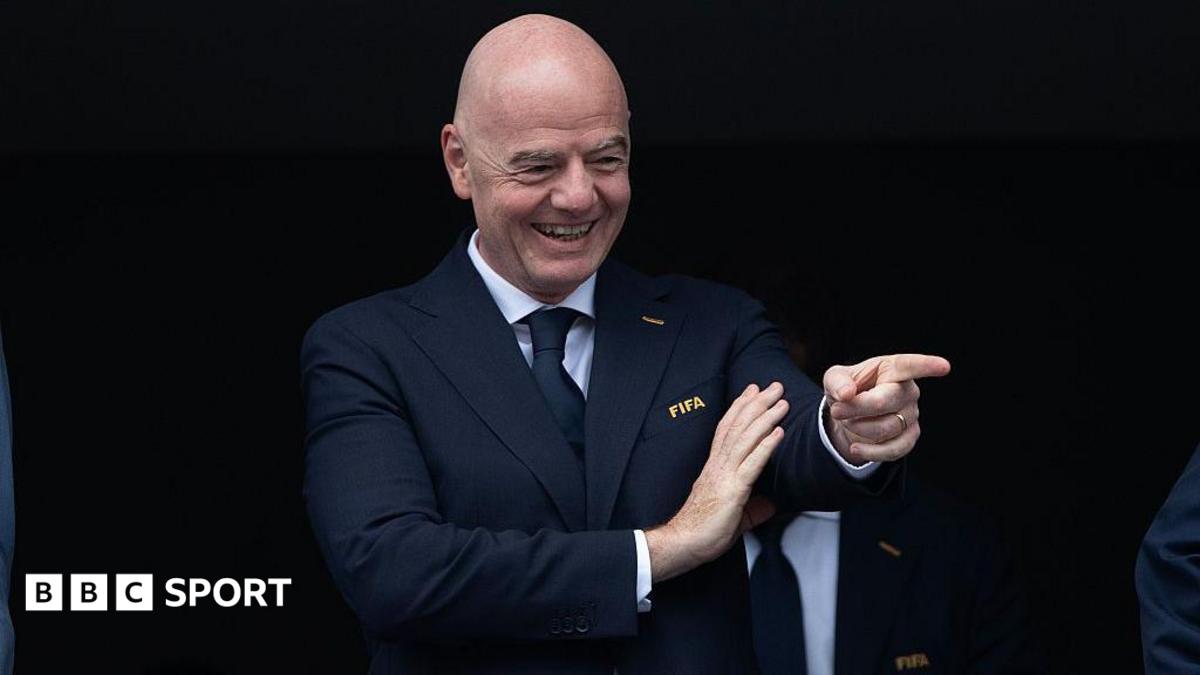
FIFA President Gianni Infantino remains insulated from European political backlash regarding potential U.S. political interventions because his power base relies on a global voting bloc of member associations rather than European approval. Despite criticism from UEFA officials and European sports administrators over the influence of figures like Donald Trump on the global game, Infantino’s leadership is secured by the support of nations in Asia, Africa, and the Middle East, according to current FIFA governance structures.
The tension centers on the perceived shift of football’s geopolitical axis. While European nations historically dominated the sport’s administration, Infantino has pivoted toward a “global” model that prioritizes emerging markets. This strategy has effectively neutralized the ability of European federations to trigger a leadership change through the FIFA Congress, where each of the 211 member associations holds one vote regardless of size or regional influence.
Infantino, who assumed office in 2016, has navigated a series of controversies—from the 2022 World Cup in Qatar to the proposed expansion of the 2026 tournament—by ensuring that the financial benefits of these decisions flow to the smaller member associations. According to FIFA’s official financial reports, the organization has significantly increased the funds distributed via the FIFA Forward program, which provides development grants to national associations.
Why European backlash fails to threaten Infantino’s position
European dissatisfaction with Infantino’s alignment with non-European political powers does not translate into a viable electoral threat. In the FIFA democratic system, the 55 members of UEFA are outnumbered by the combined votes of the Asian Football Confederation (AFC), the Confederation of African Football (CAF), and CONCACAF. As long as Infantino maintains the support of these regions, European protests remain symbolic.

The influence of U.S. political interests, particularly during the tenure of Donald Trump and the subsequent preparations for the 2026 World Cup, has created a friction point. European critics argue that the commercialization and political alignment of the sport are drifting away from traditional “European values.” However, for many member associations in the Global South, these shifts represent a break from the “Euro-centric” era of football governance.
This dynamic is visible in the strategic placement of tournaments. By awarding the 2030 and 2034 World Cups to regions outside of the traditional European heartland, Infantino has solidified a network of loyalty. According to reports on the Reuters news wire, the decision to award the 2034 tournament effectively to Saudi Arabia (via a unified bidding process) has further cemented ties between FIFA leadership and the Middle East.
The role of the Folarin Balogun case in FIFA politics
The controversy surrounding Folarin Balogun’s international eligibility—where the player sought to switch from England to Nigeria—served as a lightning rod for discussions about FIFA’s consistency in applying rules. While some observers suggested such disputes could erode trust in Infantino’s administration, the reality is that individual player eligibility cases rarely impact the presidential vote.

The Balogun situation highlighted the complexities of FIFA’s Statutes regarding “sporting nationality.” However, these administrative disputes are handled by the Players’ Status Committee and the FIFA Council, not the President personally in a way that creates political vulnerability. For the member associations that vote for Infantino, the priority is not the eligibility of a single Premier League striker, but the continued flow of development funds and the expansion of tournament slots.
How the 2026 World Cup changes the power dynamic
The upcoming 2026 FIFA World Cup, hosted jointly by the United States, Canada, and Mexico, represents the pinnacle of Infantino’s “globalization” strategy. The tournament will be the first to feature 48 teams, a move that was heavily supported by nations outside Europe and South America who had previously struggled to qualify.
This expansion is a critical piece of Infantino’s political armor. By increasing the number of qualifying spots, he has provided a tangible benefit to dozens of small nations. According to Associated Press reporting on tournament expansions, this move ensures that a vast majority of the FIFA Congress views the current administration as a vehicle for their own growth, regardless of how the administration is viewed in London, Paris, or Zurich.
The intervention of U.S. political figures in the orbit of the tournament further complicates the European perspective. While European officials may view the proximity of FIFA leadership to U.S. political power as a risk to the “autonomy of sport,” this autonomy is often viewed as a European luxury. For many associations, the ability to leverage political ties for infrastructure and investment is a primary goal.
The financial insulation of the FIFA presidency
Beyond the voting bloc, the sheer scale of FIFA’s revenue provides Infantino with a level of stability his predecessors lacked. The commercial success of the World Cup and the introduction of new revenue streams have allowed FIFA to maintain a massive reserve. This financial strength prevents the kind of economic instability that usually precedes a leadership coup.

The “FIFA Forward” program is the primary mechanism for this stability. By distributing hundreds of millions of dollars to national federations for pitches, headquarters, and youth academies, FIFA has created a patronage system that is difficult to dismantle. A challenger to Infantino would not only need a better vision for the game but would also need to convince 100+ nations that they would not lose their funding under a new regime.
What happens next for the Infantino administration
The immediate focus for the FIFA presidency is the finalization of the 2030 and 2034 World Cup frameworks and the operational rollout of the 48-team format for 2026. These milestones will serve as the ultimate litmus test for Infantino’s “Global Game” philosophy.
The next confirmed checkpoint for the administration’s stability will be the upcoming FIFA Congress, where the president’s strategic direction and financial allocations for the next cycle will be formally ratified. This meeting will provide the clearest indication of whether European dissent has found any meaningful traction among the global membership.
We invite readers to share their views on the globalization of football governance in the comments section below.