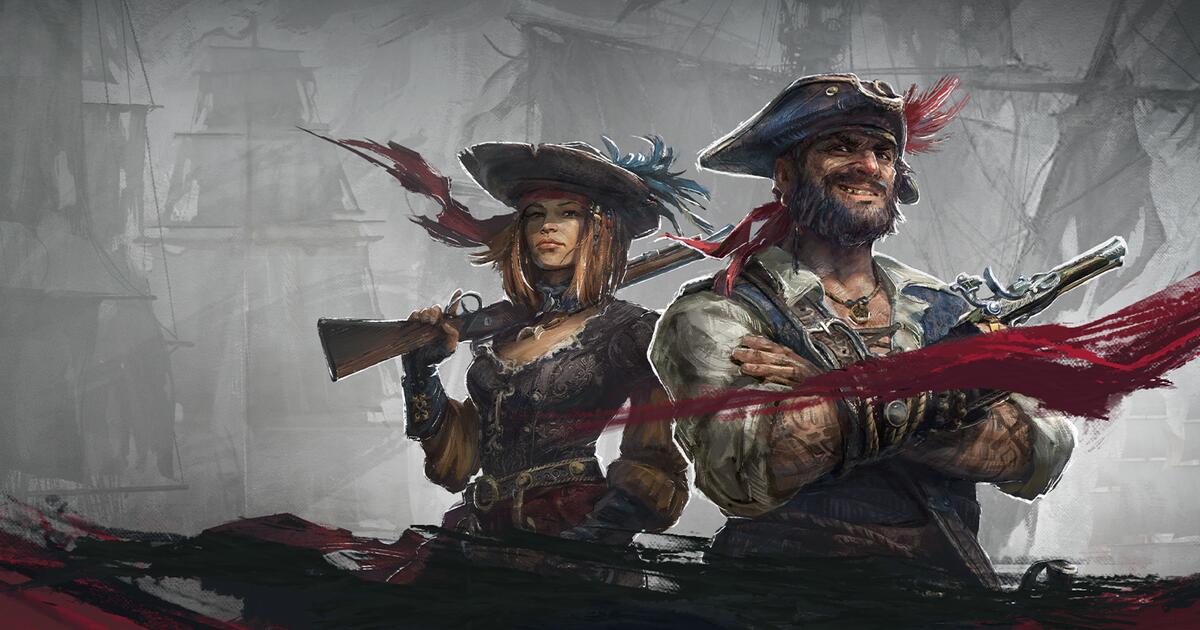
For years, the gaming industry has chased the elusive “perfect” pirate simulator—a title that captures the lawless freedom, the salt-sprayed danger and the tactical depth of naval warfare. When Ubisoft finally unleashed Skull and Bones, the expectation was a definitive AAA interpretation of the Golden Age of Piracy. Instead, many players found a polished but restrictive experience that felt more like a curated checklist than a voyage of discovery.
Enter Windrose, an indie survival title that has begun to capture the imagination of the community by doing what the corporate giant struggled to achieve: delivering a sense of genuine agency. While it lacks the cinematic budget of a Ubisoft production, Windrose is increasingly viewed as the spiritual successor to the pirate fantasy that players actually wanted.
The contrast between the two titles highlights a growing trend in the tech and gaming sectors where specialized indie developers are outmaneuvering AAA studios by prioritizing core gameplay loops over visual fidelity. For those seeking a world where they can truly build a legacy from the wreckage of the sea, the shift toward Windrose is not just a preference—it is a migration toward authenticity.
The Windrose Shift: Redefining the Pirate Experience
Windrose has recently undergone a significant transformation, implementing a first major update that has fundamentally altered how players interact with its world. Unlike the scripted nature of many modern open-world games, Windrose leans heavily into survival and crafting mechanics, forcing players to earn their status as captains through resource management and strategic exploration.

The recent update has been described by players as a turning point, effectively rewriting the pirate experience
by deepening the systems that allow for ship customization and world interaction. By focusing on the gritty reality of survival—gathering materials, managing a crew, and upgrading a vessel from a rowboat to a formidable warship—the game provides a progression curve that feels earned rather than gifted.
From a software engineering perspective, the success of Windrose lies in its systemic design. Rather than relying on pre-baked missions, the game utilizes emerging gameplay, where the interaction of different systems (weather, combat, and resource scarcity) creates unique stories for every player. This approach creates a level of immersion that often escapes AAA titles, which frequently prioritize a linear narrative over systemic freedom.
The AAA Gap: Why Skull and Bones Faltered
The frustration surrounding Skull and Bones stems from a misalignment between marketing, and execution. While the game offers impressive graphics and a vast ocean, it often feels constrained by “invisible walls” and a heavy reliance on grind-based progression that limits player creativity. The experience is often more about managing menus and loot tables than it is about the thrill of the high seas.
Critics and players alike have noted that the game lacks the visceral feeling of command. In Windrose, the ship is an extension of the player’s survival; in Skull and Bones, the ship often feels like a vehicle in a themed racing game. This distinction is critical for the target audience, who seek the romanticism of piracy—the ability to sail into the unknown and carve out a territory—rather than a series of checkpoints in a corporate-managed sandbox.
The disparity in reception underscores a wider industry lesson: fidelity cannot replace feeling. A game can have the most advanced water physics in the world, but if the player feels like a passenger in their own adventure, the technical achievement becomes irrelevant.
The Developer’s Dilemma: Stability vs. Content
Success brings its own set of challenges. The developers of Windrose currently find themselves in a precarious position, balancing the intense demand for new features with the technical necessity of game stability. Following the rollout of their massive update, the team has had to make a strategic decision regarding the pace of future development.
In a move toward long-term sustainability, the developers have signaled that a major content update is not expected for at least six months. This period will be dedicated to fixing the game
and refining existing systems rather than rushing new assets into a potentially unstable build. This is a classic development trade-off: adding new features to a buggy foundation only compounds technical debt, eventually leading to a “broken” product that alienates the core user base.
This decision has placed the team between two fires
, as they must manage the expectations of an excited community while adhering to the rigorous demands of software stability. Still, for seasoned gamers and developers, this is the correct path. A stable, polished experience with fewer features is infinitely more valuable than a feature-rich game that crashes during a critical naval battle.
Windrose Development Roadmap Comparison
| Phase | Primary Objective | Expected Outcome |
|---|---|---|
| Current (Next 6 Months) | Stability and Bug Fixing | Reduced crash rates and optimized performance |
| Mid-Term | System Refinement | Smoother gameplay loops and balanced economy |
| Long-Term | Major Content Expansion | New territories, enemies, and ship classes |
The Broader Impact on the Gaming Ecosystem
The rise of Windrose as a viable alternative to a Ubisoft title is a symptom of a larger shift in consumer behavior. Players are increasingly gravitating toward “Early Access” titles that offer transparency and a collaborative development process. The ability to see a roadmap and provide feedback that actually shapes the game creates a bond between the developer and the player that AAA studios rarely achieve.
the success of survival-crafting hybrids suggests that the market is moving away from the “Ubisoft formula”—the map filled with icons and repetitive tasks—and toward experiences that reward curiosity and experimentation. When players say they wish Skull and Bones were more like Windrose, they are essentially asking for more trust. They want the developers to trust them to explore and fail, rather than guiding them through a sanitized version of piracy.
As we look at the trajectory of the genre, it is likely that more indie studios will step into the gaps left by AAA developers who are too risk-averse to implement truly open systems. The “pirate mecca” is no longer being built in the boardrooms of Montreal or Paris, but in the smaller studios that are willing to let their players truly sail off the map.
What Happens Next
For the Windrose community, the next few months will be a test of patience. The developers have promised that a detailed schedule and roadmap will be released soon, providing a clearer picture of when the next wave of content will arrive. Until then, the focus remains on polishing the current build to ensure the game can handle its growing population.
Whether Windrose can maintain its momentum and eventually rival the production values of a major studio remains to be seen, but it has already won the most key battle: the hearts of the players who just wanted to be pirates.
Do you prefer the polished, cinematic approach of AAA titles, or the raw, systemic freedom of indie survival games? Share your thoughts in the comments below or join the conversation on our social channels.