Linda Park — Technology Editor, World Today Journal
The “Witch Croc” of New Mexico: A Bipedal Predator That Roamed Before T. Rex
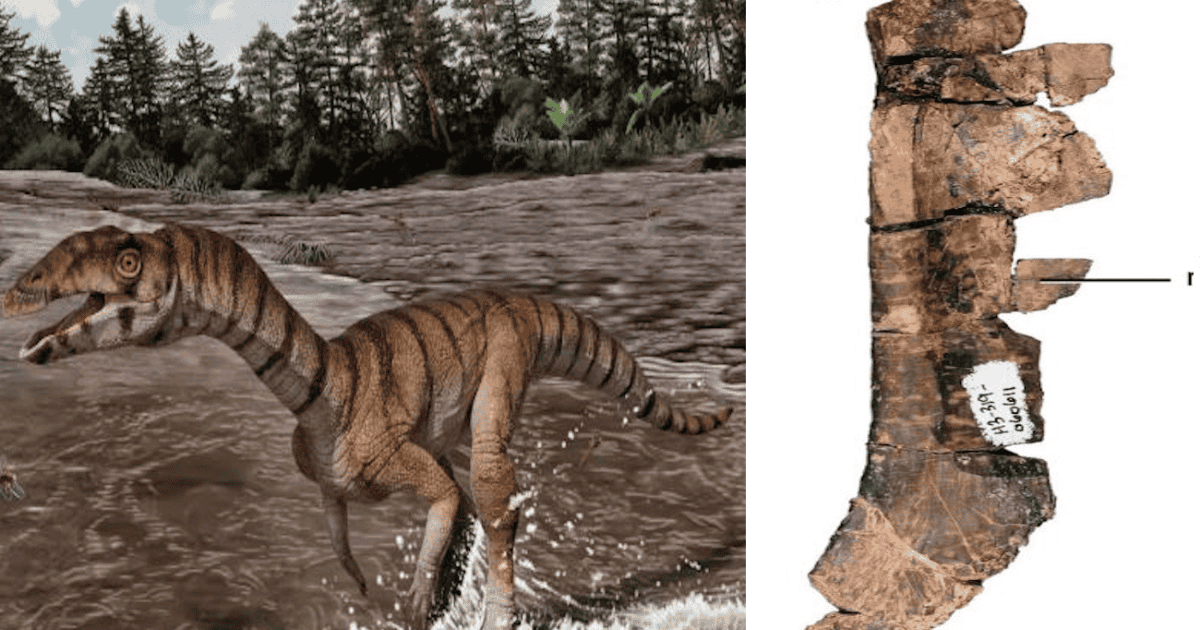
Deep in the deserts of New Mexico, paleontologists have uncovered one of the most extraordinary prehistoric discoveries in decades: a crocodile-like predator that walked on two legs, predating even the mighty Tyrannosaurus rex by nearly 200 million years. Nicknamed the “witch crocodile” by researchers, this bizarre creature—officially classified as Hesperosuchus agilis—challenges long-held assumptions about the evolution of crocodilians and their relatives. What makes this find particularly fascinating is its hybrid nature: a creature that combined traits of both crocodiles and dinosaurs, yet existed in an era when neither group had fully dominated the landscape.
The discovery, which has sent shockwaves through the paleontology community, was made in the Chinle Formation of New Mexico, a region renowned for its Triassic-era fossils. Unlike modern crocodiles, which are slow-moving ambush predators, this ancient ancestor was agile, bipedal and likely an active hunter. The nickname “witch crocodile” reflects not only its eerie appearance but also its status as a bridge between two of Earth’s most iconic reptilian groups: the archosaurs, which include crocodiles, and the dinosaurs themselves.
While the media has latched onto sensational nicknames like “La Bruja Croc” (Spanish for “Witch Croc”), scientists emphasize that this creature is neither a dinosaur nor a true crocodile in the modern sense. Instead, it represents a transitional form that thrived during the Late Triassic period, approximately 253 to 201 million years ago—a time when the first dinosaurs were just beginning to diversify. The discovery forces us to reconsider the evolutionary timeline of these reptiles and their ecological roles.
What We Know About the “Witch Croc”
The fossilized remains of this creature were first identified in the Chinle Formation, a geological layer rich in Triassic fossils that spans parts of Arizona, New Mexico, and Utah. The specimen, though incomplete, reveals several striking features:
- Bipedal locomotion: Unlike modern crocodiles, which drag their tails and waddle, this creature walked upright on two powerful legs, similar to early dinosaurs.
- Toothless beak: Its jaws lacked teeth, instead featuring a beak akin to that of a pelican or modern crocodile, suggesting a diet of fish or small prey.
- Small size: Estimates place it at roughly 3 to 4 feet in length, making it a lightweight predator compared to later archosaurs.
- Predatory adaptations: Its skeleton shows signs of agility, with long hind limbs and a streamlined body built for speed.
Paleontologists believe this creature occupied a niche similar to that of early dinosaurs, filling the role of a fast, active predator in its ecosystem. Its existence suggests that the evolutionary split between crocodile-line archosaurs (crocodylomorphs) and dinosaur-line archosaurs (dinosaurs) was more complex than previously thought.
Rewriting Prehistoric History
The discovery of Hesperosuchus agilis complicates the traditional narrative of reptilian evolution. For decades, scientists have viewed crocodiles and dinosaurs as distinct branches of the archosaur family tree, with crocodiles diverging early and dinosaurs emerging later. However, this “witch crocodile” blurs those lines, demonstrating that some Triassic archosaurs retained primitive traits while also exhibiting advanced adaptations.
“This creature is a living fossil in the truest sense,” says Dr. Randall Irmis, a paleontologist at the Utah Geological Survey, who has studied similar fossils. “It shows that the transition from four-legged to two-legged predators wasn’t a sudden event but a gradual process spread across millions of years.”
The Chinle Formation, where the fossil was found, is particularly significant because it preserves a snapshot of life during the Late Triassic, a time when the first true dinosaurs were still rare. The presence of a bipedal crocodile-like predator in this environment suggests that ecological niches were more fluid than previously assumed. “This creature wasn’t just a side branch of evolution,” explains Dr. Irmis. “It was a major player in its ecosystem, competing with early dinosaurs and other archosaurs for dominance.”
How Does This Creature Compare to T. Rex?
While Tyrannosaurus rex is often portrayed as the ultimate predator, the “witch crocodile” thrived in a world where dinosaurs were still evolving. Here’s how they differ:
| Feature | Witch Croc (Hesperosuchus agilis) | T. Rex |
|---|---|---|
| Time Period | Late Triassic (~253 million years ago) | Late Cretaceous (~68–66 million years ago) |
| Size | 3–4 feet long | 40 feet long, 9 tons |
| Locomotion | Bipedal (walked on two legs) | Bipedal (primarily two-legged) |
| Diet | Fish, small prey (toothless beak) | Carnivorous (meat-eating) |
| Evolutionary Role | Transitional archosaur (crocodile-dinosaur hybrid) | Apex predator (theropod dinosaur) |
Why This Discovery Matters
The “witch crocodile” is more than just a curiosity—it’s a critical piece of the evolutionary puzzle. Here’s why paleontologists are so excited:
Key Takeaways
- Evolutionary bridge: The fossil provides evidence that bipedalism evolved independently in multiple archosaur lineages, not just dinosaurs.
- Ecological competition: It suggests that early crocodile relatives were active predators, competing with dinosaurs for resources long before the Jurassic period.
- Triassic ecosystem insights: The Late Triassic was a time of rapid diversification, and this creature helps us understand how different predators coexisted.
- Challenges to classification: The discovery may force scientists to re-examine how we categorize archosaurs, as this creature defies neat taxonomic boxes.
- Public fascination: Nicknames like “witch crocodile” highlight how prehistoric creatures capture the imagination, bridging science and pop culture.
Dr. Sterling Nesbitt, a paleontologist at University of Virginia, notes that this find is part of a broader trend in paleontology: “We’re seeing more and more transitional fossils that show evolution wasn’t a straight line but a web of interconnected experiments. This creature is one of those experiments that didn’t lead to modern crocodiles but was still a vital part of the story.”
From Lab to Headlines: How the “Witch Croc” Captured the World’s Attention
While scientists are careful to avoid sensationalism, the media’s embrace of nicknames like “La Bruja Croc” has brought unprecedented attention to the field of paleontology. Social media platforms have exploded with reconstructions, memes, and comparisons to Jurassic Park creatures. However, experts warn that the public should distinguish between the scientific reality and the creative liberties taken in pop culture.
“The nickname is fun, but it’s important to remember that this was a real animal with real ecological roles,” says Dr. Nesbitt. “It wasn’t a ‘witch’ in any supernatural sense—it was a predator that thrived in a world where the rules of evolution were still being written.”
What’s Next for the “Witch Croc” and Paleontology?
The discovery of this bipedal crocodile ancestor opens new avenues for research. Scientists are now focusing on several key questions:
- More fossils: Paleontologists are scouring the Chinle Formation for additional specimens that could reveal more about its behavior and anatomy.
- Behavioral insights: By studying its limb structure and jaw mechanics, researchers hope to determine whether it was a solitary hunter or a pack predator.
- Evolutionary tree revisions: The find may prompt updates to the archosaur family tree, particularly in how we understand the divergence between crocodile-line and dinosaur-line reptiles.
- Public engagement: Museums and educational institutions are likely to feature this discovery in exhibits, using it to teach about evolutionary biology and the Triassic period.
Dr. Irmis predicts that this discovery will inspire a wave of new studies: “We’re only scratching the surface of what the Chinle Formation has to offer. Every new fossil tells us more about how life evolved, and this one is particularly exciting because it challenges our preconceptions.”
Have questions about prehistoric predators or the latest in paleontology? Share your thoughts in the comments below—or tag us on X with your favorite Triassic-era creature!
For more on this story, follow our Science & Discovery section, where we’ll continue to update you on new fossil findings and evolutionary breakthroughs.
Worth a look