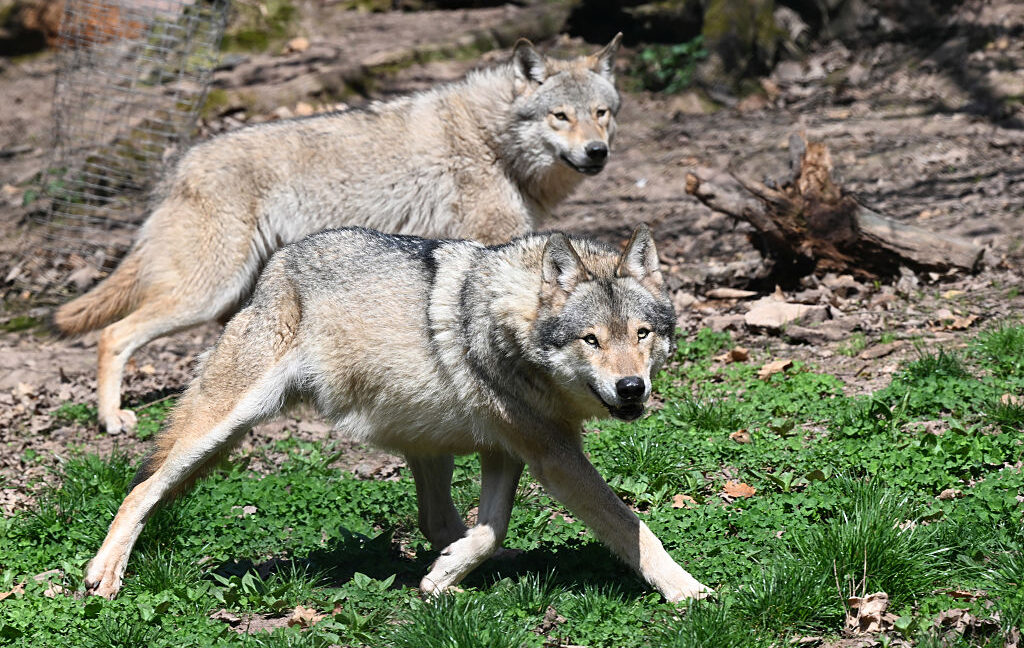
Are Wolves Losing Their Fear of Humans? A Polish Forest Reveals surprising Insights
Have you ever wondered what happens to wildlife when hunting restrictions are put in place? Do animals become bolder, venturing closer to human settlements? This question sparked a heated debate in Poland, and a recent study offers compelling evidence that challenges long-held assumptions about wolf behavior. The story isn’t just about wolves; it’s a window into the complex relationship between humans and apex predators, and the importance of data-driven conservation.
The Rising Concerns in Poland
In late 2017, concerns began to surface regarding wolf activity near populated areas in Poland. Mieczysław Kacprzak, a Member of Parliament representing the Polish People’s Party (PSL), voiced these anxieties during a parliamentary session. He described wolves roaming suburban streets, instilling fear in citizens – notably children afraid to walk to school. Kacprzak appealed to the Ministry of Agriculture to reconsider the hunting ban, arguing it was creating a “tragedy waiting to happen.”
These concerns were echoed in hunting circles. Łowczy Polski, a leading Polish hunting journal, published articles framing wolves as a growing threat to human safety, especially for young people. The core argument centered on the idea that the absence of hunting pressure had lead wolves to loose their natural fear of humans, emboldening them to approach settlements. But was this fearlessness based on fact, or simply anecdotal evidence?
Challenging the Narrative: A Scientific Investigation
The claims of increased boldness prompted a team of researchers, led by biologists liana zanette and Clint Clinchy from Western University in Canada, to investigate. They partnered with Polish colleagues, including Maciej Szewczyk, to conduct a rigorous study in the Tuchola Forest, a large forested area in north-central Poland known for its wolf population.
“We found this was not the case,” explains Zanette, directly addressing the prevailing narrative. But how did they arrive at this conclusion? The team employed a clever methodology utilizing camera traps and carefully selected soundscapes.
the Tuchola Forest experiment: Sounding Out Wolf Fear
The researchers strategically placed 24 camera traps throughout the Tuchola Forest, guided by the local expertise of their Polish collaborators. Szewczyk’s intimate knowledge of the terrain proved invaluable, pinpointing locations with high wolf activity. These traps weren’t just for capturing images; they were equipped to play sounds when an animal approached.
The team used three distinct sound cues, presented randomly:
* Chirping Birds: Serving as a control, this sound represented a typical, non-threatening element of the forest habitat. The assumption was that wolves wouldn’t react considerably to birdsong.
* Barking Dogs: Chosen because dogs are fellow carnivores, the researchers hypothesized that the sound of barking would elicit a fear response in wolves.
* Human Conversation (in Polish): This was the crucial test. The team wanted to determine if wolves reacted differently to the sound of human voices compared to other stimuli.
By meticulously measuring how quickly wolves vacated the area after hearing each sound, the researchers could quantify their level of fear. this innovative approach allowed for a controlled and objective assessment of wolf behavior.
What the Data Revealed: Wolves Remain Wary
The results were striking. The study, published in Functional Ecology (Zanette et al., 2023), revealed that wolves exhibited a clear and consistent fear response to the sound of human voices.actually, they reacted more strongly to human conversation than to barking dogs. This indicated that the absence of hunting hadn’t diminished their innate caution around people.
“Wolves are still very afraid of people,” Clinchy emphasizes. “They haven’t become habituated to our presence in the way some people feared.”
Recent Statistics & Research: A 2024 report by the mammal Research Institute Polish Academy of Sciences confirms these findings, noting no important increase in wolf-human conflict incidents in areas with hunting restrictions over the past five years.https://www.mammal.pl/en/
Implications for Conservation and Human-Wildlife Coexistence
This research has significant implications for wildlife management and conservation efforts. It demonstrates that hunting bans don’t necessarily lead to increased boldness in apex predators. Rather, it highlights the importance of understanding animal behavior through scientific investigation, rather than relying on anecdotal evidence or preconceived notions.
Practical Tips for Safe Coexistence:
* Never intentionally feed wolves or other wildlife. This can lead to habituation and increased risk of encounters.
* **Secure food