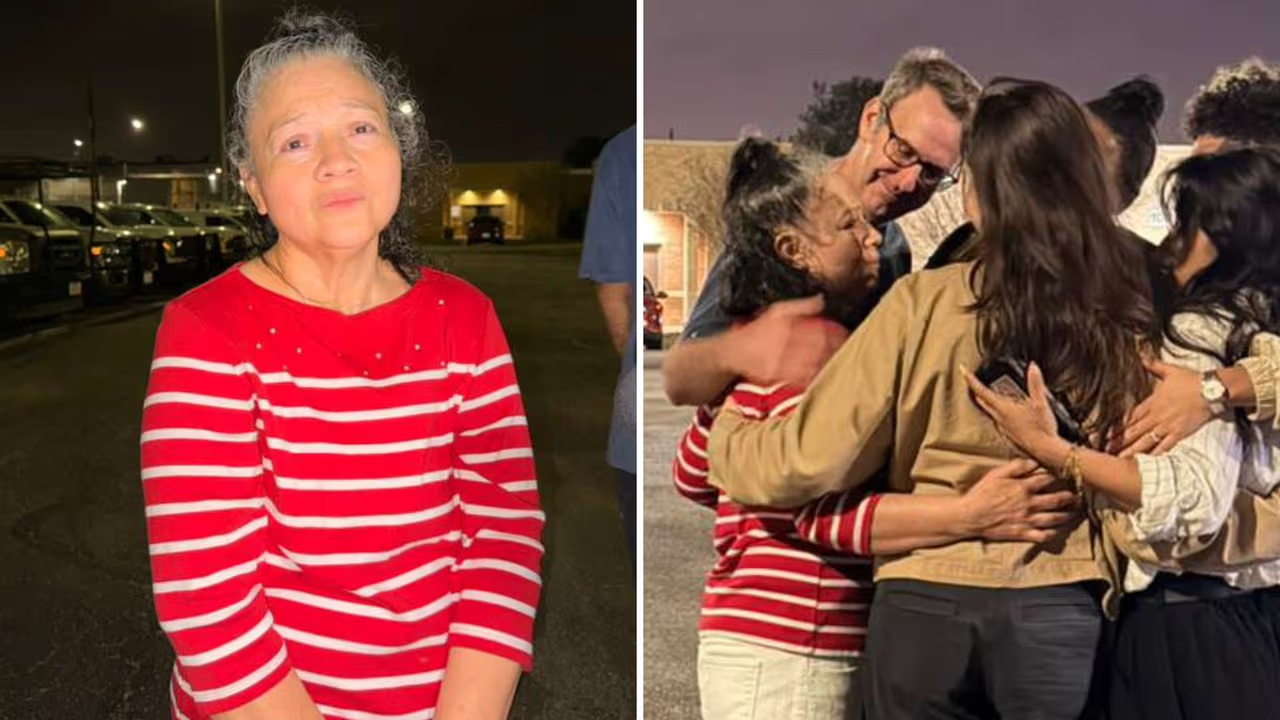
Austin, Texas – After more than two decades imprisoned for a crime she did not commit, Carmen Mejía walked free on March 11, 2026. The 54-year-old was released from the Travis County Correctional Complex in Del Valle, Texas, marking the end of a long and arduous fight for justice. Her case, which garnered attention for its wrongful conviction aspects, highlights systemic flaws within the criminal justice system and the crucial role of organizations dedicated to exonerating the wrongly accused.
Mejía was initially convicted in connection with the death of a ten-month-old baby in 2004. She maintained her innocence throughout her 22 years and seven months of incarceration, consistently proclaiming her faith and hope for eventual freedom. The Innocence Project, a non-profit legal organization dedicated to exonerating wrongly convicted individuals, took up her case and worked tirelessly to uncover new evidence that ultimately led to her release. The organization’s involvement underscores the importance of independent review and advocacy in challenging potentially flawed convictions.
A Long Road to Exoneration
The details surrounding the original investigation and conviction have been subject to scrutiny in recent years. While the initial case relied heavily on what were presented as eyewitness accounts and forensic evidence, subsequent investigations, spearheaded by the Innocence Project, revealed significant doubts about the reliability of that evidence. Specifically, questions arose regarding the validity of the forensic analysis used to implicate Mejía and inconsistencies were identified in witness testimonies. Univision Austin reported that Mejía was released in the early hours of March 11th, earlier than initially scheduled, following a favorable change in her case.
The exoneration process involved a thorough re-examination of the case file, including a review of police reports, witness statements, and forensic evidence. The Innocence Project collaborated with legal experts and forensic scientists to challenge the original findings and present new evidence to the court. This collaborative effort ultimately led the judge to overturn Mejía’s conviction, recognizing the significant doubts surrounding her guilt. The case serves as a stark reminder of the potential for errors in the criminal justice system and the need for ongoing vigilance to ensure fair and accurate outcomes.
“I Believed in God” – Mejía’s First Words of Freedom
Footage of Mejía’s release, captured by N+ Univision, shows a deeply emotional moment as she stepped out of the correctional facility. Surrounded by her attorneys and supporters from the Innocence Project, Mejía expressed profound gratitude and unwavering faith. “I was strong, (I believed) that I was going to die there. I was strong, I believed in God,” she stated, her voice filled with emotion. Her words reflect the resilience and spiritual strength she maintained throughout her years of wrongful imprisonment.
Mejía also spoke of the importance of prayer and faith in sustaining her during her incarceration. She described finding solace in music, particularly Christian hymns, which provided her with hope and strength. “Praying, putting my knees on the floor, listening to music. My favorite music is Christian, in it I found faith, love. And I was crying, since my heart is humble,” she shared. Her testimony underscores the power of faith and inner strength in overcoming adversity.
Facing Deportation
Despite her exoneration, Mejía’s freedom is not entirely secure. As reported by a Facebook reel from Univision, she now faces the threat of deportation to Honduras, her country of origin. This adds another layer of complexity to her situation, raising concerns about her safety and well-being in a country she left many years ago. The legal implications of her immigration status are currently being assessed by her legal team, who are exploring all available options to prevent her deportation. This situation highlights the intersection of criminal justice and immigration law, and the challenges faced by non-citizen individuals who are wrongly convicted.
The Role of the Innocence Project
The Innocence Project has been instrumental in securing the release of hundreds of wrongly convicted individuals across the United States. Founded in 1992, the organization utilizes DNA testing and other forensic advancements to challenge convictions and exonerate those who have been wrongly imprisoned. Their work has not only freed innocent people but has also exposed systemic flaws in the criminal justice system, leading to reforms aimed at preventing future wrongful convictions. The organization’s success relies on a dedicated team of attorneys, investigators, and forensic scientists who work tirelessly to uncover new evidence and advocate for justice.
The Innocence Project’s involvement in Mejía’s case demonstrates the organization’s commitment to representing individuals who have been marginalized and overlooked by the justice system. They provide legal representation, conduct independent investigations, and work to raise awareness about the issue of wrongful convictions. Their efforts are crucial in ensuring that the principles of fairness and justice are upheld in the pursuit of truth.
Impact and Implications
The exoneration of Carmen Mejía has far-reaching implications for the criminal justice system. It underscores the importance of rigorous investigation, reliable forensic evidence, and thorough legal representation. The case also highlights the need for greater accountability and transparency in the pursuit of justice. The wrongful conviction of an innocent person not only devastates the individual involved but also erodes public trust in the legal system.
Mejía’s case raises questions about the potential biases and systemic flaws that can contribute to wrongful convictions. Factors such as racial disparities, inadequate legal representation, and reliance on flawed eyewitness testimony can all play a role in leading to unjust outcomes. Addressing these issues requires a comprehensive approach that includes reforms to police procedures, prosecutorial practices, and the provision of legal aid.
The case also brings to light the challenges faced by immigrants navigating the U.S. Legal system. The threat of deportation adds another layer of vulnerability for non-citizen individuals who are wrongly convicted, potentially separating them from their families and communities. Advocates are calling for greater protections for immigrants who are wrongly accused of crimes, ensuring that they have access to fair legal representation and due process.
As Mejía begins to rebuild her life after two decades of wrongful imprisonment, her story serves as a powerful reminder of the importance of fighting for justice and advocating for the rights of the wrongly accused. Her resilience and unwavering faith are an inspiration to all who believe in the power of hope and the pursuit of truth.
The next step in Mejía’s case involves navigating the complexities of her immigration status and seeking legal counsel to prevent deportation. Her legal team is actively working to explore all available options and ensure that her rights are protected. We will continue to follow this developing story and provide updates as they become available. Share your thoughts on this important case in the comments below.
Worth a look
- Iran Rejects Trump’s Claim Over Strait of Hormuz: “Cannot Be Seized by a Tweet
- Disney Praises Global Success of Korean Content at D23
- What Holds Matter Together? Physicists Find Breakthrough Evidence After 50 Years (archyworldys.com)
- Man and Woman Admit Stealing Baby Pygmy Goat from Farm (world-today-news.com)