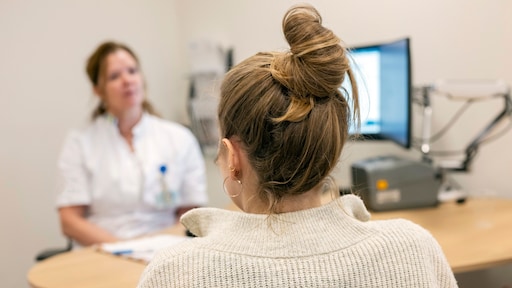
Women consistently report more health concerns and utilize healthcare services at a higher rate than men, a trend that continues to be a significant area of study for public health officials. Recent data from the Netherlands’ Centraal Bureau voor de Statistiek (CBS) reinforces this pattern, revealing that women are more likely to visit general practitioners, specialists, physiotherapists, psychologists, and psychiatrists. This isn’t necessarily indicative of women being inherently more susceptible to illness, but rather a complex interplay of biological factors, societal pressures, and healthcare-seeking behaviors. Understanding these nuances is crucial for improving healthcare equity and ensuring that all individuals receive the timely and appropriate care they need.
The disparity in healthcare utilization isn’t simply about the number of diagnoses. It’s similarly about *when* people seek help. According to Professor Hanneke Takkenberg, a leading expert in the field, men tend to delay seeking medical attention, while women are more proactive in addressing health concerns. This difference, she explains, is rooted in societal expectations. Men are often socialized to suppress vulnerability and “tough it out,” while women may feel more permission to acknowledge and address their health needs. This cultural dynamic can have serious consequences, leading to delayed diagnoses and poorer health outcomes for men.
The Gendered Experience of Pain and Illness
The way individuals experience and communicate pain also differs significantly between genders. Research suggests that men are more likely to discuss pain within the family circle but may be reluctant to express it outside of that intimate setting. Conversely, women often downplay their pain within the family but are more willing to disclose it to healthcare professionals or others outside the home. This pattern, highlighted by Jeanine Roeters, suggests that societal expectations influence how both men and women navigate pain and illness, impacting their willingness to seek and receive appropriate care.
The story of Mirjam, as referenced in initial reports, exemplifies the challenges women can face in obtaining accurate diagnoses. Her case underscores the need for improved awareness and research into conditions that disproportionately affect women. This need prompted Professor Takkenberg and Roeters to establish the Netherlands Womens Health Research and Innovation Centre at ErasmusMC, dedicated to advancing knowledge about female health and addressing the historical underrepresentation of women in medical research.
Specific Health Concerns Affecting Women
The CBS data from 2025 reveals specific conditions that are significantly more prevalent among women. Approximately 26% of women reported their health as not good, compared to 21% of men. Notably, women are roughly four times more likely than men to experience involuntary urine loss. The CBS reports that migraine, bowel disorders, joint inflammation, and joint wear and tear are approximately twice as common in women. Specifically, 18% of women reported experiencing migraine in the past twelve months, compared to 8% of men, and 10% of women reported involuntary urine loss, compared to 3% of men.
Involuntary urine loss, a condition often stigmatized and underreported, is a particularly significant concern. Professor Takkenberg explains that anatomical differences contribute to this disparity, with women having shorter urethras than men. Pregnancy and menopause can weaken pelvic floor muscles, leading to urinary incontinence. The condition can also be linked to uterine prolapse, which puts pressure on the bladder.
The Role of Hormonal Fluctuations and Systemic Bias
Hormonal fluctuations throughout a woman’s life – during menstruation, pregnancy, and menopause – play a substantial role in her overall health. These fluctuations can influence a wide range of physiological processes and contribute to the development of various health conditions. Roeters emphasizes that healthcare providers sometimes compartmentalize medical specialties, leading to a failure to recognize the interconnectedness of symptoms. For example, migraine may be treated by a neurologist, bowel problems by a gastroenterologist, and anxiety by a psychologist, without considering the potential link to hormonal changes. Conversely, symptoms may be dismissed as simply being “hormonal,” overlooking underlying medical conditions.
Pregnancy itself is often described as a “stress test” for the body. Complications during pregnancy, such as high blood pressure or gestational diabetes, can increase a woman’s risk of developing chronic conditions like hypertension, diabetes, and cardiovascular disease later in life. It’s crucial that healthcare providers across specialties are aware of a patient’s pregnancy history to provide comprehensive and preventative care.
The Need for Increased Research and Gender-Specific Medicine
A critical factor contributing to the health disparities between men and women is the historical lack of research focused specifically on the female body. Much medical research has traditionally been conducted on male subjects or using male cells, leading to a limited understanding of how diseases manifest and progress in women. This can result in misdiagnosis, ineffective treatments, and prolonged suffering. The establishment of centers like the Netherlands Womens Health Research and Innovation Centre at ErasmusMC represents a vital step towards addressing this gap in knowledge.
The underrepresentation of women in clinical trials is another significant issue. Women may be excluded from trials due to concerns about hormonal fluctuations interfering with results, or simply because researchers haven’t prioritized their inclusion. This lack of data makes it difficult to determine the optimal dosages and treatment strategies for women. Increasing female participation in clinical trials is essential for developing gender-specific medicine and ensuring that all patients receive the most effective care.
Addressing Societal Barriers to Healthcare
Beyond biological and research-related factors, societal barriers also contribute to the health disparities between men and women. The stigma surrounding certain conditions, such as urinary incontinence or mental health issues, can prevent women from seeking help. Cultural norms that discourage women from prioritizing their own health needs can also play a role. Addressing these societal barriers requires a multi-faceted approach, including public health campaigns to raise awareness, reduce stigma, and promote gender equality in healthcare.
improving communication between healthcare providers and patients is crucial. Women need to feel comfortable discussing their health concerns openly and honestly with their doctors. Healthcare providers need to be trained to recognize and address the unique health needs of women, and to avoid making assumptions based on gender stereotypes.
Key Takeaways
- Women report more health concerns and utilize healthcare services more frequently than men, influenced by biological, societal, and behavioral factors.
- Societal expectations play a role in how men and women experience and communicate pain, impacting healthcare-seeking behaviors.
- Conditions like urinary incontinence, migraine, and bowel disorders are significantly more prevalent in women.
- Historical underrepresentation of women in medical research has led to gaps in knowledge and potentially ineffective treatments.
- Addressing health disparities requires increased research, gender-specific medicine, and a reduction in societal stigma.
The CBS is scheduled to release updated health statistics for 2026 in December, providing further insights into the evolving health landscape for both men and women. Continued monitoring of these trends and investment in research are essential for improving the health and well-being of all populations. We encourage readers to share their experiences and perspectives on women’s health in the comments below.
Related reading