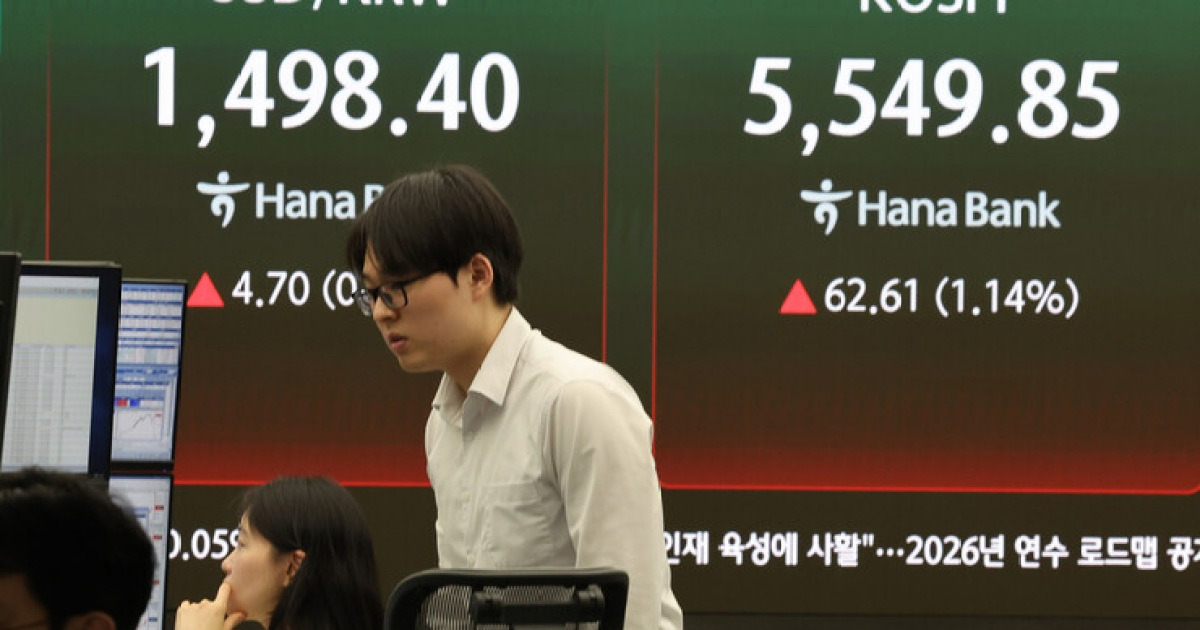
Seoul, South Korea – The Korean won experienced significant volatility this week, closing at 1497.5 won per US dollar on March 16, 2026. This marks the currency’s weakest closing level in 17 years, with the exchange rate briefly surpassing the 1500 won mark during intraday trading. The continued surge in international oil prices, coupled with a strengthening US dollar, are key factors driving the won’s depreciation, raising concerns about potential inflationary pressures and the impact on South Korea’s trade balance. The recent fluctuations underscore the sensitivity of the Korean economy to global geopolitical events and energy market dynamics.
The won’s decline comes amidst heightened anxieties surrounding escalating tensions in the Middle East, particularly concerning the potential for broader conflict involving the United States and Iran. These geopolitical risks have fueled a rally in crude oil prices, which surpassed $100 per barrel, contributing to the dollar’s strength as investors seek safe-haven assets. The dollar index (DXY), a measure of the dollar’s value against a basket of six major currencies, rose to 100.36 on March 13, a significant increase from 97.61 on February 27, according to data from MarketWatch. This strengthening dollar puts downward pressure on currencies like the won, particularly those of import-dependent economies like South Korea.
Won’s Steepest Decline in Nearly Two Decades
Intraday trading on March 16 saw the won open at 1501.0, a 7.3 won increase from the previous week’s close. While initial trading saw the exchange rate peak at this level, intervention expectations and profit-taking helped to moderate the rise, ultimately closing at 1497.5 won during domestic trading hours (9:00 AM to 3:30 PM). This represents a 3.8 won decline from the opening rate but still signifies a substantial weakening of the currency. The last time the won traded above 1500 during intraday trading was March 12, 2009, during the height of the global financial crisis, when it reached a high of 1500 won. Further pressure was exerted during overnight trading on March 3, when the exchange rate climbed to 1505.8 won, and again on March 13.
The Korean won isn’t alone in its struggle against the dollar. The Japanese yen has as well weakened considerably, trading at around 159.72 yen per dollar on March 16, nearing the 160 yen level. This widespread weakening of Asian currencies reflects the broader impact of a strong dollar and rising oil prices on regional economies. The Bank of Korea, South Korea’s central bank, is closely monitoring the situation and is expected to intervene in the foreign exchange market if the won’s depreciation becomes excessive or destabilizing. Hana Bank provides current exchange rates and related financial information.
Oil Prices and Geopolitical Risks Fuel Dollar Demand
The primary driver of the won’s recent weakness is the sustained increase in international oil prices. Brent crude futures for May delivery settled at $103.14 per barrel on March 13, a 2.7% increase from the previous day, and continued to trade slightly higher at $104.5 per barrel as of London time on March 16 (4:00 PM KST), according to the London ICE Futures Exchange. The escalating tensions in the Middle East, specifically surrounding the potential for conflict involving Iran and its impact on crucial shipping lanes like the Strait of Hormuz, are the main catalysts for the oil price surge. The appointment of Ayatollah Seyyed Mostafa Khamenei as Iran’s latest supreme leader and his subsequent rhetoric regarding the potential closure of the Strait of Hormuz have further exacerbated these concerns.
A higher oil price negatively impacts South Korea’s trade balance, as the country is a major importer of crude oil. This increased import cost contributes to a widening current account deficit and puts downward pressure on the won. The strong dollar makes imports more expensive for Korean businesses, potentially leading to higher inflation. The combination of these factors creates a challenging economic environment for South Korea.
Stock Market Performance Amidst Currency Volatility
Despite the won’s depreciation, the South Korean stock market showed resilience on March 16. The benchmark KOSPI index closed up 1.14% (62.61 points) at 5549.85. Though, the gains were uneven, with most large-cap stocks experiencing declines. Samsung Electronics rose 2.83% to close at 188,700 won, and SK Hynix saw a significant increase of 7.03% to 974,000 won, contributing to the KOSPI’s overall positive performance. The KOSDAQ index, focused on smaller, growth-oriented companies, fell 1.27% (14.67 points) to close at 1138.29.
Foreign investors continued their selling streak, offloading Korean equities for the fourth consecutive trading day and KOSDAQ shares for the seventh consecutive day. This continued outflow of foreign capital further exacerbates the pressure on the won. The net selling by foreign investors suggests a lack of confidence in the short-term outlook for the Korean economy and financial markets.
Key Takeaways
- Won Weakness: The Korean won closed at 1497.5 won per US dollar on March 16, 2026, its weakest level in 17 years.
- Oil Price Impact: Rising international oil prices, driven by geopolitical tensions in the Middle East, are a major factor contributing to the won’s depreciation.
- Dollar Strength: A strengthening US dollar, fueled by safe-haven demand, is putting downward pressure on the won and other Asian currencies.
- Stock Market Resilience: Despite currency volatility, the KOSPI index showed gains on March 16, driven by strong performance from Samsung Electronics and SK Hynix.
- Foreign Outflow: Continued net selling of Korean equities by foreign investors is adding to the pressure on the won.
The situation remains fluid, and further volatility in the won is expected in the coming days and weeks. The Bank of Korea’s response, along with developments in the Middle East and global oil markets, will be crucial in determining the currency’s future trajectory. Market participants are closely watching for any signs of intervention from the authorities to stabilize the exchange rate. The next key economic indicator to watch will be South Korea’s trade balance data, which will provide further insights into the impact of higher oil prices on the country’s economy.
As the situation evolves, staying informed about currency fluctuations and their potential impact on your financial decisions is paramount. For the latest exchange rates and financial news, please refer to reputable sources such as Hana Bank.
What are your thoughts on the recent volatility in the Korean won? Share your insights and perspectives in the comments below. Don’t forget to share this article with your network to keep them informed about this significant economic development.
Worth a look
- Spending review, tutti ne parlano e nessuno la fa: i soldi per la sanità sepolti sotto enti …
- People Are More Skeptical of ‘Experts’ These Days. Here’s How You Actually Turn Your Experience Into Authority.
- Global Fidget Market Boom Driven by NeeDoh Squishy Toys (time.news)
- China’s AI Surge: Market Growth, Tech Distillation, and US Tension (archynewsy.com)