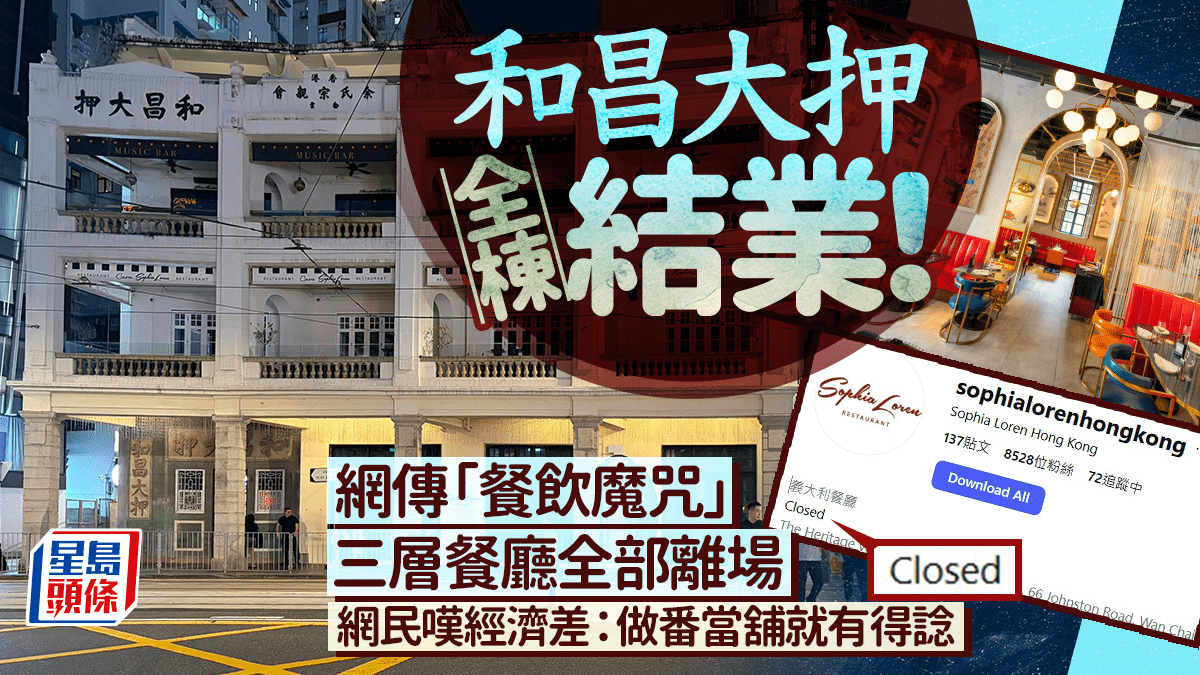
The historic Woo Cheong Pawn Shop on Johnston Road in Wan Chai has seen its three-storey restaurant operations fully cease, marking the latest closure in a series of high-profile departures within Hong Kong’s revitalized heritage sites. Following the closure of the fine dining establishment Casa Sophia Loren in February, the ground-floor pizza parlour and music bar have also shuttered their doors, with official social media accounts for the venue now confirmed as “Closed.”
Heritage Preservation and the Challenges of Commercial Viability
The Woo Cheong Pawn Shop building, a prominent landmark in Wan Chai, underwent a significant revitalization project led by the Urban Renewal Authority (URA) in 2007. According to reporting from HomeDash, the site was intended to blend historic architecture with modern commercial use, housing various dining concepts over the years, including the well-known restaurant The Pawn and the Woo Cheong Restaurant. The site later transitioned to house the Italian food and beverage brand co-founded by actress Sophia Loren.
The recent total cessation of restaurant operations at the site has prompted public discussion regarding the economic challenges facing the local food and beverage sector. As noted by HomeDash, members of the public have attributed the closures to a combination of a challenging economic climate, shifting consumer habits, and feedback regarding food quality. These factors have led to a broader conversation in the community about the sustainability of converting heritage buildings into premium dining venues.
Community Response and Future Prospects for the Landmark
The vacancy of the three-storey space has triggered a wave of public discourse on local forums and social media platforms. Some observers have suggested that the “curse” of high-end dining closures in historic locations may necessitate a shift in how these spaces are utilized. Proposals from the public have ranged from repurposing the building as a traditional teahouse or an exhibition venue to calls for the site to return to its original function as a pawn shop, reflecting a desire to see the building’s heritage preserved through more culturally aligned uses.
While the URA has historically managed the revitalisation of such sites to ensure their preservation, the commercial operation of these spaces remains subject to market volatility. There has been no official announcement from the URA or the property management regarding the next tenant or a potential change in the building’s usage policy.
As the city awaits further updates on the future of the Woo Cheong Pawn Shop, the situation serves as a reminder of the delicate balance between commercial revitalization and the long-term viability of heritage assets.
Related reading