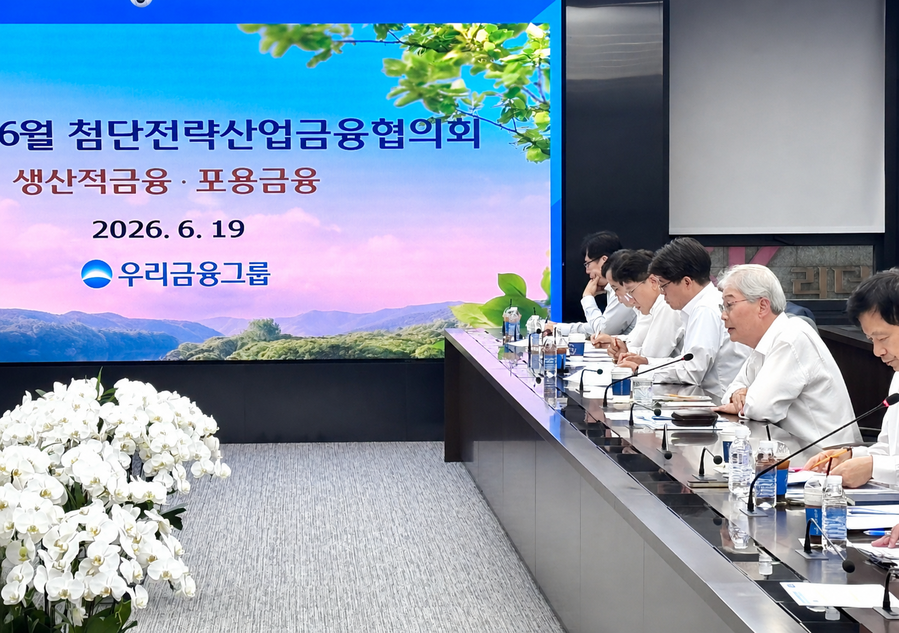
Woori Financial Group Chairman Lim Jong-ryong has announced a strategic plan to expand “productive finance” by 10 trillion won ($7.3 billion) and cancel 280 billion won in long-term overdue debt to support both advanced industries and vulnerable borrowers. The initiative, aimed at bolstering South Korea’s economic growth engines while providing a safety net for struggling individuals, marks a significant commitment from one of the nation’s leading financial conglomerates.
The dual-track approach separates the group’s capital deployment into two distinct categories: aggressive investment in high-growth, high-tech sectors and social responsibility through the relief of long-term, uncollectible debt. According to company statements, this strategy is intended to align the group’s growth with the broader economic needs of the South Korean market.
How will the 10 trillion won productive finance initiative be allocated?
The 10 trillion won increase in productive finance is designed to direct capital toward sectors that drive national competitiveness. In the context of South Korean banking, “productive finance” refers to lending and investment focused on sectors that generate long-term value, such as research and development (R&D), manufacturing, and technological innovation, rather than real estate or consumer-driven debt.

According to the group’s strategic roadmap, the funding will prioritize several key “future industries,” including:
- Semiconductors and High-Tech Manufacturing: Providing liquidity to maintain South Korea’s global lead in the hardware supply chain.
- Secondary Batteries and Green Energy: Supporting the transition to sustainable energy technologies.
- Biotechnology: Funding the high-cost, high-reward R&D necessary for medical innovation.
- Artificial Intelligence (AI) and Digital Infrastructure: Investing in the foundational technologies of the modern economy.
By increasing the volume of capital flowing into these sectors, Woori Financial Group aims to mitigate the credit constraints often faced by mid-sized tech firms that are essential to the national supply chain but may lack the collateral required by traditional lending models.
What is the purpose of the 280 billion won debt cancellation?
While the 10 trillion won expansion focuses on growth, the 280 billion won debt cancellation serves as a mechanism for economic recovery among the most vulnerable segments of the population. The group plans to write off long-term overdue debt, which is often considered uncollectible, to help small business owners and individual borrowers regain financial stability.
This move is expected to have several socio-economic impacts:
- Reducing the “Debt Trap”: By erasing long-standing, unrecoverable debts, the group allows individuals to clear their credit records and re-enter the formal economy.
- Supporting Small Business Re-entry: Small business owners who have been sidelined by debt can leverage a clean slate to restart operations or seek new employment.
- Mitigating Social Costs: Providing a pathway for debt relief can reduce the long-term reliance on social welfare programs by facilitating economic self-sufficiency.
Financial analysts note that such large-scale debt write-offs are often part of a broader effort by South Korean financial institutions to fulfill ESG (Environmental, Social, and Governance) mandates and respond to government calls for increased social responsibility in the banking sector.
Comparative Strategy Overview
The following table outlines the two primary pillars of Chairman Lim Jong-ryong’s recent strategic announcement:

| Feature | Productive Finance Expansion | Debt Relief Program |
|---|---|---|
| Primary Goal | Economic growth and industrial competitiveness | Social stability and borrower rehabilitation |
| Target Audience | Advanced industries (Semiconductors, AI, Bio) | Vulnerable borrowers and small businesses |
| Capital Scale | 10 trillion won | 280 billion won |
| Economic Role | Capital injection for innovation | Reduction of systemic debt burdens |
The strategic context for South Korean banking
The announcement comes at a time when South Korean financial institutions are under increasing pressure to balance profitability with the health of the real economy. As interest rates have fluctuated and economic uncertainty persists, the role of major banking groups in stabilizing the domestic market has become a central point of discussion for regulators and policymakers.
Under the leadership of Lim Jong-ryong, Woori Financial Group is attempting to position itself as a proactive participant in national economic policy. By targeting “productive” sectors, the group is not only seeking higher-quality assets but is also aligning its portfolio with the South Korean government’s long-term industrial strategy. Simultaneously, the debt cancellation measures address the growing concern regarding household and small business debt levels, which have remained a significant macroeconomic risk factor in the region.
Market observers suggest that this “two-pronged” approach—combining growth-oriented lending with social-oriented debt relief—is a calculated move to enhance the group’s reputation and ensure long-term sustainability in a highly regulated environment.
Next Steps: Further details regarding the specific implementation timelines for the 10 trillion won funding allocation and the criteria for the debt cancellation program are expected to be released in upcoming quarterly financial reports and official group filings.
For more updates on global financial markets and South Korean economic policy, please follow World Today Journal or share this article with your network.
Keep reading