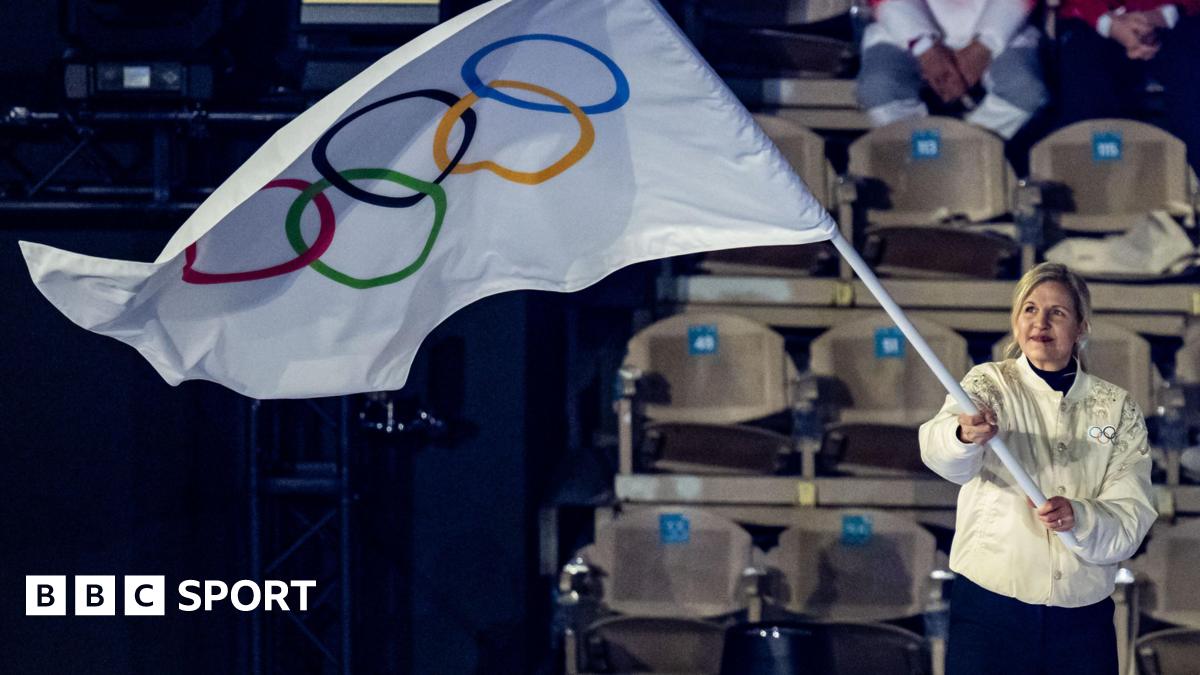
A significant rift has emerged between the governing body of global track and field and the International Olympic Committee (IOC) regarding the status of Belarusian sports. On Thursday, May 7, 2026, World Athletics rejects IOC proposal to lift Belarus ban, maintaining strict sanctions that prevent Belarusian athletes and teams from competing under their own national flag.
The decision comes after the IOC’s executive board urged international sports federations and event organizers to allow Belarus to return to international competition. While the IOC suggested a path toward normalization for Belarus, it emphasized that restrictions on Russia should remain in place, creating a divergent approach to the two allies.
This clash highlights a fundamental disagreement over the intersection of geopolitics and sport. While the IOC views the Belarusian National Olympic Committee (NOC) as compliant with international standards, World Athletics continues to tie the lifting of sanctions directly to the cessation of hostilities in the region.
The IOC’s Argument for Reinstatement
The International Olympic Committee, led by President Kirsty Coventry—who was elected to the role in March 2025—has taken a more lenient stance toward Belarus than toward Russia. The IOC’s executive board stated that the National Olympic Committee (NOC) of Belarus “is in good standing and complies with the Olympic Charter.”
According to the IOC, the track record of Belarusian competitors since the introduction of a partial ban in 2023 supports their return. The committee noted that athletes with Belarusian passports have participated as individual neutral athletes (AINs) in numerous international events, including the Paris 2024 Olympic Games and the Milano Cortina 2026 Olympic Winter Games, “without any incident on or off the field of play.”
Central to the IOC’s position is the belief that an athlete’s ability to compete should be decoupled from the political actions of their government. The organization reaffirmed its stance that “athletes’ participation in international competition should not be limited by the actions of their governments, including involvement in a war or conflict.”
World Athletics Maintains Hardline Stance
Despite the IOC’s recommendations, World Athletics has remained resolute. A spokesperson for the organization confirmed that the sanctions implemented in March 2022—which exclude Belarusian and Russian athletes, officials, and supporting personnel from competition—remain fully in effect.
The governing body’s refusal is rooted in a demand for diplomatic progress rather than administrative compliance. World Athletics stated that its council has made a clear decision: the organization will only begin to review its decisions when there is “tangible movement towards peace negotiations.”
By maintaining this position, World Athletics is effectively ignoring the “good standing” of the Belarusian NOC, prioritizing the geopolitical reality of Russia’s invasion of Ukraine and Belarus’s role as a close ally in that conflict over the IOC’s desire for athletic inclusivity.
Context: The Path from 2022 to 2026
The current deadlock is the result of years of evolving sanctions. Both Russia and Belarus were suspended from Olympic competition immediately following the invasion of Ukraine in 2022. However, by 2023, a compromise was reached in the form of a partial ban, which allowed specific athletes to compete as neutrals provided they met strict criteria.
This neutral status (AIN) was designed to protect the rights of individual athletes while still penalizing the national sporting structures of the involved countries. While this system has functioned for the Paris 2024 and Milano Cortina 2026 games, the IOC now believes Belarus has proven its reliability enough to move beyond neutral status.
The divergence between the IOC and World Athletics creates a complex landscape for Belarusian athletes. They may find themselves permitted to compete in some Olympic-sanctioned events or under certain federation rules, while remaining banned from the world’s premier track and field competitions. This fragmentation underscores the lack of a unified global consensus on how to handle state-sponsored conflict in the sporting arena.
Key Timeline of Sanctions and Rulings
| Date | Action/Event | Status/Result |
|---|---|---|
| March 2022 | Initial Sanctions | Belarusian and Russian athletes/officials excluded from competition. |
| 2023 | Partial Ban Introduced | Athletes permitted to compete as Individual Neutral Athletes (AINs). |
| March 2025 | Leadership Change | Kirsty Coventry elected as IOC President. |
| May 7, 2026 | IOC Proposal | IOC urges lifting of Belarus ban; World Athletics rejects the move. |
What So for the Future of Athletics
The decision by World Athletics rejects IOC proposal to lift Belarus ban sends a clear message: the governing body of athletics views sports as an inseparable part of international diplomacy. Unlike the IOC, which operates on a broader mandate to keep the Olympic movement universal, World Athletics is utilizing its authority to maintain pressure on the Belarusian government.
For the athletes involved, the uncertainty continues. While the IOC argues that participation should not be limited by government actions, the reality is that as long as World Athletics holds the keys to the World Championships and other major Diamond League events, Belarusian athletes will remain sidelined or restricted.
The situation also places other international sports federations in a difficult position. They must now choose between following the IOC’s lead to reintegrate Belarus or adhering to the more stringent standards set by World Athletics.
The next confirmed checkpoint for this issue depends entirely on the geopolitical landscape. World Athletics has explicitly stated that it will not review its position until “tangible movement towards peace negotiations” is observed. Until such a diplomatic breakthrough occurs, the ban on the Belarusian flag in athletics is expected to remain.
Do you believe sports should be separate from political conflicts, or is the use of sanctions a necessary tool for peace? Share your thoughts in the comments below.
Worth a look