
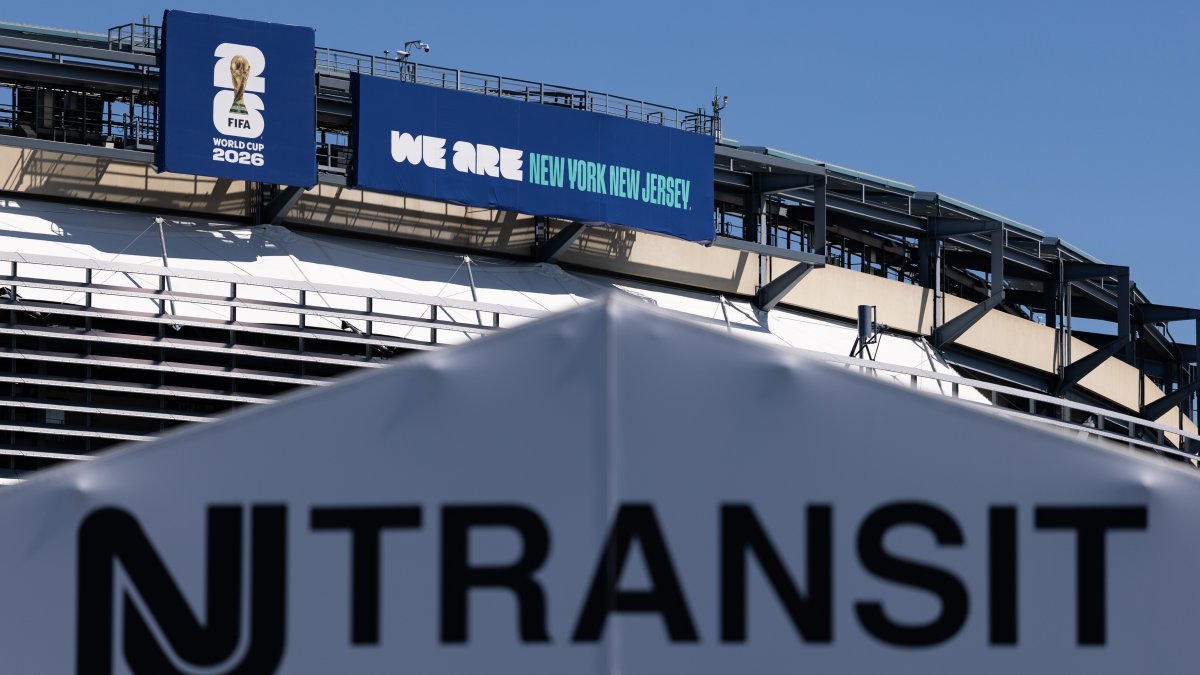
Fans traveling to the 2026 FIFA World Cup in the New York and New Jersey region are seeing a welcome reduction in travel costs as state officials move to make the tournament more accessible. In a series of updates announced this week, the costs for both rail and bus transportation to MetLife Stadium have been lowered, easing some of the financial pressure on spectators attending the high-stakes matches.
The price adjustments come after significant public debate regarding the affordability of public transit during the event. While the reductions are substantial—particularly for bus commuters—the move highlights a continuing tension between local transit authorities and soccer’s global governing body over who should shoulder the immense operational costs of moving hundreds of thousands of people into East Rutherford.
For those fortunate enough to secure match tickets, the logistics of getting to and from the stadium—which will be temporarily rebranded as the New York New Jersey Stadium to comply with FIFA’s corporate naming restrictions—have become a central concern. With the tournament kicking off in less than 30 days, these updated fare structures provide a clearer financial picture for international and domestic travelers alike.
The most dramatic shift appears in the bus fares, where costs have been slashed to a fraction of their original price. Meanwhile, NJ Transit rail fares have seen a tiered reduction, moving from an initial high to a more moderate, though still premium, rate. These changes reflect an effort by the governors of New York and New Jersey to prevent a “chilling effect” on attendance and to ensure the region’s infrastructure can handle the unprecedented crowds.
Rail and Bus Fare Reductions for World Cup Spectators
The cost of taking public transit to the World Cup matches at MetLife Stadium has undergone several revisions. NJ Transit has confirmed that the price of a round-trip rail ticket for match days has been lowered to $98. This follows an initial announcement of $150, which was first reduced to $105 before reaching the current $98 price point. While this remains significantly higher than a standard $13 fare, officials maintain that the premium is necessary to fund the massive surge in service required for the event.
In a more aggressive move to lower costs, New York Governor Kathy Hochul announced that the price for a round-trip bus ticket to the stadium will be slashed from $80 to $20. This reduction offers a more affordable alternative for those traveling from Manhattan and other parts of the city, significantly lowering the barrier to entry for fans relying on bus transport.
The pricing controversy stems from the sheer scale of the operation. NJ Transit officials have stated that the agency is facing nearly $50 million in added costs to support the World Cup matches via NJ Transit official advisories. Governor Phil Murphy has previously expressed a desire for FIFA to contribute to these costs, but the governing body has remained firm in its position, leading the state to seek private and non-taxpayer funding to help offset the fares for the public.
NJ Transit President and CEO Kris Kolluri defended the pricing structure during a press conference in April, explicitly denying accusations of price gouging. Kolluri stated that the agency is “literally trying to recoup our costs” to ensure the safety and efficiency of the transport network during the tournament.
Ticketing Logistics and Purchase Requirements
To manage the flow of spectators and prevent fraud, the ticketing process for World Cup transit is strictly controlled. Round-trip tickets became available on May 13 and are sold exclusively through the NJ Transit mobile app. These tickets are non-transferable and non-refundable, and they can only be purchased by individuals who already hold a valid match ticket.
The transit agency expects to move more than 78,000 spectators for each match. To maintain order, NJ Transit will make 40,000 round-trip rail tickets available per match day. Crucially, these tickets will not be available for purchase on the day of the event at station ticket offices or vending machines, making the mobile app the sole point of access.

For fans traveling from New York City via rail, all passengers must board at Penn Station. Those coming from other areas within New Jersey will be required to purchase tickets for specific time windows and will be directed to either Hoboken Terminal or Secaucus Junction. Tickets will be verified before boarding trains headed to the stadium, and passengers transferring at Secaucus Junction will be guided through dedicated connecting services to ensure a streamlined flow of traffic.
Bus services provide a different set of options. Tickets, which first went on sale in April, cover service to and from the Port Authority Bus Terminal and the Midtown East Shuttle pick-up point located east of Grand Central in New York City. For New Jersey residents, a park-and-ride shuttle service will operate from the Hackensack Meridian School of Medicine, providing a strategic alternative to stadium-area congestion.
Penn Station Disruptions and Commuter Impacts
The massive influx of soccer fans will have significant repercussions for daily commuters, particularly those utilizing New York Penn Station. NJ Transit has warned that some trains scheduled around peak match-day windows will be temporarily diverted or adjusted to prioritize stadium service.
Commuters should be aware of two critical service windows on match days:
- Pre-Match: There will be no outbound rail service from the Manhattan transit hub for commuters starting four hours prior to kickoff. However, trains traveling into Penn Station during this window will continue to operate normally.
- Post-Match: For three hours following the conclusion of each match, rail service to New York Penn Station on the North Jersey Coast Line, the Raritan Valley Line, and the Northeast Corridor will terminate at Newark Penn Station.
To mitigate these disruptions, NJ Transit is offering transfers to alternative transportation. Commuters with rail tickets traveling between New York and New Jersey can transfer to PATH trains at 33rd Street or NJ Transit buses at Port Authority at no additional cost according to official service alerts. Local governments and transit officials are strongly advising all non-essential travelers to avoid the area on match days to minimize congestion.
Comparative Transit Costs Across Host Cities
The struggle over fare pricing in the New York/New Jersey region is not an isolated incident, though it is one of the more contentious. Several other U.S. Host cities have taken different approaches to managing the cost of tournament transportation, leading to a stark contrast in fan experiences.
In Boston, transit costs have also drawn criticism. A round-trip bus ticket is priced at $95, while the MBTA’s special express train service to the stadium in Foxboro costs $80. Both fares are several times higher than typical transit costs in the region, mirroring the initial pricing strategy seen in New Jersey.

Conversely, other cities have prioritized affordability through grants or flat-rate pricing. In Philadelphia, SEPTA has confirmed there will be no fare increases for World Cup games, noting that added operating costs are being covered by a recently awarded federal grant. Similarly, officials in Atlanta and Houston have announced that public transportation fares will remain unchanged via FIFA host city updates.
The most aggressive pricing model comes from Los Angeles, which has revealed a plan to offer fans round-trip transit for just $3.50. This disparity has fueled the argument that the New York/New Jersey pricing, even after the reductions to $98 for rail and $20 for bus, remains an outlier in the 2026 tournament landscape.
Alternative Transport and Stadium Access
Due to the extreme congestion expected at the New York New Jersey Stadium, traditional parking and private transport will be severely limited. There will be no general parking available on stadium property on match days, and the use of private buses or charters is prohibited.
For those avoiding public transit, limited supplemental rideshare options will be available. To prevent gridlock near the stadium, rideshare services will be managed through a designated drop-off and pick-up spot at the nearby Meadowlands Racing and Entertainment complex. A limited amount of premium parking will be offered at the American Dream Mall. This parking requires an advance purchase, and officials urge drivers to arrive early to account for heavy traffic conditions.
The stadium is set to host eight matches in total, including the FIFA World Cup 26 Final on July 19. Group stage matches featuring global powerhouses such as England, France, Germany, and Brazil are scheduled to begin on June 13. As the region prepares for this global spotlight, the focus remains on balancing the financial viability of the transit system with the need to provide a welcoming experience for millions of visitors.
The next major checkpoint for travelers will be the finalization of the match-day security protocols and the release of specific train schedules, expected in the coming weeks. Fans are encouraged to keep their NJ Transit mobile apps updated for real-time alerts and schedule changes.
What are your thoughts on the new transit pricing? Do you think the reductions are enough, or should FIFA be covering the costs? Let us know in the comments below and share this guide with fellow fans.