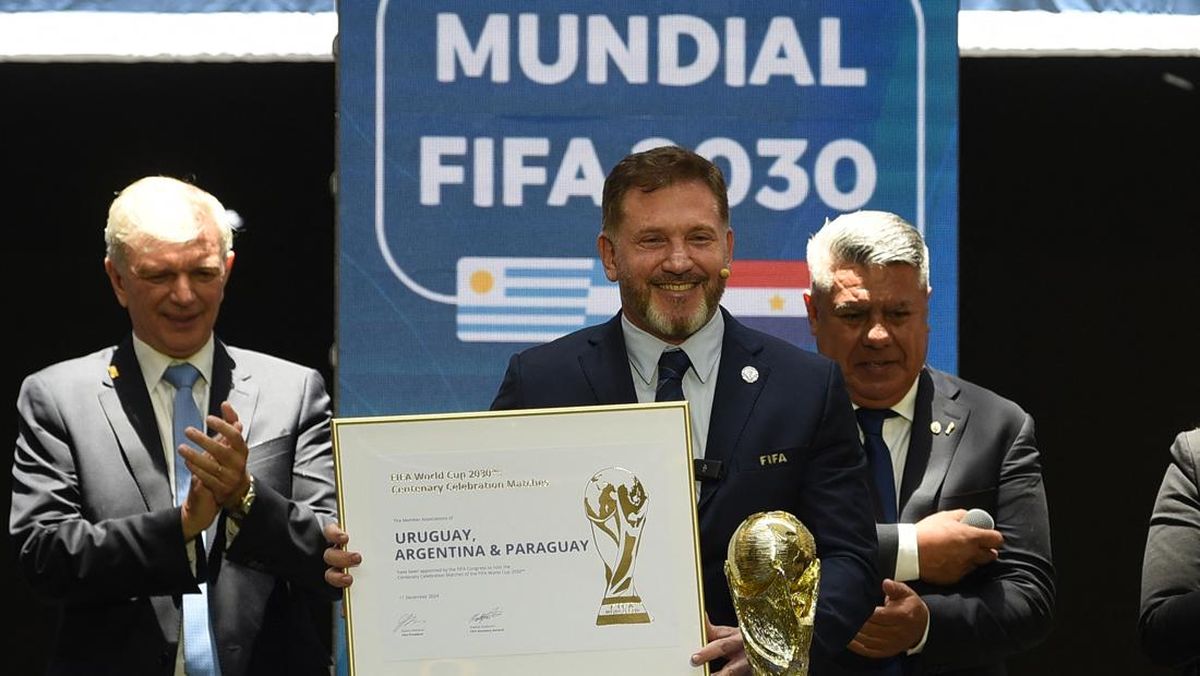
The 2030 FIFA World Cup will mark an expansion in the tournament’s format, with matches scheduled to take place across six nations. FIFA confirmed that the primary hosts for the centennial celebration will be Morocco, Portugal, and Spain, while Uruguay, Argentina, and Paraguay will host the tournament’s opening three matches to commemorate the competition’s origins. According to official statements, this unique arrangement was designed to honor the inaugural 1930 World Cup held in Uruguay.
Host Nations and the Centennial Celebration
The decision to distribute hosting duties across six countries represents a departure from traditional single- or dual-nation formats. Morocco, Portugal, and Spain have been designated as the primary co-hosts, meaning they will stage the majority of the tournament’s matches.

The inclusion of South America serves as a tribute to the tournament’s history. To mark the 100th anniversary, FIFA announced that the opening ceremony and the first three matches will occur in South America. Specifically, Uruguay, Argentina, and Paraguay will each host one celebratory match before the teams and officials travel to the primary host nations for the remainder of the competition. This decision ensures that the centenary is recognized in the region where the tournament began.
Structural Changes and Tournament Expansion
The 2030 edition will feature teams, and there has been significant public discussion regarding the potential for further expansion to 64 teams, a concept mentioned by regional football officials. FIFA has opened the option for a 64-team format for the 2030 World Cup, and the Chairman of CONMEBOL stated that the 2030 World Cup will be followed by 64 teams.
The logistical complexity of hosting across six countries requires significant coordination regarding travel and scheduling. This approach is intended to balance the historical significance of the anniversary with the modern requirements of a global sports event.
Impact on Participating Nations
For football associations worldwide, the 2030 World Cup represents a significant milestone in the sport’s development. As the tournament grows, the qualification pathways for other nations remain a primary focus for regional confederations. While some reports have speculated on the potential for expanded slots based on the hosting arrangements, the official qualification process is managed through the respective continental governing bodies and must align with the parameters set by FIFA.
The infrastructure requirements for a tournament spanning three continents are substantial. Updates regarding venue confirmation and the final match schedule are expected to be released by FIFA as the tournament approaches.
Next Steps in the Hosting Process
Stakeholders and football fans can monitor the official FIFA website for verified updates on venue announcements and ticket information as they become available. As the tournament nears, FIFA will continue to provide guidance on the specific logistical arrangements for the matches held in South America versus the primary matches in Europe and Africa.
The global football community continues to observe how this multi-continental model will influence future bidding processes for major sporting events. For more analysis on the evolving landscape of international football, follow our sports desk for updates on the qualification cycles and administrative developments leading up to 2030.
Worth a look