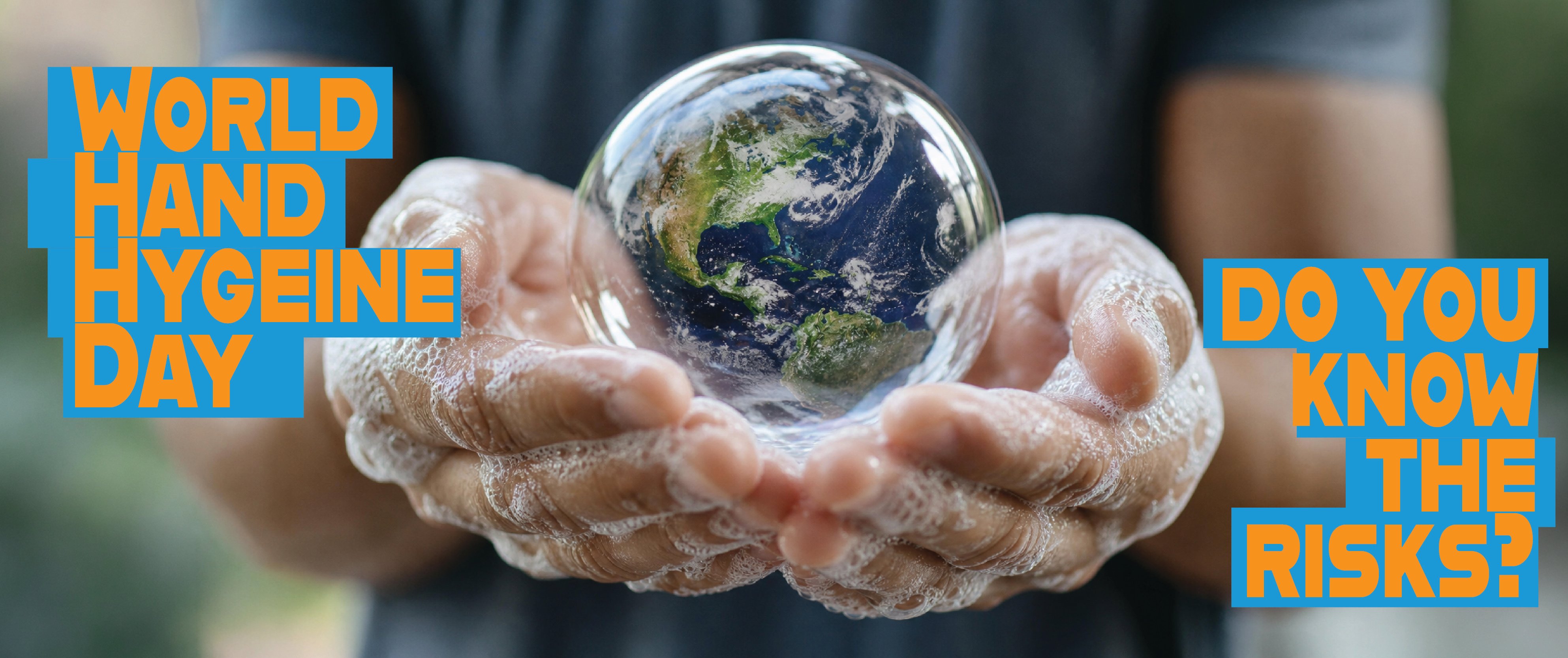
The global healthcare community recently marked World Hand Hygiene Day on May 5, a date that serves as more than just a calendar reminder. For those of us in the medical field, it is a critical inflection point to evaluate one of the most basic yet profound interventions in patient safety: the simple act of cleaning one’s hands.
As a physician and journalist, I have seen firsthand how the invisible migration of pathogens can dictate the outcome of a patient’s recovery. In the sterile environment of a hospital, the hands of healthcare providers are the primary vehicles for the transmission of microorganisms. While medical innovation has given us robotic surgeries and targeted gene therapies, the most effective tool we possess to prevent healthcare-associated infections (HAIs) remains accessible to everyone and costs virtually nothing.
The risks of dirty hands in a clinical setting are not merely about “germs” in a general sense. They involve the transfer of multi-drug resistant organisms (MDROs) that can turn a routine procedure into a life-threatening complication. To combat this, the World Health Organization (WHO) has established a gold-standard framework known as the “Five Moments for Hand Hygiene,” designed to ensure that cleaning happens at the precise points where the risk of transmission is highest.
Understanding these moments is essential not only for clinicians but for patients and caregivers who wish to advocate for their own safety. By recognizing the specific windows of vulnerability, we can break the chain of infection and significantly reduce the burden of nosocomial diseases worldwide.
Deconstructing the WHO “Five Moments for Hand Hygiene”
The World Health Organization’s Five Moments for Hand Hygiene framework is not a random set of rules; it is a strategic map of patient-provider interaction. The goal is to protect both the patient and the healthcare worker by identifying the exact moment a hand becomes contaminated or poses a risk to the patient.
Moment 1: Before touching a patient. This is the first line of defense. The objective is to protect the patient against harmful germs carried on the hands of the healthcare worker. Whether it is shaking a hand, helping a patient move, or performing a physical examination, the provider must ensure their hands are clean to avoid introducing external pathogens into the patient’s immediate environment.
Moment 2: Before a clean or aseptic procedure. This moment is critical for preventing germs—including the patient’s own flora—from entering the body. This applies to any procedure that breaks the skin or enters a sterile cavity, such as inserting an intravenous (IV) catheter, performing wound care, or administering medication via injection. In these instances, hand hygiene is the primary barrier preventing a localized infection from becoming systemic.
Moment 3: After body fluid exposure risk. Here, the priority shifts to protecting the healthcare worker and the wider clinical environment. After handling blood, urine, saliva, or other bodily fluids—even if gloves were worn—hand hygiene is mandatory. This prevents the provider from carrying potentially infectious materials to other patients or surfaces.
Moment 4: After touching a patient. Once a physical interaction is complete, the provider must clean their hands to protect themselves and the hospital environment. This ensures that any pathogens picked up from the patient’s skin or clothing are not transported to the next person or the next room.
Moment 5: After touching patient surroundings. This is perhaps the most frequently overlooked moment. Germs do not only live on patients; they thrive on bed rails, bedside tables, monitors, and infusion pumps. Touching these surfaces can contaminate a provider’s hands just as easily as touching the patient themselves. Cleaning hands after this interaction prevents the spread of environmental contamination.
The Science of Contamination: Why Timing Matters
To understand why these five moments are so specific, we must look at the “chain of infection.” For an infection to occur, there must be an infectious agent, a reservoir (where the germ lives), a portal of exit, a mode of transmission, a portal of entry, and a susceptible host. Hand hygiene is the most effective way to disrupt the “mode of transmission.”
A common misconception is that gloves replace the need for hand hygiene. In reality, gloves are permeable and can develop microscopic holes during use. The process of removing gloves (doffing) often results in the contamination of the wearer’s hands. This is why the WHO mandates hand hygiene immediately after glove removal.

The risk profile changes dynamically based on the sequence of events. For example, if a provider touches a contaminated bed rail (Moment 5) and then immediately performs an IV insertion (Moment 2) without cleaning their hands, they have created a direct conduit for environmental bacteria to enter the patient’s bloodstream. This sequence is how healthcare-associated infections, such as bloodstream infections or catheter-associated urinary tract infections (CAUTIs), often begin.
the rise of antimicrobial resistance (AMR) has increased the stakes. When bacteria like Methicillin-resistant Staphylococcus aureus (MRSA) or Carbapenem-resistant Enterobacteriaceae (CRE) enter a patient’s system, the options for treatment are severely limited. In these cases, the “dirty hand” is not just a hygiene failure; it is a catalyst for a medical crisis that may be untreatable with current antibiotics.
Choosing the Right Tool: Soap and Water vs. Alcohol-Based Rubs
In a fast-paced clinical environment, efficiency is key. This has led to the widespread adoption of Alcohol-Based Hand Rubs (ABHR), but they are not a universal replacement for traditional handwashing. The choice between the two depends entirely on the nature of the contamination.
Alcohol-Based Hand Rubs: ABHRs are the preferred method for routine hand hygiene in most clinical situations. They are faster, more accessible, and generally less irritating to the skin than repeated soap-and-water washing. They work by denaturing the proteins of the microorganisms, effectively killing them on contact. However, alcohol is not effective against all pathogens.
Soap and Water: Traditional handwashing is mandatory in specific scenarios. First, when hands are visibly soiled with blood, dirt, or other organic matter, soap and water are required to physically remove the debris. Second, soap and water must be used when dealing with spore-forming bacteria, such as Clostridioides difficile (C. Diff). Alcohol does not penetrate the hardy outer shell of C. Diff spores; only the mechanical action of scrubbing with soap and rinsing with water can physically remove them from the skin.
The effectiveness of either method depends on technique. For soap and water, this means scrubbing all surfaces—including the backs of the hands, between fingers, and under nails—for at least 20 seconds. For ABHR, it requires applying enough product to keep the hands wet for approximately 20 to 30 seconds until they are completely dry.
The Global Impact: Patient Safety and Health Policy
Hand hygiene is not just a clinical task; it is a pillar of healthcare policy. The Centers for Disease Control and Prevention (CDC) and other global health bodies emphasize that improving hand hygiene compliance is one of the most cost-effective ways to reduce morbidity and mortality in hospitals.
Despite the evidence, compliance remains a challenge. Factors such as understaffing, lack of accessible sanitizers, and “alarm fatigue” can lead to lapses in hygiene. This is why many institutions are moving toward “patient-led” safety models, where patients are encouraged to ask their providers, “Have you cleaned your hands?” This shifts the culture from one of top-down policing to one of collaborative safety.
The broader implication of poor hand hygiene is the acceleration of antimicrobial resistance. When HAIs increase, the use of broad-spectrum antibiotics also increases. This selective pressure allows the most resistant bacteria to survive and multiply, creating a cycle where the medicines we rely on to save lives become ineffective. By adhering to the Five Moments, we are not just protecting one patient; we are protecting the future efficacy of our global pharmacopeia.
Key Takeaways for Patients and Providers
- The Five Moments: Hand hygiene must occur before touching a patient, before aseptic procedures, after body fluid exposure, after touching a patient, and after touching the patient’s environment.
- Gloves are not a substitute: Hand hygiene is required before donning and immediately after removing gloves.
- Method matters: Use alcohol-based rubs for routine cleaning, but switch to soap and water for visibly soiled hands or suspected spore-forming infections like C. Diff.
- AMR Connection: Proper hand hygiene reduces the incidence of healthcare-associated infections, which in turn reduces the reliance on antibiotics and slows the spread of drug-resistant “superbugs.”
- Advocacy: Patients should feel empowered to remind healthcare providers about hand hygiene as a standard part of their care.
As we move forward from World Hand Hygiene Day, the goal is to transition these practices from a conscious effort into an instinctive habit. The margin between a successful recovery and a secondary infection often comes down to a few seconds spent at a sanitizer dispenser.
The next major global focus on infection control will be the upcoming World Health Assembly, where member states will continue to refine the Global Action Plan on Antimicrobial Resistance. These high-level policy discussions are only effective if they are mirrored by the basic, diligent actions taken at the bedside every single day.
Do you have a story about patient safety or a question about infection prevention in your local healthcare facility? Share your thoughts in the comments below or join the conversation on our social media platforms.
Related reading