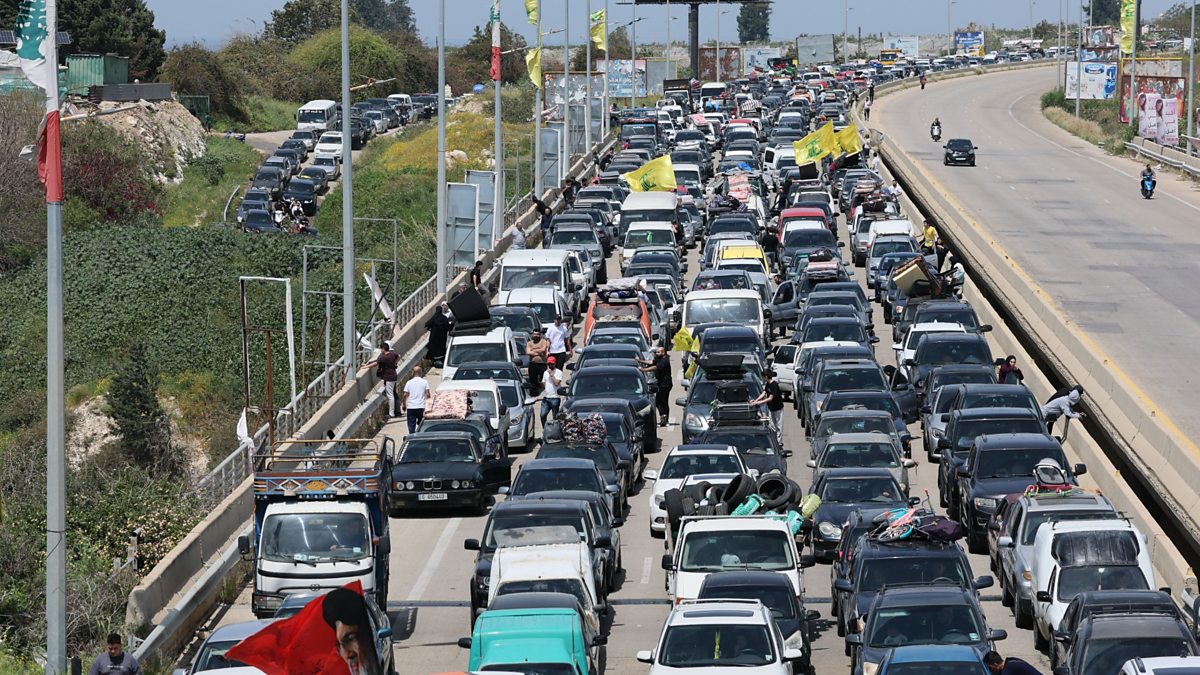
Tens of thousands of Lebanese families have begun returning to their homes following a 10-day pause in fighting between Israeli forces and Hezbollah, according to reports from the region. The temporary ceasefire, which took effect in late November 2024, allowed displaced civilians to move back to areas in southern Lebanon that had been heavily impacted by cross-border exchanges. Although the pause brought relief to many, Israeli officials have maintained that the country reserves the right to resume military operations against Hezbollah if deemed necessary for national security.
The return of displaced persons marks a significant development in the ongoing Israel-Hezbollah conflict, which escalated sharply after the October 7, 2023 attacks by Hamas on Israel. Since then, exchanges of fire along the Lebanon-Israel border have intensified, prompting mass evacuations from border villages on both sides. During the most recent surge in hostilities, Israeli airstrikes targeted Hezbollah positions in Lebanon’s south and east, while the group launched rockets and drones into northern Israel. The 10-day pause, brokered through diplomatic channels, represented one of the longest lulls in violence since the conflict widened.
Despite the ceasefire, the Israeli Defense Forces (IDF) have reiterated their stance that they will not hesitate to act against Hezbollah infrastructure or personnel if intelligence indicates an imminent threat. Israeli officials have too warned that civilians in certain areas may be required to evacuate again should hostilities resume. This position reflects Israel’s longstanding security doctrine of preemptive action against perceived threats from Iran-backed groups operating in Lebanon, and Syria.
Hezbollah, for its part, has affirmed its commitment to the ceasefire while maintaining its right to defend Lebanese territory. The group, designated a terrorist organization by Israel, the United States, and several other countries, remains a powerful political and military force within Lebanon. Its dual role as a militia and a provider of social services has complicated efforts to isolate it militarily without affecting the broader civilian population.
The humanitarian impact of the displacement has been substantial. United Nations agencies and non-governmental organizations reported that over 90,000 people were displaced within Lebanon at the height of the tensions, with many seeking shelter in schools, public buildings, and with host families in safer regions. The return process has been uneven, with some families finding their homes damaged or destroyed, while others face challenges related to unexploded ordnance or disrupted basic services such as electricity and water.
Efforts to assess damage and clear hazardous materials are underway, supported by Lebanese authorities and international partners. The Lebanese Army has deployed engineers to inspect infrastructure in affected zones, while demining teams work to identify and neutralize unexploded munitions. Access to certain areas remains restricted pending safety evaluations, particularly near known Hezbollah strongholds where Israeli strikes were concentrated.
The ceasefire has also created space for diplomatic engagement. International mediators, including officials from France and the United States, have engaged in backchannel discussions aimed at preventing further escalation. These talks have focused on establishing mechanisms to monitor compliance with the pause and address incidents that could threaten its stability. However, no formal agreement has been reached to extend the pause beyond its initial 10-day duration, leaving the situation fluid.
Regional analysts note that the broader context of the Israel-Hamas war in Gaza continues to influence dynamics along the northern border. Hezbollah has framed its involvement in the conflict as solidarity with Gaza and opposition to Israeli military actions there. Any significant shift in the Gaza situation—whether through a ceasefire, escalation, or political development—could quickly alter calculations on the Lebanon-Israel front.
For now, the return of displaced families offers a moment of reprieve amid prolonged uncertainty. Many express cautious optimism, hoping the pause could lead to a more durable de-escalation. Others remain deeply skeptical, citing repeated cycles of violence and broken truces in past years. As one resident of a border village told reporters, “We go back to rebuild, but we don’t know how long we’ll be allowed to stay.”
The situation remains closely watched by international observers, with updates expected from the United Nations Interim Force in Lebanon (UNIFIL), which monitors the Blue Line border and reports on violations by either side. UNIFIL has called on all parties to respect the cessation of hostilities and avoid actions that could endanger civilians or reignite fighting.
As the region awaits further developments, the focus remains on sustaining the conditions that allowed families to return home—however temporarily—and addressing the urgent needs of those still affected by displacement.
Keep reading