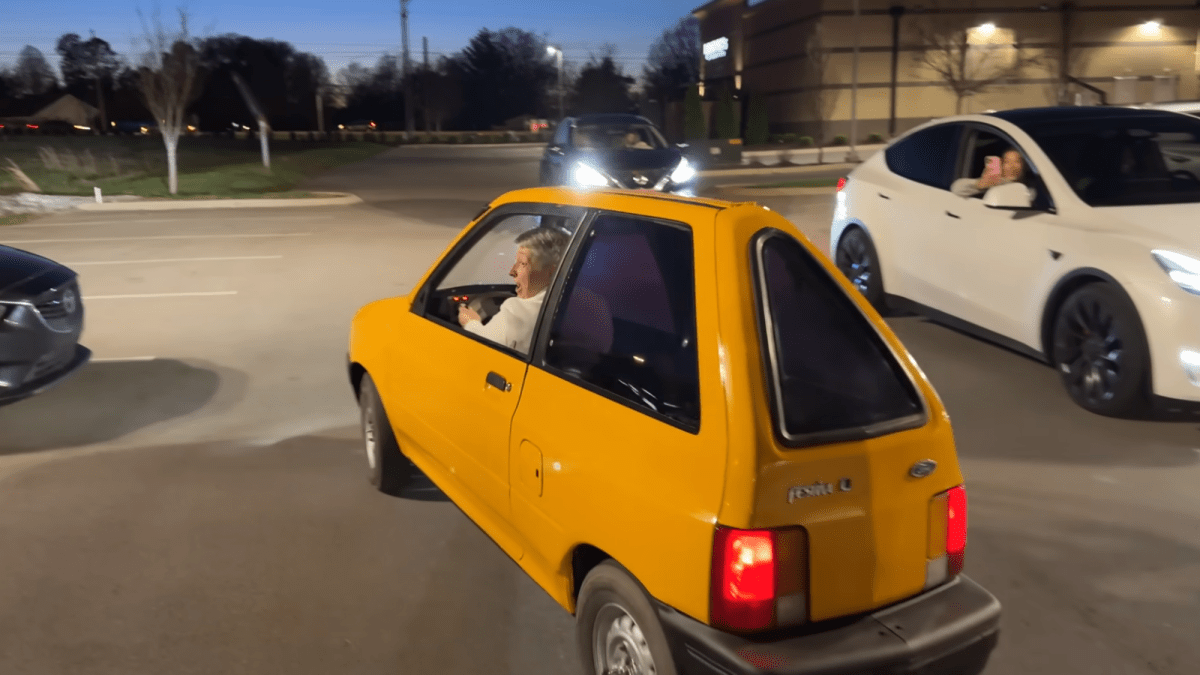
Tennessee Man Crafts Remarkably Thin, Street-Legal Car Using Lasers
Nashville, Tennessee – A Tennessee resident, Tyler Fever, has captured attention online after transforming a 1988 Ford Festiva into what many are calling the world’s thinnest street-legal car. Fever, who runs the YouTube channel Prop Department, documented the ambitious project, which involved drastically reducing the vehicle’s width using a combination of metal cutting tools and powerful lasers. The resulting vehicle, whereas unconventional in appearance, has reportedly been insured and driven on public roads, turning heads and sparking conversations about automotive engineering and DIY innovation.
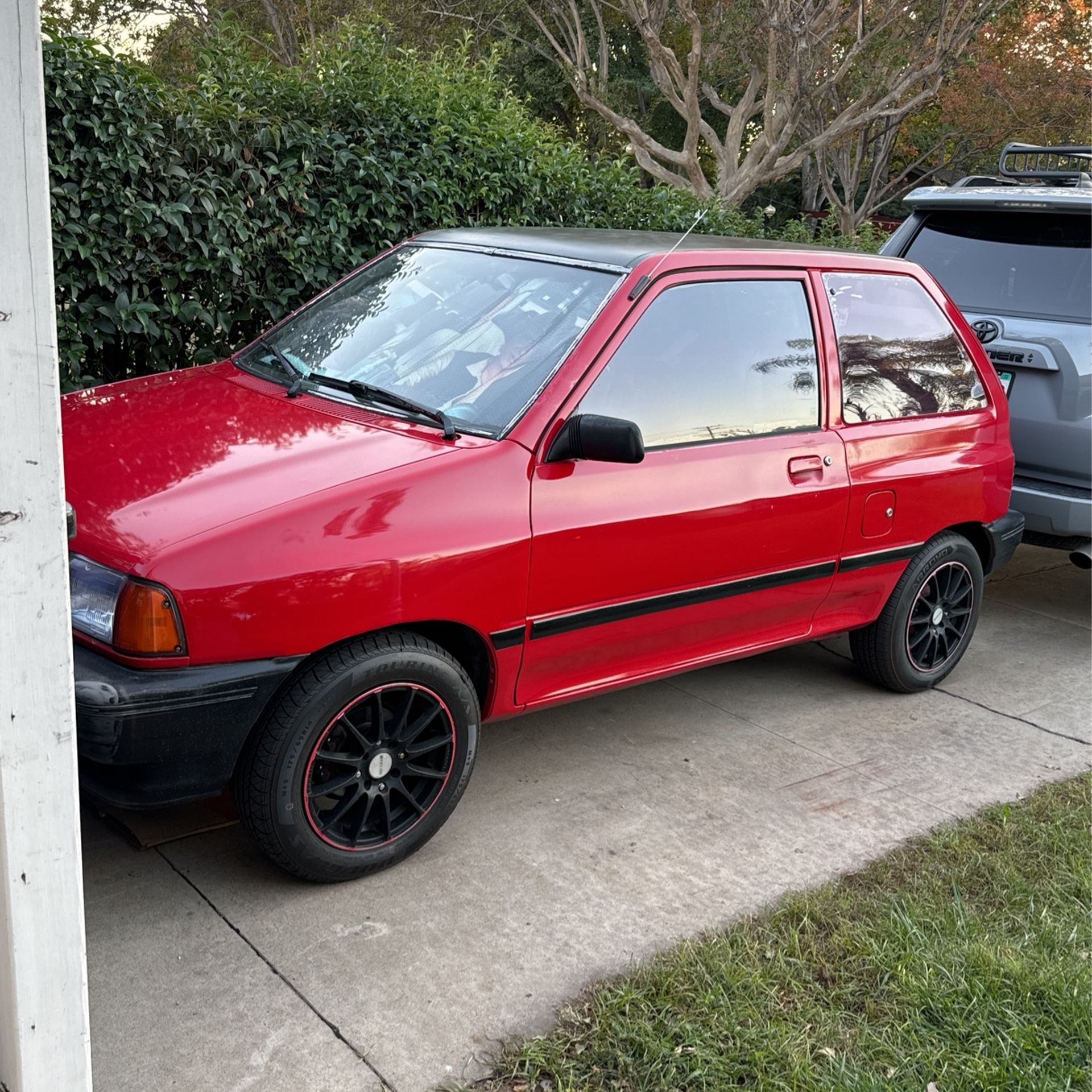
The project began with a seemingly simple premise: to make an already small car even more compact. Fever’s goal, as he stated in his video, was to create the “most pathetic car” possible. The 1988 Ford Festiva, known for being one of the smallest American-made cars of its time, provided an ideal starting point. Discontinued in the Americas in 1993, according to automotive resources like Automobile Fandom, the Festiva maintained a following in other markets. Its diminutive size made it a logical candidate for such a radical modification.
The transformation wasn’t for the faint of heart. Fever began by stripping the Festiva down to its bare chassis, removing the interior components. He then employed a tank of liquid nitrogen to aid in the removal of stubborn parts. The most dramatic step involved slicing the car lengthwise down the middle using a high-powered metal laser and a CNC cutter. The laser’s intensity was such that it cut through the metal and continued into the ground beneath the vehicle, a testament to its power and a warning against attempting similar feats without proper safety precautions.
Engineering Challenges and Innovative Solutions
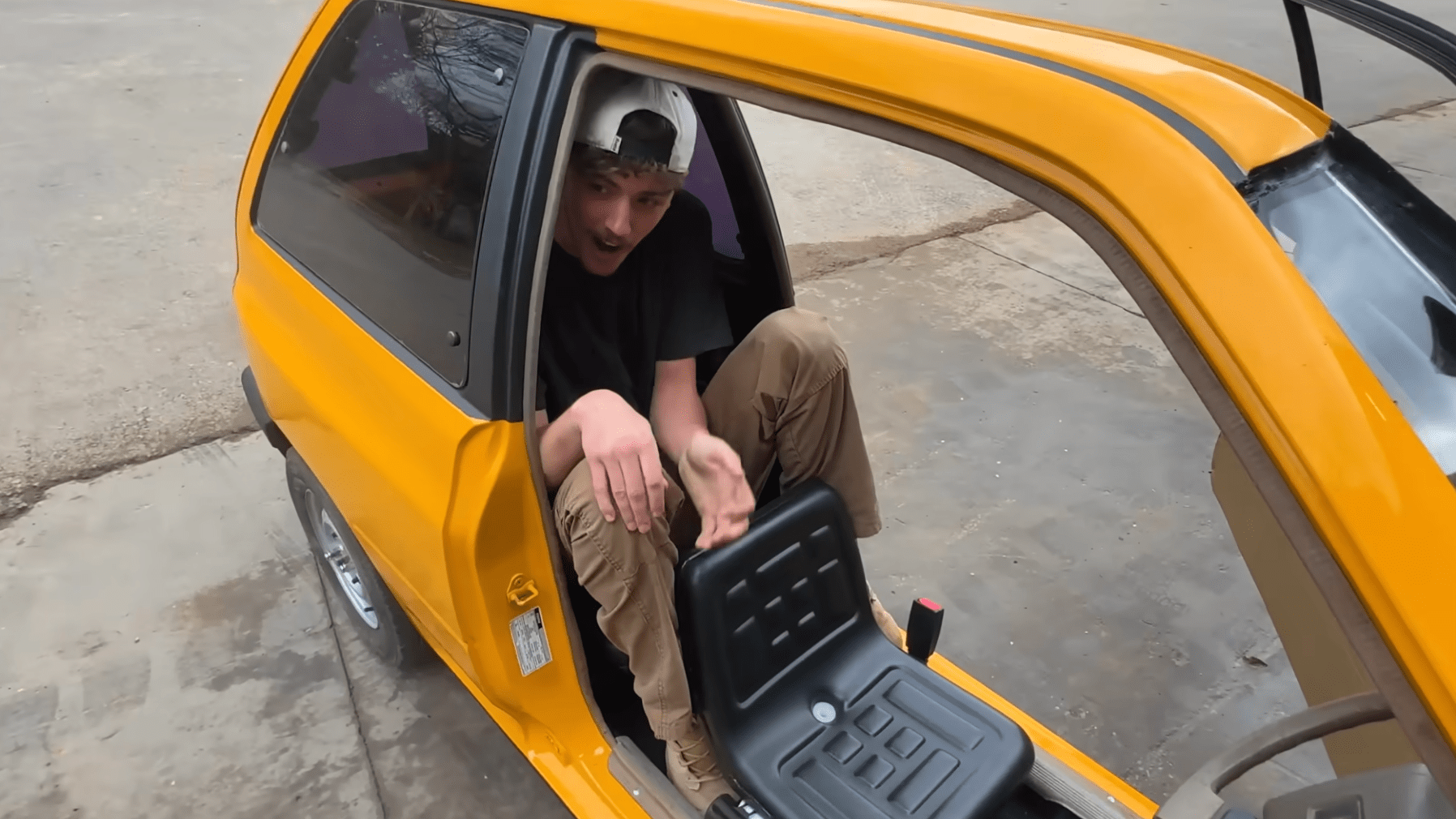
Reducing the car’s width presented significant engineering challenges. The original engine was deemed too large to fit within the drastically reduced frame. Fever addressed this by replacing it with an electric motor sourced from a powerful dirt bike, offering the benefit of compactness and a rechargeable battery. Yet, this change introduced new problems. The shrunken dimensions meant the steering wheel interfered with access to the brake pedal. Fever’s solution was characteristically unconventional: he simply cut the steering wheel in half, creating a half-wheel configuration reminiscent of some Tesla models. Even with this modification, maneuvering the vehicle required a degree of dexterity and careful coordination.
To ensure the modified vehicle met street-legal requirements, Fever focused on redesigning the dashboard and integrating essential safety features. He custom 3D-printed brackets to mount the headlights, mirrors, and other necessary components, powering them with a 12-volt battery. This battery similarly provided enough power to operate the headlamps, horn, and even charge mobile phones. The reassembled vehicle, while undeniably cramped, proved to be drivable, even accommodating a passenger – Fever’s cameraman – in a small space behind the driver’s seat.
Testing and Public Reaction
After completing the modifications and applying a bright yellow paint job, Fever took the car for a test drive around Nashville, Tennessee. The vehicle immediately attracted attention, drawing stares and comments from onlookers. Footage from the test drive shows Fever navigating city streets, visiting a gas station, and even crossing a major bridge without incident. The car’s maneuverability proved surprisingly adept, allowing it to navigate tight spaces and park in areas where larger vehicles would struggle.
“This was a successful project I think,” Fever said in his video documentation of the build. “I’m actually blown away by how well it drives on the street and everyone loves it.”
The Appeal of Extreme Automotive Modification
Fever’s project taps into a growing trend of extreme automotive modification and DIY engineering. While not practical for everyday use, the vehicle serves as a compelling demonstration of ingenuity and resourcefulness. The use of lasers in the construction process highlights the increasing accessibility of advanced technologies to hobbyists and makers. The project also raises questions about the limits of automotive modification and the challenges of balancing creativity with safety and legal compliance.
The story of this remarkably thin car has quickly spread online, generating considerable interest and discussion within the automotive community. It’s a testament to the power of online platforms like YouTube to showcase unconventional projects and inspire others to push the boundaries of what’s possible. While the long-term viability of the vehicle remains to be seen, it has undoubtedly captured the imagination of many and sparked a conversation about the future of automotive design and engineering.
The legality of operating such a heavily modified vehicle on public roads is a complex issue, varying by jurisdiction. Fever’s claim of having obtained insurance for the vehicle is particularly noteworthy, suggesting that he successfully navigated the regulatory hurdles involved. Further details regarding the insurance coverage and the specific modifications approved by local authorities remain unclear.
As of May 1, 2026, Tyler Fever’s Prop Department YouTube channel continues to document the car’s adventures, and further modifications or tests are anticipated. The project serves as a unique example of how passion, creativity, and a willingness to experiment can lead to extraordinary results, even in the realm of automotive engineering.
Worth a look