
Chinese President Xi Jinping arrived in North Korea on Monday for a high-profile visit, marking his first trip abroad this year and his first visit to Pyongyang since 2019. The Chinese leader’s arrival comes as Beijing seeks to balance its influence over its neighbor amid shifting regional dynamics, including North Korea’s deepening military ties with Russia and stalled denuclearization talks with the United States.
Upon his arrival, Xi hailed an “invincible friendship” between the two nations, a sentiment echoed in an article he penned for the front page of North Korea’s state newspaper, the Rodong Sinmun. The visit arrives after a period of intense diplomatic activity in Beijing, where Xi recently hosted summits with both U.S. President Donald Trump and Russian President Vladimir Putin.
A man watches a television screen showing a news broadcast with file footage of the 2019 meeting between China’s President Xi Jinping and North Korean leader Kim Jong Un, at a train station in Seoul on June 8, 2026. Photo: Jung Yeon-je/AFP.
Diplomatic Signaling and Regional Stability
The two-day trip is widely viewed by analysts as a strategic move by Beijing to assert its influence in the region. While China remains North Korea’s primary trading partner and a vital source of economic support, the relationship has evolved as Pyongyang has increasingly aligned itself with Moscow. According to Minseon Ku, a diplomacy professor at DePaul University, Beijing likely acknowledges North Korea’s status as a nuclear state but is focused on maintaining regional stability while managing its own complex relationship with Washington.
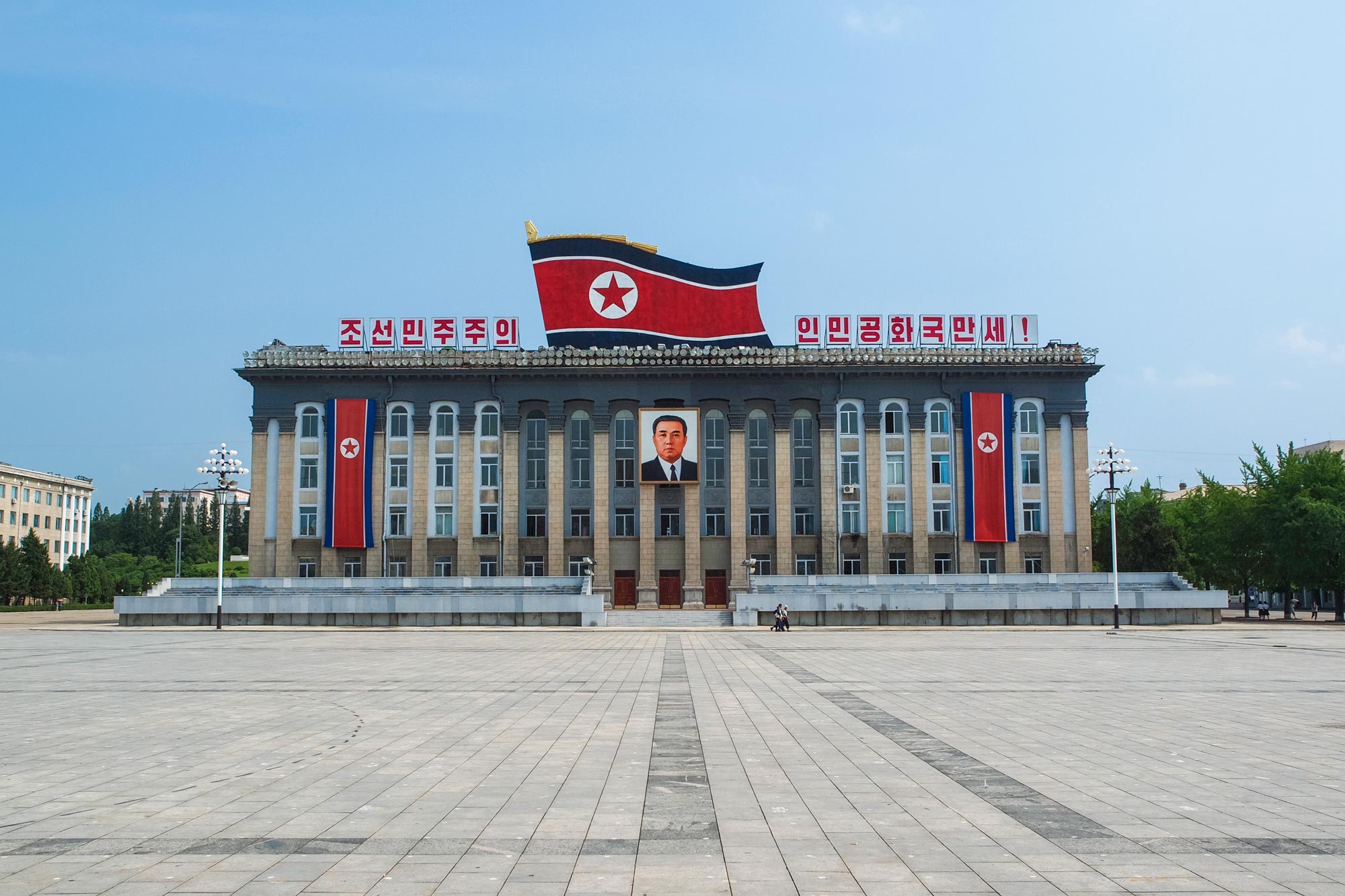
“Beijing probably has accepted North Korea as a nuclear state,” Ku noted, adding that Xi is expected to emphasize that China prioritizes stability above other diplomatic goals. This perspective is shared by Seong-Hyon Lee, a visiting scholar at the Harvard University Asia Center, who suggests that China’s regional strategy is shifting toward “underwriting regime durability” in Pyongyang. By supporting a stable, aligned buffer state, Beijing effectively absorbs military bandwidth from the United States and its regional allies.
Chinese President Xi Jinping (centre) flanked by Russian President Vladimir Putin and North Korean leader Kim Jong Un walks before the military parade marking China’s 80th anniversary of Victory Day at Tiananmen Square, Beijing, on September 3, 2025. Photo: The Kremlin.
The Nuclear Deadlock
The summit takes place against a backdrop of long-standing tensions regarding North Korea’s nuclear program. While the White House reported last month that Xi and President Trump confirmed a “shared goal to denuclearize North Korea” during their Beijing summit, the situation on the ground remains volatile. On the eve of Xi’s arrival, Kim Jong Un’s sister described the country’s nuclear weapons program as “the line of no retreat.”
South Korean President Lee Jae-myung, addressing the situation on Monday, maintained that Seoul should not abandon efforts toward denuclearization, noting that North Korea continues to produce nuclear material. Despite these international concerns, North Korea has repeatedly declared itself an “irreversible” nuclear state since the collapse of the 2019 summit between Kim and Trump.
South Korean President Lee Jae-myung attended an event on December 2, 2025. Photo: Lee Jae-myung, via Facebook.
Economic and Military Implications
North Korea remains the only country with a formal, binding military alliance with China. As China’s international profile continues to grow, experts like Lim Eul-chul of Kyungnam University suggest that Beijing is actively working to draw Pyongyang closer into its diplomatic orbit. This effort serves as a counterweight to the strengthening ties between the U.S. and its regional partners, South Korea and Japan.

The economic dimension of the visit also remains significant. Some observers, such as Jun Sang-gab, a South Korean tour guide near the border, expressed hope that the summit might encourage Pyongyang to open its economy and pursue a development model similar to China’s. Such a shift, they argue, could reduce the risk of conflict on the Korean Peninsula. However, for now, the primary focus remains on the diplomatic handshake between Xi and Kim, as both leaders navigate the pressures of an evolving global security landscape.
The visit is expected to conclude on Tuesday. Future updates regarding the specific outcomes of the talks, including any potential new economic agreements or joint statements on regional security, will be monitored as official reports are released by state media in Beijing and Pyongyang.
Keep reading