
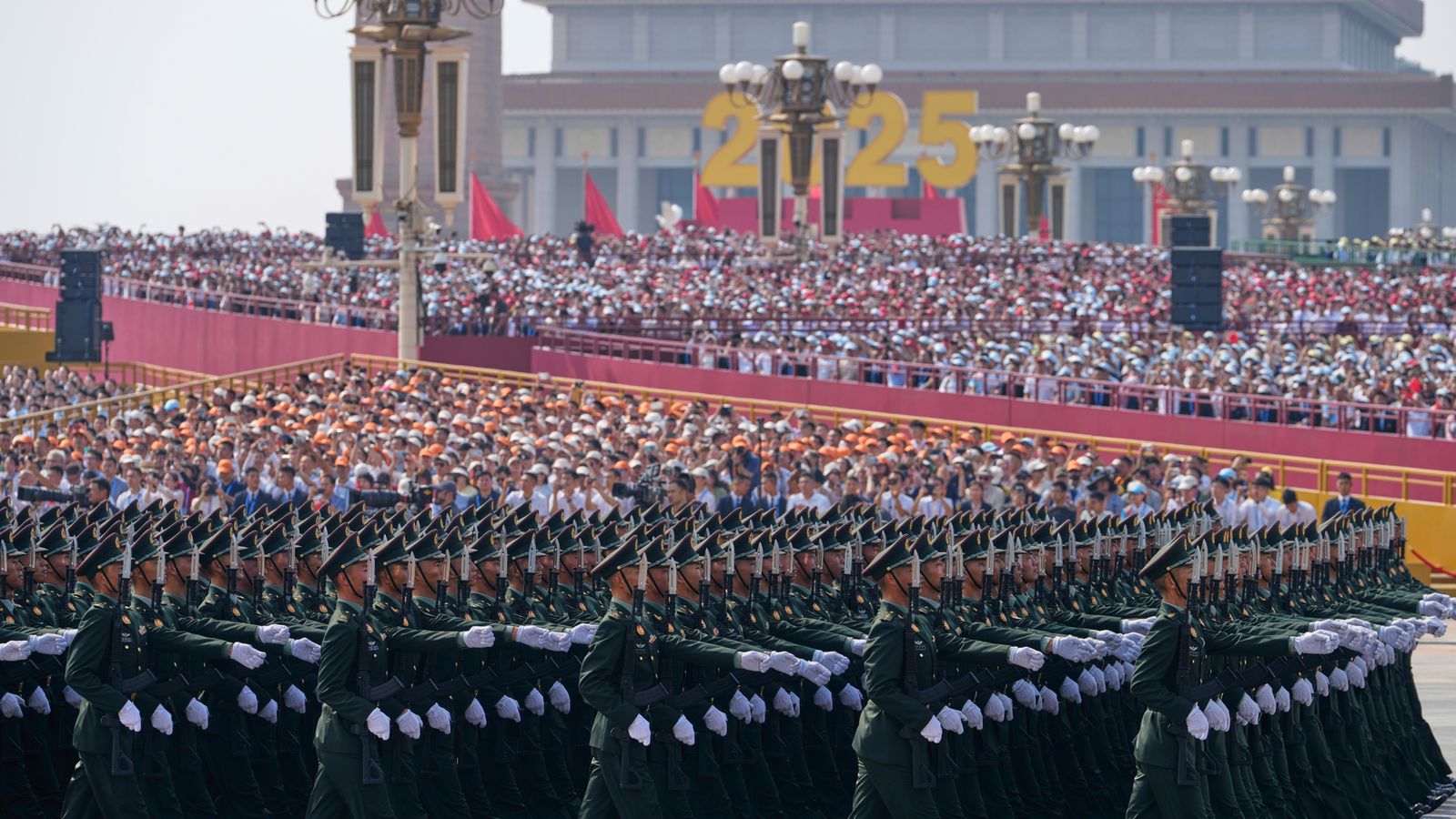
For more than a decade, Xi Jinping has pursued a singular, towering ambition: transforming the People’s Liberation Army (PLA) into a world-class fighting force capable of challenging the United States. Through massive spending, structural overhauls, and a relentless drive for technological parity, the Chinese leader has spent 13 years building a military to rival the West. Yet, as the PLA has grown in strength and sophistication, a paradoxical tension has emerged within the halls of power in Beijing.
The very generals Xi handpicked to lead this modernization are now facing an unprecedented wave of suspicion. In a climate where political loyalty is prized above strategic brilliance, the Chinese leader appears to have lost faith in the military elite he spent years cultivating. This erosion of trust has manifested in a series of high-profile purges, sudden disappearances, and systemic shake-ups that suggest a deep-seated anxiety about the reliability of the military command.
This internal friction comes at a critical juncture. As China eyes the 2027 centenary of the PLA—a date often cited as a milestone for military readiness—the gap between the military’s material capabilities and its leadership’s stability has become a central concern for global intelligence agencies and geopolitical analysts. The struggle is no longer just about how many hypersonic missiles China possesses, but whether the officers in charge of them are trusted by the man at the top.
The Paradox of Power: Modernization vs. Loyalty
Since assuming power in 2012, Xi Jinping has fundamentally reshaped the PLA. He moved away from the traditional model of a massive, peasant-based army toward a leaner, high-tech force focused on “intelligentized” warfare. This evolution required a new breed of generals—technocrats and strategists who could integrate AI, cyber warfare, and long-range precision strikes into a cohesive strategy.

However, the concentration of power required to achieve this rapid modernization created a vulnerability. By centralizing control within the Central Military Commission (CMC), which Xi chairs, he effectively removed the institutional buffers that previously balanced military influence. When the military becomes a primary instrument of national power, the risk of it becoming an independent power center—or a nest of corruption—becomes an existential threat to the party leader.
Analysts suggest that Xi’s distrust is rooted in a dual fear: the potential for military corruption to undermine combat readiness and the fear that generals might prioritize their own careers or factions over absolute obedience to the Communist Party. In the eyes of the leadership, a general who is technically proficient but politically ambivalent is a liability.
The Rocket Force Purge and the Crisis of Readiness
The most striking evidence of this distrust has played out within the PLA Rocket Force (PLARF), the strategic arm responsible for China’s land-based nuclear and conventional missiles. The Rocket Force was intended to be the “crown jewel” of Xi’s military modernization, providing the deterrence necessary to limit U.S. Intervention in the Indo-Pacific.
Instead, the unit became the epicenter of a massive purge. Throughout 2023 and 2024, several top commanders and officials within the Rocket Force were removed from their posts. While official statements often cite “discipline violations”—a common euphemism for corruption—the scale of the removals suggests a deeper failure. Reports indicate that the purges were linked to systemic corruption in procurement, specifically regarding the quality of missiles and the equipment used to launch them.
For Xi, this was not merely a financial crime but a betrayal of strategic intent. If corruption in the supply chain meant that the missiles intended to deter the United States were unreliable, the generals overseeing those programs had effectively compromised national security. This realization likely accelerated the transition from a policy of “guidance” to one of “purging,” as the leadership sought to root out any perceived incompetence or disloyalty.
The Revolving Door of Defense Leadership
The instability at the top of the military hierarchy is perhaps most visible in the tenure of China’s Defense Ministers. The abrupt removal of Li Shangfu in 2023, following a period of unexplained absence from public view, sent shockwaves through the international diplomatic community. Li, who had been viewed as a rising star and a close associate of Xi, vanished from the public eye before being formally stripped of his titles.

This pattern of “disappearances” followed by removals serves as a potent warning to the military elite. It signals that no amount of previous favor or professional achievement provides immunity if the leadership perceives a lapse in loyalty or a failure in execution. The subsequent struggle to find a permanent, stable replacement for the Defense Minister role underscored the difficulty the CMC faced in finding candidates who were both qualified to lead and sufficiently trusted by Xi.
This volatility creates a “culture of fear” within the officer corps. When the cost of a mistake—or the perception of a mistake—is a sudden purge, generals are less likely to take the initiative or offer candid strategic advice. This risk-aversion can be deadly in a high-stakes military environment where flexibility and rapid decision-making are essential.
Strategic Implications for Global Security
The internal turmoil within the PLA carries significant implications for how the world views China’s military capabilities. On paper, the PLA is more powerful than ever. In practice, the distrust between the leadership and the generals may create a “readiness gap.”
- Command and Control: Frequent purges at the top can disrupt the chain of command and erode the confidence of mid-level officers.
- Procurement Integrity: The focus on corruption in the Rocket Force suggests that some of China’s most advanced weaponry may have systemic flaws that are only now being uncovered.
- Operational Hesitation: A military leadership that fears its own leader may be hesitant to act decisively during a crisis, fearing that any failure will result in a political purge.
this instability complicates the dialogue between the U.S. And China. Military-to-military communication is the primary tool for avoiding accidental escalation. However, when the Chinese side is represented by officials who may be under intense scrutiny or on the verge of removal, the reliability and authority of those communications are called into question.
What Happens Next?
As China moves closer to the 2027 milestone, the tension between modernization and trust is likely to intensify. The leadership must find a way to maintain a professional, capable officer corps while ensuring that the military remains an instrument of the party’s will. If the purges continue at the current pace, the PLA risks becoming a force that is formidable in equipment but fragile in leadership.
The next critical window for observation will be the upcoming plenary sessions of the Communist Party and the subsequent appointments to the Central Military Commission. These movements will reveal whether Xi has found a new circle of trusted generals or if the cycle of suspicion and removal will continue to define the PLA’s trajectory.
World Today Journal will continue to monitor the leadership changes within the PLA and the implications for Indo-Pacific security. We invite our readers to share their perspectives on these developments in the comments section below.
Keep reading