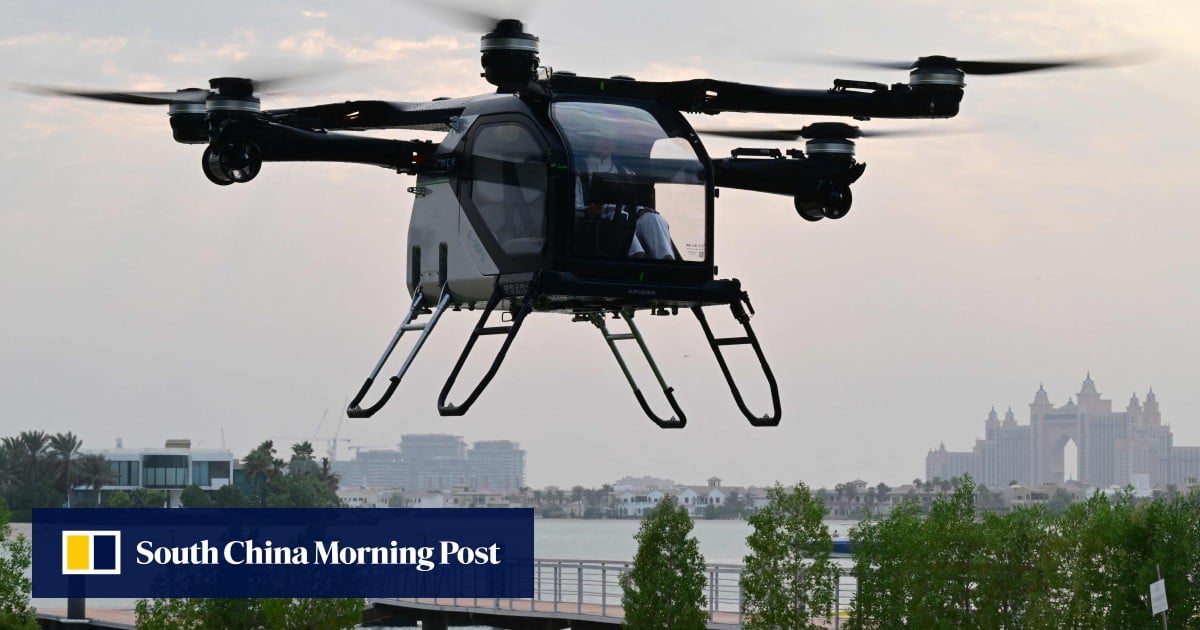
The dream of personal flight is edging closer to reality, fueled by a fresh injection of capital into Aridge, a Chinese flying car developer backed by electric vehicle giant Xpeng. On Friday, March 13, 2026, Aridge announced it had secured approximately $200 million in novel funding, bolstering its position as the most well-funded flying car company in Asia and paving the way for a potential initial public offering (IPO) in Hong Kong later this year. This latest investment underscores growing confidence in the emerging electric vertical takeoff and landing (eVTOL) sector, as companies worldwide race to overcome technological and regulatory hurdles to commercialize this futuristic mode of transportation.
The funding round saw participation from existing investors including GL Ventures, the venture capital arm of Hillhouse Investment, and HongShan, formerly known as Sequoia China, according to a company statement. This brings Aridge’s total equity financing to roughly $1 billion, a significant milestone in the development of this nascent industry. The company, previously operating as AeroHT, is not simply building concept vehicles; it’s actively scaling production capabilities, having completed its mass production plant in Guangzhou in September 2025 and producing its first flying car in November of the same year. This proactive approach to manufacturing, combined with the substantial financial backing, positions Aridge as a frontrunner in the competitive landscape of flying car development.
Aridge’s Path to Public Markets
Aridge confidentially submitted its IPO application to the Hong Kong Stock Exchange in January 2026, with JPMorgan Chase and Morgan Stanley appointed as underwriters, according to reports from the South China Morning Post. The anticipated IPO, expected to occur this year, represents a pivotal moment not only for Aridge but for the entire eVTOL industry. A successful listing would provide the company with crucial capital for further research and development, expansion of production facilities, and navigating the complex regulatory approval processes required for commercial operation. Xpeng’s decision to take Aridge public signals a broader strategic move to capitalize on the potential of urban air mobility.
The timing of the IPO coincides with increasing momentum in the flying car sector globally. Several companies are vying to commercialize eVTOL aircraft, aiming to address urban congestion and offer a faster, more efficient alternative to traditional ground transportation. Bloomberg News reported earlier this month that Xpeng had hired banks to manage the IPO, further solidifying the company’s commitment to bringing flying cars to market.
The Technology and Production Behind the Vision
Aridge’s Guangzhou production facility is a key component of its strategy. Spanning approximately 120,000 square meters, the plant is designed to utilize a modern assembly line for aircraft production, capable of rolling out one aircraft every 30 minutes at full capacity. This represents a significant step towards mass production, a critical challenge for the eVTOL industry. The company’s focus is on developing and manufacturing flying cars, specifically addressing the need for innovative transportation solutions in densely populated urban areas. The “Land Aircraft Carrier” vehicle, as it’s been dubbed, is designed to provide a new mode of transport, potentially alleviating traffic congestion and reducing commute times.
While specific technical details about Aridge’s flying car technology remain somewhat limited, the company’s progress is being closely watched by industry analysts and investors. The development of safe, reliable, and commercially viable eVTOL aircraft requires overcoming significant engineering challenges, including battery technology, autonomous flight control systems, and air traffic management. The company’s ability to successfully navigate these challenges will be crucial to its long-term success.
Investment Landscape and Key Players
The $200 million funding round highlights the growing investor interest in the flying car market. GL Ventures, the venture capital arm of Hillhouse Investment, and HongShan (formerly Sequoia China) have demonstrated continued confidence in Aridge’s vision. These investors bring not only capital but also valuable expertise and networks to support the company’s growth. The participation of Gaorong Ventures and Fortune Capital in this latest round further diversifies Aridge’s investor base. The total $1 billion in equity financing establishes Aridge as the leading player in Asia’s crewed low-altitude flying sector.
Xpeng’s role as a backer is also significant. As a prominent electric vehicle manufacturer, Xpeng brings valuable experience in automotive engineering, manufacturing, and supply chain management to the table. This synergy between an established automotive company and a dedicated flying car developer could prove to be a competitive advantage. Xpeng’s commitment to Aridge underscores its belief in the long-term potential of urban air mobility.
Regulatory Hurdles and Future Outlook
Despite the recent funding success and progress in production, Aridge and other flying car developers face significant regulatory hurdles. Obtaining certification from aviation authorities, such as the Civil Aviation Administration of China (CAAC) and the Federal Aviation Administration (FAA) in the United States, is a complex and time-consuming process. Establishing robust air traffic management systems and ensuring public safety are also critical considerations. The regulatory landscape for eVTOL aircraft is still evolving, and companies must perform closely with regulators to develop appropriate standards and procedures.
The commercialization of flying cars is not without its challenges. Infrastructure requirements, including vertiports (landing and takeoff facilities), charging infrastructure, and maintenance facilities, will need to be addressed. Public acceptance and affordability are also important factors. However, the potential benefits of flying cars – reduced congestion, faster travel times, and increased accessibility – are driving continued investment and innovation in the sector.
Looking ahead, Aridge’s focus will be on ramping up production, securing regulatory approvals, and preparing for its IPO. The company’s success will depend on its ability to execute its business plan, overcome technical challenges, and navigate the evolving regulatory landscape. The coming months will be crucial as Aridge moves closer to realizing its vision of a future where flying cars are a common sight in urban skies.
Key Takeaways
- Significant Funding: Aridge has secured $200 million in new funding, bringing its total equity financing to $1 billion.
- IPO Plans: The company is preparing for a potential IPO in Hong Kong later this year.
- Production Capacity: Aridge has completed a large-scale production facility in Guangzhou, capable of producing one aircraft every 30 minutes at full capacity.
- Xpeng Backing: The support of Xpeng provides valuable expertise and resources in automotive engineering and manufacturing.
- Regulatory Challenges: Navigating complex regulatory approvals remains a key hurdle for the eVTOL industry.
The next major milestone for Aridge will be the completion of its IPO process and the subsequent listing on the Hong Kong Stock Exchange. Investors and industry observers will be closely watching the company’s performance as it seeks to establish itself as a leader in the rapidly evolving flying car market. What are your thoughts on the future of urban air mobility? Share your comments below and join the conversation.
Keep reading